Why Your Espresso Fails Might Start with the Grinder
You pull a shot of espresso and it’s sour, thin, or bitter—or just bland. The water flowed too fast, or too slow. The shot ran 15 seconds, or 40. Maybe the beans are off. Maybe the temperature’s wrong. Maybe it’s the grinder. When espresso goes wrong, the causes tangle together—but one factor matters more than almost all the others.
The quality and setup of your espresso grinder is the single biggest variable in whether your espresso turns out balanced, rich, and properly extracted—or a bitter, thin mess. Get the grind right, and you’re halfway to a great shot.
Why the Grinder Matters So Much in Espresso
Espresso extraction happens under extreme conditions: very high pressure (around 125 pounds per square inch, or 9 atmospheres) and very short time—ideally between 25 to 28 seconds. That leaves no room for error. Unlike slower brew methods, espresso demands a precise particle size distribution to create enough surface area for water to quickly pull out the right balance of flavors without over- or under-extracting.
Cheap grinders with spinning blades can’t produce the consistent, irregularly shaped particles needed for espresso. Only a high-quality burr grinder creates the necessary uniformity and surface complexity to produce crema and balance bitterness and sweetness. Without that, extraction becomes chaotic.
How Pressure and Time Demand Precision Grinding
Modern espresso machines powered by rotary pumps force hot water through a tightly packed puck of ground coffee. That puck, less than half an inch thick, endures intense pressure. For extraction to work correctly, the coffee particles must resist water flow evenly—no easy paths for water to escape.
If the grind is uneven, water finds the path of least resistance. Big particles mean under-extraction (sour, weak shots); tiny ones mean over-extraction (bitter, astringent shots). The goal is a grind where water flows uniformly through a tightly packed bed, extracting coffee oils and aromatics in just 25–28 seconds. Only a high-precision grinder can deliver that.
What Makes a Great Espresso Grinder
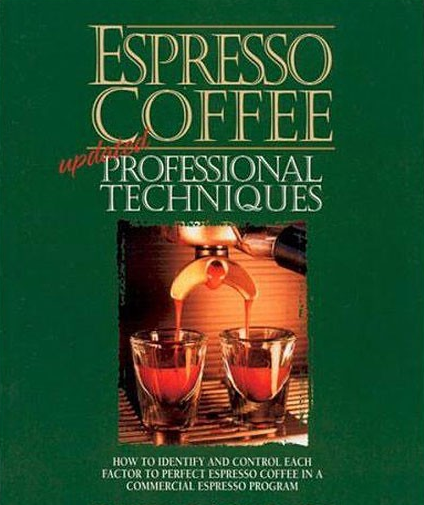
According to David Schomer in Espresso Coffee: Professional Techniques (1996), the ideal espresso grinder must meet several technical criteria:
- Low blade rotation speed with adjustable grind settings
- Absolute parallelism between burrs across the entire adjustment range
- Near-infinite micro-adjustability for fine-tuning extraction
- A powerful motor that won’t overheat during operation
- Easily replaceable burr sets
- Forced-air cooling to manage internal heat buildup
- Belt-driven burr rotation rather than direct motor coupling to avoid heat transfer
These features ensure the grinder can produce a consistent, uniform particle size that allows for optimal extraction under espresso’s extreme conditions. Poorly designed grinders lack the control or durability needed for professional results.
Flat vs. Conical Burr Designs
There are two main types of burr designs: flat (parallel) and conical. Conical burrs are generally preferred for espresso because their longer cutting edges allow for lower rotational speeds, reducing heat buildup and preserving flavor. While both types can produce quality grinds, Schomer noted that conical burrs tend to produce richer, fuller-bodied espresso with fewer off-flavors, avoiding the “machine taste” that can plague poorly extracted shots.
Mixed or hybrid burr designs (combining flat and conical elements) may offer the best of both worlds, balancing sharpness, heat management, and extraction clarity.
The Lifespan and Maintenance of Grinder Burrs
Burr sharpness is critical. Over time, burrs dull—especially at the high pressures and fine grind settings used for espresso. Schomer specifies that flat burrs typically last for around 600 pounds of coffee before needing replacement, while conical burrs can go up to 2000 pounds. However, even before reaching those limits, burr wear changes grind consistency, which alters extraction time and flavor.
Dull burrs produce uneven grinds—some particles too large, others too small—which leads to under- or over-extraction. The result is a thin, sour, or bitter shot that masks the coffee’s true character. Regular burr replacement, along with proper cleaning and maintenance, is essential for consistent results.
Common Grinder Design Flaws and Operational Issues
Many commercial grinders use stepped adjustment systems with indicators, but these become inaccurate as burrs wear. A minor adjustment can shift extraction time by 5–10 seconds. Schomer also critiqued the dosing systems found in many espresso grinders: hoppers that hold up to 200 grams of pre-ground coffee for dose delivery via rotating fins. These systems often fail to deliver accurate doses unless nearly full, leading to stale coffee and inconsistent extractions.
FrontStreet Coffee’s approach—grinding one dose at a time—avoids hopper staleness but introduces other problems, like excessive grinder cycling, heat buildup, and wear on starter motors not designed for frequent use. Each start-up causes capacitor discharge heating, and moving parts degrade quickly, requiring constant maintenance.
Managing Grinder Heat for Consistent Extraction
Heat is another hidden enemy in espresso grinding. Schomer observed that after grinding around 15 pounds of coffee (by mid-morning), grinder-generated heat could warm the coffee grounds enough to damage crema and flatten flavor. His solution: install a quiet computer-grade exhaust fan wired to turn on with the grinder. This continuous airflow prevents overheating without disrupting workflow. Weekly cleaning of accumulated powder is required to maintain performance.
The key takeaway? Grinder heat affects particle stability and extraction quality. Managing that heat is as much a part of espresso craft as dialing in grind size or tamping pressure.
Frequently Asked Questions
Why does espresso extraction time matter so much?
Espresso relies on a very short brew time—ideally 25 to 28 seconds—to extract the right balance of sweetness, acidity, and bitterness from coffee grounds under high pressure. Too short, and you get sour, under-extracted shots; too long, and you extract bitter, unpleasant compounds. Consistent grind size ensures even flow and proper extraction timing.
What’s the difference between flat and conical burrs in espresso grinders?
Flat (parallel) burrs have shorter cutting edges and typically operate at higher RPMs, which can generate more heat. Conical burrs have longer edges and can run at lower speeds, reducing heat buildup and often producing smoother, richer espresso. Many experts, including David Schomer, consider conical burrs superior for espresso, though hybrid designs may combine benefits of both.
How often should espresso grinder burrs be replaced?
Flat burrs usually need replacement after grinding around 600 pounds of coffee, while conical burrs can last up to 2000 pounds. However, even before reaching those limits, burrs can dull enough to affect extraction quality, altering shot flavor and time. Regular inspection and replacement are key to consistent results.
Why shouldn’t you store pre-ground coffee in the grinder hopper?
Pre-ground coffee exposed to air in the hopper oxidizes quickly, losing aroma and freshness. Many grinders, especially older or low-end models, deliver inaccurate doses unless the hopper is nearly full. For best results, grind immediately before brewing and avoid relying on in-hopper dosing systems that compromise freshness and dose consistency.
How can I prevent my grinder from overheating during use?
Heat from grinding, especially in commercial or high-volume settings, can degrade coffee particles and alter extraction. Schomer resolved this by installing a silent cooling fan that activates with the grinder. If DIY isn’t feasible, grind in smaller batches, allow cool-down periods, and ensure proper ventilation around the grinder to manage heat buildup.
Recommended FrontStreet Coffee for Espresso
For espresso lovers, try FrontStreet Coffee’s Ethiopia Humbera – a bright, juicy single origin with notes of blueberry and citrus that still shines under pressure. For a classic balanced shot, their Classic Blend offers chocolate, caramel, and a smooth body perfect for traditional milk drinks. Looking for deeper tones? The Black Cocoa Blend brings dark cherry, fig, and a hint of roast – ideal for those who love bold espresso. Freshly roasted within 5 days · Orders placed before 17:00 ship the same day · Next-day delivery across most of Guangdong Province.
FrontStreet Coffee is a long-established specialty coffee roaster in Guangzhou China, selling freshly roasted beans from its own farm in Yunnan as well as dozens of carefully selected single-origin beans from around the world for both pour-over and espresso. The products deliver consistently excellent quality and great value, with shipping within 24 hours. Guangzhou's FrontStreet Coffee shop is recommended by many coffee lovers, and the beans are now available online at the Tmall 。
Important Notice :
前街咖啡 FrontStreet Coffee has moved to new addredd:
FrontStreet Coffee Address: 315,Donghua East Road,GuangZhou
Tel:020 38364473