15 Fascinating Facts About Coffee You Didn’t Know
Ever wondered why coffee is such a big deal worldwide, or how we ended up drinking it instead of eating it? Whether you’re a barista, a home brewer, or just curious, there’s more to your daily brew than meets the eye — including goats, kings, and even a different George Washington.
Here are 15 little-known, verified facts about coffee’s origins, production, chemistry, and cultural impact — all pulled from historical accounts and industry knowledge.
The Origin Myth & Early Consumption

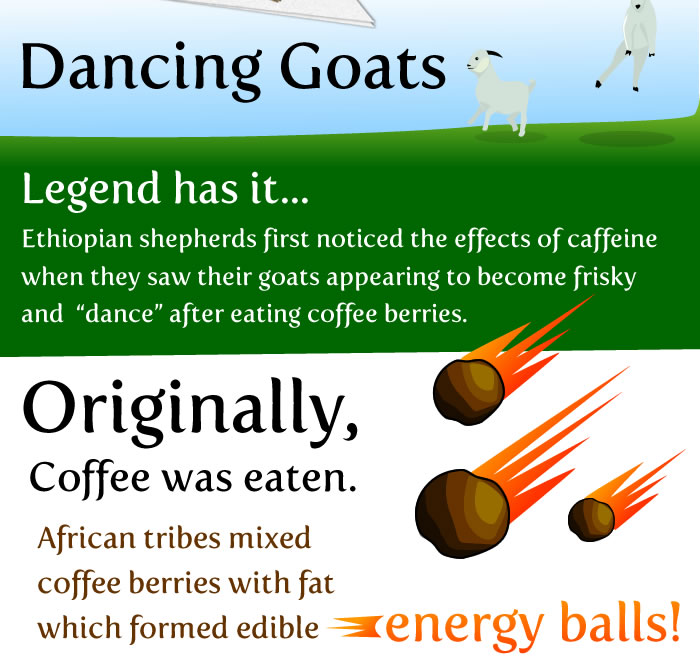
The most famous coffee discovery story dates back to around 850 AD, when an Ethiopian shepherd noticed his goats became hyperactive after eating red berries from a local shrub. That plant turned out to be Coffea, and those berries held the seeds we now roast as coffee beans.
But people didn’t always drink coffee. Early African tribes mixed coffee cherries with animal fat to form energy-rich edible balls — a far cry from your morning pour-over.
Coffee’s Global Spread & Cultural Role
Religion played a huge role in coffee’s expansion. Islam’s ban on alcohol made coffee an acceptable and even essential social drink, helping it spread rapidly across the Middle East.
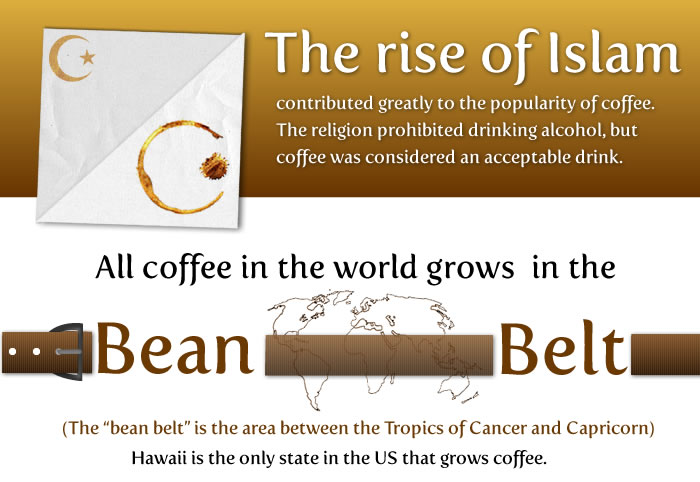
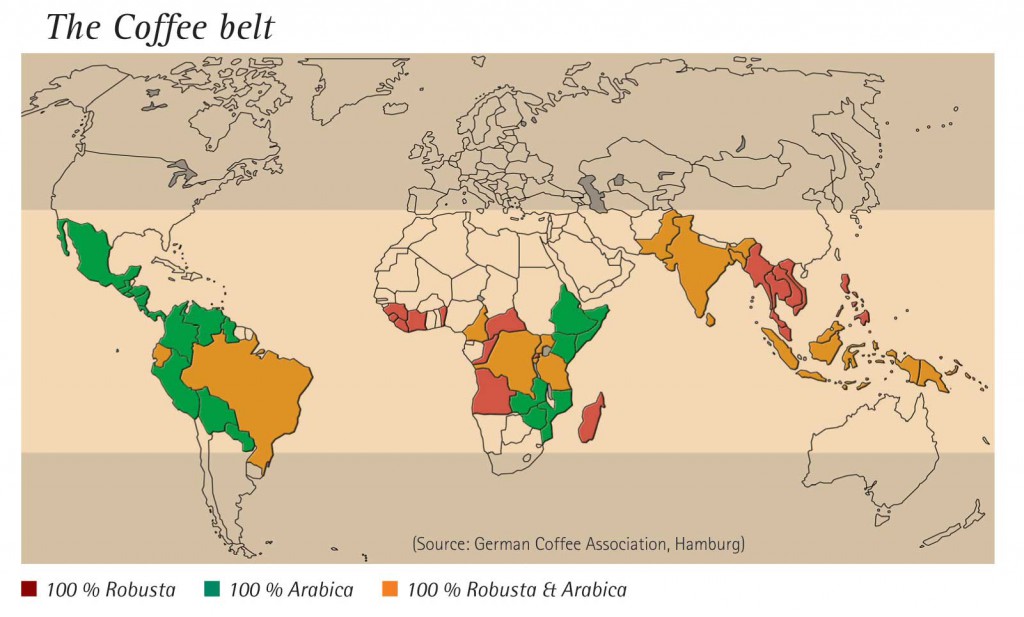
Today, all coffee grows within the “Bean Belt” — the region between the Tropics of Cancer and Capricorn. Strangely, the only U.S. state that grows coffee commercially is Hawaii.
How Coffee Went from Forbidden to Ubiquitous
In 1675, King Charles II of England tried to ban coffeehouses, fearing they were hotbeds of sedition and political plotting. The ban failed.
More successfully, coffee established itself globally through trade. It’s now the second-most traded commodity on Earth, right after oil. That’s a lot of black liquid passion.
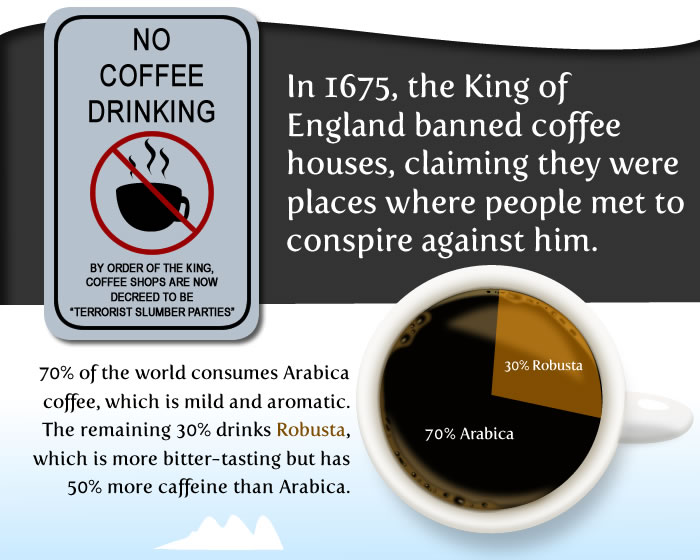
Only about 70% of the world drinks Arabica — known for its mild, aromatic profile — while the remaining 30% prefers Robusta, which is stronger, harsher, and has 50% more caffeine.
From Cherry to Cup: The Coffee Journey
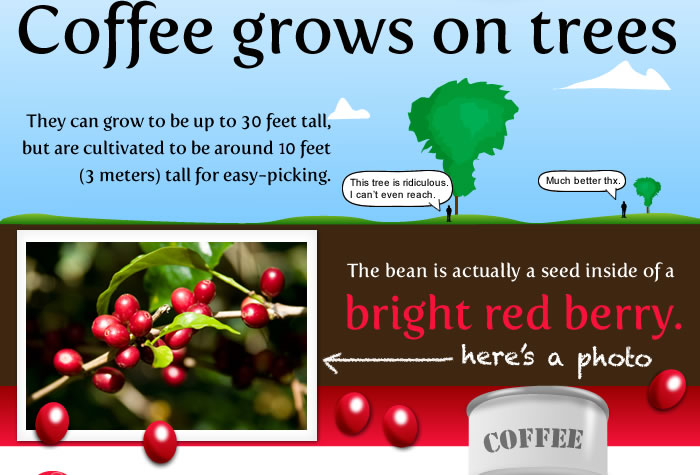
Coffee beans are actually the seeds inside bright red coffee cherries. The coffee plant can grow up to 30 feet tall, but farmers prune them to around 10 feet to make harvesting easier.
After picking, the cherries undergo processing — either sun-drying (natural) or washing (washed/wet process) — until only the green coffee bean remains. That green bean is then shipped to roasters everywhere.
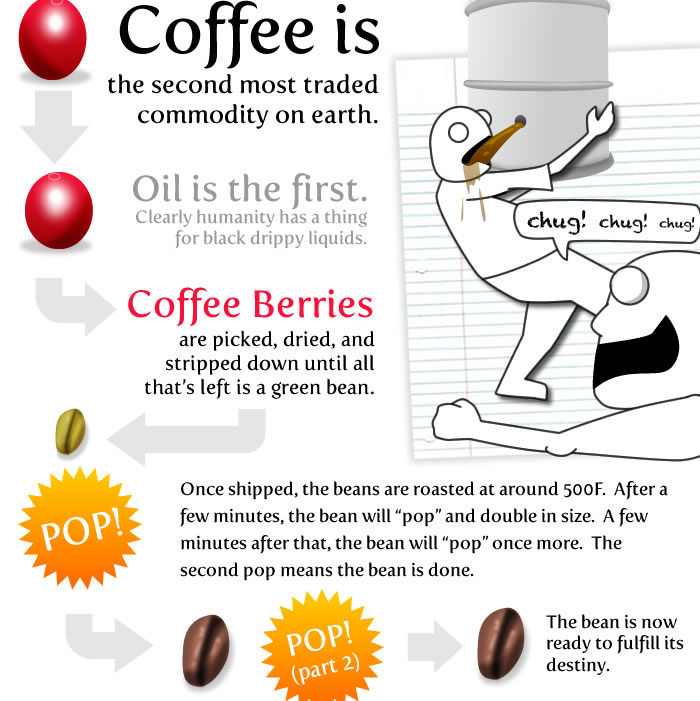
Roasting transforms the green bean into the aromatic brown one we know. It happens around 500°F (260°C). First, you’ll hear the “first crack” — a sign the bean has expanded to roughly double its original size. Later, a “second crack” signals deeper roasting and often marks the end point for specialty styles.
The Weird & Wonderful Side of Coffee Culture
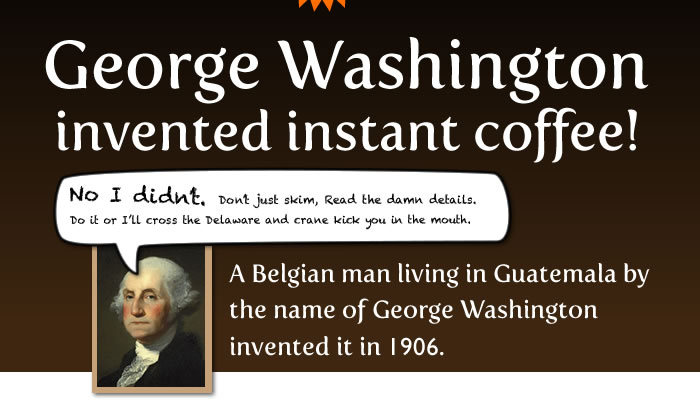
Did you know someone else named George Washington invented instant coffee? In 1906, Belgian chemist George Constant Washington developed the first commercial instant coffee — in Guatemala, not the U.S.
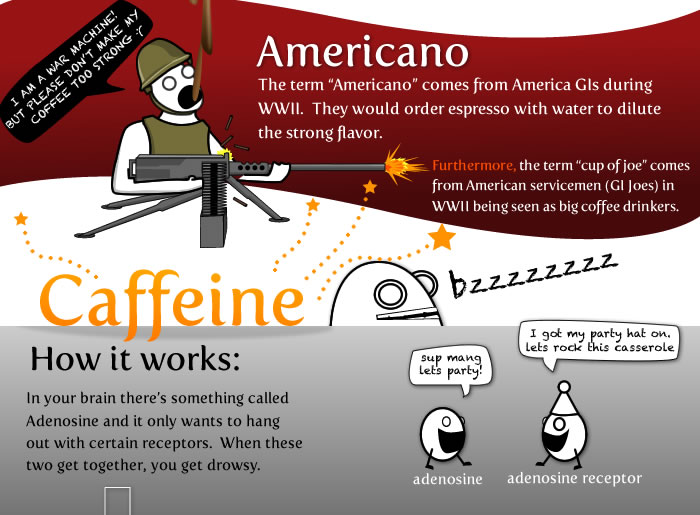
And “Americano” coffee? It was created during World War II when American soldiers in Europe diluted strong espresso with hot water to match their preferred milder taste. They also gave us the slang “cup of joe,” referring to the average GI — a “G.I. Joe” — who couldn’t function without coffee.
The Science of Caffeine & Your Brain
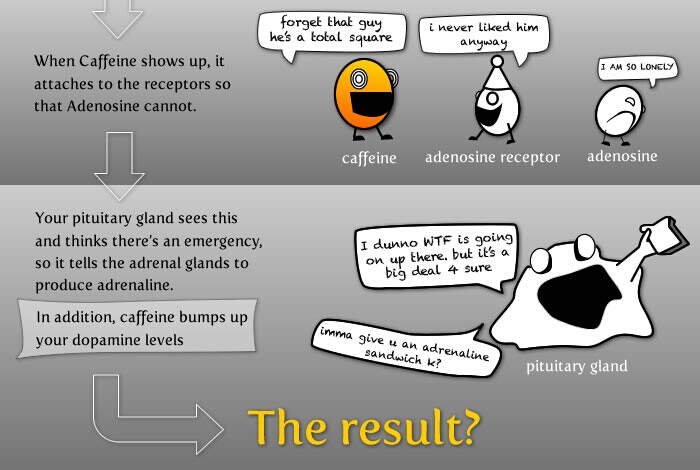
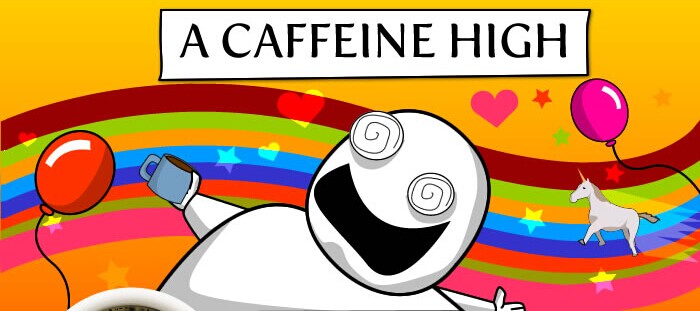
Here’s how caffeine actually works: Your brain produces adenosine, which binds to receptors and makes you feel sleepy. Caffeine blocks those receptors. When adenosine can’t attach, your brain thinks there’s an emergency, so it signals the adrenal glands to release adrenaline. Caffeine also boosts dopamine levels. The result? You feel alert, focused, and maybe a little jittery.
Frequently Asked Questions
Did coffee really come from Ethiopia?
Yes. The earliest known coffee discovery story comes from 9th-century Ethiopia, where a shepherd observed his goats acting energetic after eating red berries from a bush. Those berries were from what we now know as the coffee plant.
Why do some people drink Robusta instead of Arabica?
Arabica makes up about 70% of global consumption due to its smoother, more aromatic profile. Robusta, though harsher and more bitter, has 50% more caffeine and is preferred in some regions for its strong flavor and lower cost.
Was coffee ever banned anywhere?
Yes. In 1675, England’s King Charles II attempted to ban coffeehouses, believing they were centers for political rebellion. The ban was short-lived, but it shows how coffee has long been tied to social movements.
What’s the difference between espresso and regular coffee?
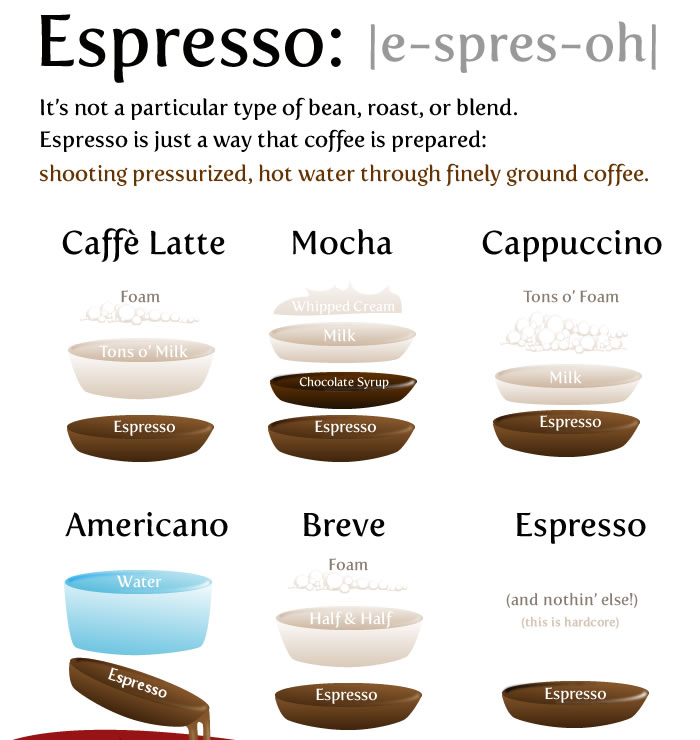
Espresso isn’t a bean or roast type — it’s a brewing method where hot water is forced through finely-ground coffee under high pressure. This creates a concentrated shot with crema on top, distinct from drip or filter coffee.
How did ‘cup of joe’ come to mean coffee?
The term “cup of joe” originated in the U.S. military during World War II. G.I. Joes — the nickname for American soldiers — were avid coffee drinkers. Referring to coffee as a “cup of joe” became a casual shorthand among troops.
How are coffee cherries turned into green beans?
After harvesting, coffee cherries are processed via either the natural (sun-dried) or washed method to remove the fruit pulp. What remains is the green coffee bean, which is then shipped to be roasted.
Recommended FrontStreet Beans for Coffee Explorers
Explore the origins of coffee with FrontStreet Coffee’s single origins: try the Ethiopia Yirgacheffe for floral, citrus notes; the Guatemala Antigua for classic chocolate and spice; or the Colombia Huila for balanced caramel and berry. These beans highlight the diversity of the coffee belt and showcase how processing and terroir shape flavor. Freshly roasted within 5 days · Orders placed before 17:00 ship the same day · Next-day delivery across most of Guangdong Province.
FrontStreet Coffee is a long-established specialty coffee roaster in Guangzhou China, selling freshly roasted beans from its own farm in Yunnan as well as dozens of carefully selected single-origin beans from around the world for both pour-over and espresso. The products deliver consistently excellent quality and great value, with shipping within 24 hours. Guangzhou's FrontStreet Coffee shop is recommended by many coffee lovers, and the beans are now available online at the Tmall 。
Important Notice :
前街咖啡 FrontStreet Coffee has moved to new addredd:
FrontStreet Coffee Address: 315,Donghua East Road,GuangZhou
Tel:020 38364473