Ethiopia’s Four Coffee Cultivation Systems Explained
Ever wondered why Ethiopian coffee tastes so unique—and why its production methods seem so different from Latin America’s high-tech farms? The answer lies in how the beans are grown. More than 90% of Ethiopia’s coffee still comes from systems that blend wild growth, manual labour, and traditional farming, with only a tiny fraction using modern agronomy. If you’ve ever sipped a Yirgacheffe with surreal floral brightness or a Sidamo with wild berry complexity, those flavours start in the forest—or the farmer’s backyard.
Ethiopia’s coffee comes from four main cultivation systems: forest, semi-forest, garden, and plantation. Together, they explain why the country relies on low-tech, high-diversity farming—and why output remains relatively small despite global demand.
What Is Forest Coffee?
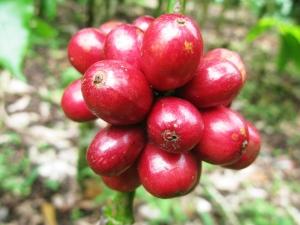
Forest coffee makes up 10% of Ethiopia’s total production. It’s grown wild in the country’s western and southwestern regions, especially within the famous Kafa Forest. Here, coffee trees thrive under dense natural tree cover, with zero human intervention. Farmers simply wander into the forest to harvest ripe cherries—no pruning, no fertilising, no pest control. The trees grow entirely on their own, shaped only by nature.
What About Semi-Forest Coffee?
Semi-forest coffee accounts for 35% of Ethiopia’s output. It’s similar to forest coffee but with a touch of human management. Farmers selectively thin out overcrowded branches in small patches of wild forest to balance sunlight and shade, aiding photosynthesis. They also weed once a year. This blend of natural growth and light human touch helps boost yields while maintaining much of the ecosystem’s integrity.
What Is Garden Coffee?
Garden coffee is the most common system, producing 50% of Ethiopia’s coffee. Farmers plant coffee trees in their backyards or mixed with other crops on small farms. With just 1,000–1,800 trees per hectare, it’s the lowest-density method—but also the most practical for local livelihoods. This mixed-cropping approach dominates southern regions like Sidamo and parts of the southeast, and the government actively promotes it as a sustainable, smallholder-friendly model.
What Is Plantation Coffee?
The rarest system, plantation coffee, covers just 5% of national production. These are mostly state-owned farms, now being prepared for privatisation. They use modern agricultural techniques: controlled planting density, standardised pruning, fertilisation, and even pesticide application. Unlike the other three, plantation coffee is not organic—the only system in Ethiopia that isn’t.
Why Does Cultivation System Matter?
Ethiopia’s coffee production differs sharply from the industrialised models of Central and South America. Instead of high-yield, tech-driven farms, most Ethiopian coffee grows through a mix of wild and semi-managed systems. That limits scalability but preserves biodiversity—and contributes to the distinct, complex cup profiles the world loves. Local researchers are now breeding higher-yielding, high-quality Arabica hybrids to help close the gap with other coffee-growing nations.
Frequently Asked Questions
What percentage of Ethiopian coffee comes from forest systems?
Forest coffee makes up 10% of Ethiopia’s total coffee production. It’s harvested wild in areas like the Kafa Forest without any human management.
How does semi-forest coffee differ from forest coffee?
Semi-forest coffee (35% of production) is still largely natural but involves farmers lightly managing small wild patches—pruning branches, balancing shade, weeding annually—to improve yields while keeping the system mostly organic.
What is garden coffee, and why is it so popular?
Garden coffee accounts for 50% of Ethiopia’s output. Farmers grow coffee at low density (1,000–1,800 trees/hectare) alongside other crops in home gardens or small farms. It’s favoured for fitting local livelihoods and is actively promoted by the government.
Does Ethiopia use modern plantation farming for coffee?
Yes, but only for 5% of production. Plantation coffee uses modern agronomy—controlled planting, pruning, fertilising, and pesticides—but is not organic. Most such farms are state-owned and being privatised.
Why don’t more Ethiopian farms use high-tech methods?
Ethiopia’s coffee tradition relies on wild and semi-managed diversity, which limits scalability but enhances cup complexity. Efforts are underway to breed higher-yield, high-quality hybrids to improve efficiency without sacrificing flavour.
Recommended FrontStreet Beans for Exploring Ethiopian Origins
Try the FrontStreet Ethiopia Humbera for vibrant tropical fruit and citrus notes, or the classic FrontStreet Yirgacheffe Gedeb for jasmine, lemon, and green tea brightness. Both showcase Ethiopia’s unique coffee diversity, grown in systems like garden and semi-forest. Freshly roasted within 5 days · Orders placed before 17:00 ship the same day · Next-day delivery across most of Guangdong Province.
FrontStreet Coffee is a long-established specialty coffee roaster in Guangzhou China, selling freshly roasted beans from its own farm in Yunnan as well as dozens of carefully selected single-origin beans from around the world for both pour-over and espresso. The products deliver consistently excellent quality and great value, with shipping within 24 hours. Guangzhou's FrontStreet Coffee shop is recommended by many coffee lovers, and the beans are now available online at the Tmall 。
Important Notice :
前街咖啡 FrontStreet Coffee has moved to new addredd:
FrontStreet Coffee Address: 315,Donghua East Road,GuangZhou
Tel:020 38364473