How Filter Cup Shape Affects Your Pour-Over Coffee
If you’ve ever struggled with uneven extraction or a slow pour-over drip, the shape of your filter cup might be the culprit. Though it looks like a simple piece of plastic or ceramic, every curve, hole, and groove plays a role in how your coffee brews. The right cup design can mean the difference between a balanced cup and a disappointing one.
The number of holes in your filter cup—whether one, two, three, or more—along with the depth and layout of the rib grooves, directly impacts water flow, air release, and coffee bloom. These elements determine how evenly your coffee extracts, especially during the critical first seconds.
Types of Pour-Over Filter Cups
Pour-over filter cups come in various materials and hole configurations. The most common materials include ceramic, acrylic, and AS resin. The number of holes at the base is where things get interesting: there are single-hole, double-hole, and triple-hole designs, each suited to different roast levels and brewing styles.
Single-Hole Filter Cups (Melitta Style)
The single-hole filter cup was invented by German housewife Melitta Bentz—yes, that Melitta—and is often called a Melitta cup. It typically features just one small hole at the bottom. This design was originally intended for darker, more soluble roasts, such as those preferred in Germany. Because the flow rate is limited and depends on a single channel, it requires precise control over both coffee dose and water volume. The entire brew must often be poured in one continuous stream. As a result, lighter roasts with finer particles that can easily clog the single hole are not ideal for this style of cup.
Triple-Hole Filter Cups (Kalita Style)
Much more common today is the triple-hole filter cup, often associated with the Kalita brand. These cups feature three small, evenly spaced holes at the base. This design allows for better airflow and more consistent water dispersion, making them suitable for a wide range of roast levels—from light to dark. The multiple holes also make the brew less sensitive to inconsistencies in grind size or coffee distribution. If your roast or grind is uneven, you can often adjust the final concentration simply by tweaking the total brew water volume.
The Role of Rib Grooves in Filter Cups
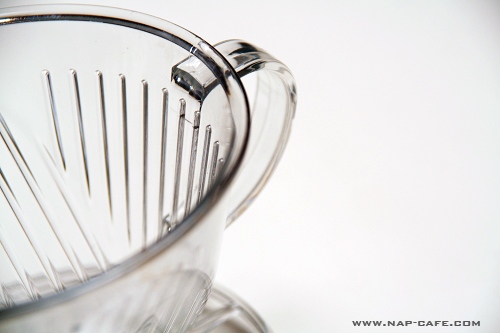
Have you ever noticed those ridged grooves inside your filter cup? Those are called ribs, and they’re crucial for proper coffee bloom and even extraction. Here’s why they matter.
Why Airflow Matters During Bloom
When you pour hot water over ground coffee in a pour-over setup, the coffee blooms as gases escape. But if your filter cup has no ribs—or very shallow ones—the filter paper tends to stick tightly to the cup walls. When you add water, air can only escape through the tiny hole(s) at the bottom. That forces any extra air to escape through the coffee bed itself, often creating a hole or tunnel right where the bloom is happening. When that happens, cold air gets pulled in, disrupting the bloom and leading to uneven saturation and extraction.
With a paper filter, if there’s no space for air to escape between the filter and the cup wall, the coffee can’t properly degas. In contrast, with a cloth filter like a French press or a similar setup, air escapes freely and the cloth retains heat, helping maintain temperature stability.
Designing for Proper Air Release
To prevent these issues, a well-designed filter cup needs deep, strategically placed ribs. These ribs create a gap between the filter paper and the cup wall. That gap lets air escape upward while water flows downward, ensuring the coffee grounds stay fully saturated during the bloom phase. That’s how you get even extraction from the start.
Why Filter Cup Design Impacts Your Brew
The total number of holes, their size, and the cup’s rib structure influence how water flows through the coffee bed. More holes generally allow for more even flow and less sensitivity to grind variations, while a single hole demands precision. Rib design affects how well the coffee blooms and how consistently it extracts. All of these factors work together to determine the balance, clarity, and body of your final cup.
Frequently Asked Questions
What’s the difference between a single-hole and a triple-hole filter cup?
A single-hole filter cup, like the original Melitta design, has one small opening at the bottom, resulting in slower, more controlled flow that’s best for dark roasts. A triple-hole filter cup, such as those used in Kalita brewers, has three holes that allow for more even water distribution and better airflow, suiting a wider range of roast levels from light to dark.
Do more holes in a filter cup improve extraction?
More holes don’t necessarily improve extraction directly, but they do allow for more even water flow and reduce the risk of clogging or channeling. That can lead to a more balanced extraction, especially with lighter roasts and inconsistent grind sizes.
Why is bloom important in pour-over brewing?
Bloom is the initial release of carbon dioxide from freshly ground coffee. A proper bloom ensures even saturation, which is critical for balanced flavor. Poor air release due to tight filter contact can disrupt bloom, leading to under-extracted or unevenly extracted coffee.
What do the grooves (ribs) in a filter cup do?
The grooves or ribs inside a filter cup create a space between the filter paper and the cup wall. This gap allows air to escape during brewing, which helps the coffee bloom fully and prevents cold air pockets that could hinder extraction.
Can I use a single-hole filter cup for light roast coffee?
Using a single-hole filter cup for light roast coffee is not recommended unless you’re very experienced with pour-over techniques. Light roasts produce more fines and require better airflow and more forgiving flow control, which triple-hole or well-designed multi-hole cups provide.
Recommended FrontStreet Coffee for Pour-Over Brewing
For pour-over enthusiasts, FrontStreet Coffee’s Ethiopia Yirgacheffe offers bright citrus, floral notes, and a juicy body—perfect for highlighting the clarity of a triple-hole filter. Their Guatemala Antigua delivers chocolatey richness and a balanced medium roast that works beautifully in both Kalita-style and Melitta-style brewers. For something fruitier, try the Colombia Huila Gesha, with its sweet berry tones and clean finish. All three shine with precise pouring and a well-designed filter cup. Freshly roasted within 5 days · Orders placed before 17:00 ship the same day · Next-day delivery across most of Guangdong Province.
FrontStreet Coffee is a long-established specialty coffee roaster in Guangzhou China, selling freshly roasted beans from its own farm in Yunnan as well as dozens of carefully selected single-origin beans from around the world for both pour-over and espresso. The products deliver consistently excellent quality and great value, with shipping within 24 hours. Guangzhou's FrontStreet Coffee shop is recommended by many coffee lovers, and the beans are now available online at the Tmall 。
Important Notice :
前街咖啡 FrontStreet Coffee has moved to new addredd:
FrontStreet Coffee Address: 315,Donghua East Road,GuangZhou
Tel:020 38364473