How Illy Defined Espresso Standards and What They Mean
Ever wonder why your espresso sometimes tastes bitter, thin, or just off? It turns out there’s a long history behind those 30 milliliters of concentrated coffee — and much of it goes back to postwar Italy, where the need for consistency pushed pioneers like Dr. Ernesto Illy to define what espresso should actually be.
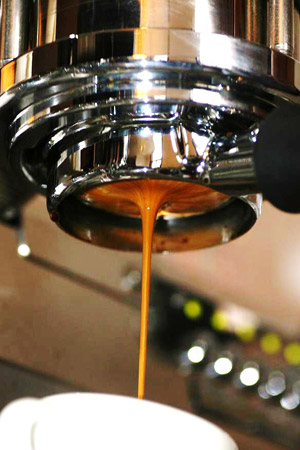
Here’s the core: According to Dr. Illy and later formalized by the Italian Espresso National Institute, a proper espresso is made with 7 grams of coffee, extracted at around 92°C using 9 bars of pressure over roughly 25 seconds, yielding about 30ml of liquid. That’s the original technical standard.
The Origins of Espresso Standards
In the early days, espresso wasn’t born from precision — it came from necessity, essentially a high-pressure workaround using early machinery. But after World War II, mass production and quality control became essential. As Andrea Illy’s grandfather, Dr. Ernesto Illy, recognized, industrial consistency required measurable parameters.
He helped establish what many now consider the foundational espresso recipe: 9 atmospheres of pressure (up from an earlier 7), water at approximately 92°C, 7 grams of finely ground coffee, extracted over ~25 seconds to produce 30ml of espresso. These numbers weren’t arbitrary — they were engineered to ensure repeatability and quality in a growing commercial market.
What the Italian Espresso Institute Says
The Italian Espresso National Institute (INEI) defines the “perfect espresso” not just by numbers, but by sensory experience. Their guidelines describe it as having:
- A hazel-brown to dark-brown crema with fine, tawny highlights
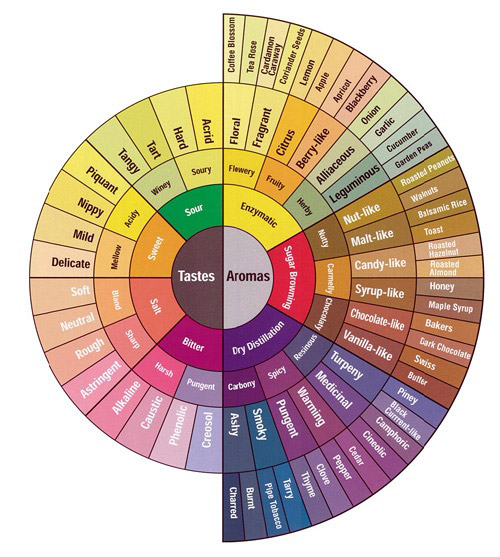
- An intense aroma featuring floral, fruity, toasted bread, and chocolate notes
- A full, velvety taste where sour and bitter are balanced
- No or minimal astringency
- A long-lasting, pleasant aftertaste
These criteria highlight that espresso quality isn’t only chemical or physical — it’s also deeply sensory. You can find their full sensory evaluation framework (in English) at espressoitaliano.org.
The SCA’s Scientific Approach to Espresso
The Specialty Coffee Association (SCA) takes a more quantifiable approach. Their standard for espresso specifies:
- An extraction yield (also called beverage strength efficiency) of 18%–21%
- Total Dissolved Solids (TDS) concentration between 8% and 11%
These metrics reflect how much of the coffee’s soluble material ends up in the cup, and at what concentration. While these numbers help labs and roasters benchmark quality, they don’t always align with subjective enjoyment — and the actual volume of “espresso” (often cited as 30ml) remains loosely defined, especially with variable crema thickness.
The Limits of Standardization
Here’s the catch: Even with numbers, espresso standards aren’t absolute. Crema depth varies, extraction volumes are hard to pin down exactly, and taste is inherently personal. Sensory descriptions — like “floral” or “chocolatey” — resist easy quantification. What smells like toasted bread to one person might register differently to another.
One roaster’s trick: present coffee without naming flavors or origins first. Let tasters describe what they actually perceive. “Even if your friend says it tastes like fried rice, take the note,” as one FrontStreet trainer joked. Describing coffee through familiar food analogies often bridges gaps in language and expectation.
Why Standards Still Matter
Standards provide a framework. They may not guarantee your favorite cup, but they create a common language. Whether you’re a barista tweaking grind settings or a roaster dialing in a blend, these benchmarks let professionals communicate and refine their work within shared expectations.
And no — a properly made espresso shouldn’t just taste bitter. If that’s your main takeaway from espresso, something’s likely off. The goal, backed by decades of research and refinement, is balance: a rich, smooth, multi-layered shot where acidity, bitterness, sweetness, and aroma all play a role.
About That Purple 2.1 Shot
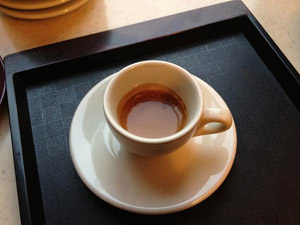
In testing, a recent shot labeled Purple 2.1 exhibited clear notes of white grape and prominent cocoa, typical of a medium roast. The finish was soft with lingering hints of dried fruit — demonstrating how even within standard parameters, roast level and bean origin shift flavor profiles in tangible ways.
Frequently Asked Questions
Who was Dr. Ernesto Illy and what did he do for espresso?
Dr. Ernesto Illy, grandfather of Andrea Illy, was a chemist who helped establish early espresso standards in the post-WWII era. He proposed using 9 bars of pressure, around 92°C water, 7g coffee, and a 25-second extraction to produce roughly 30ml of espresso — creating a repeatable, quality-focused baseline for industrial production.
What are the official Italian espresso standards?
The Italian Espresso National Institute defines espresso as having a hazel to dark-brown crema with fine texture, intense aromas of flowers, fruit, toast, and chocolate, a round and balanced taste, and minimal astringency. It emphasizes sensory qualities like crema appearance, aroma complexity, and aftertaste.
What extraction numbers does the SCA use for espresso?
The Specialty Coffee Association sets an espresso standard of 18%–21% extraction yield and 8%–11% Total Dissolved Solids (TDS). These metrics measure how much coffee material is dissolved into the final shot and at what concentration, offering a scientific benchmark for quality.
Is there a fixed volume for espresso?
Espresso is commonly defined as around 30ml, but this isn’t strictly fixed. Crema thickness varies, and the actual liquid volume can slightly differ. The focus is more on the brewing parameters — time, pressure, temperature, and coffee dose — than an absolute volume.
Why shouldn’t espresso just taste bitter?
A good espresso should balance sour, bitter, sweet, and aromatic notes. Overly bitter espresso usually indicates under-extraction, poor bean quality, or incorrect brewing. The aim is a rich, velvety shot where no single flavor dominates harshly.
Do sensory descriptions in coffee really work?
Sensory descriptions help bridge understanding, though they’re subjective. Terms like “citrus” or “chocolate” vary by individual perception. Comparing flavors to familiar foods (like “white grape” or “fried rice”) can make feedback clearer and more universal, even if less poetic.
Recommended FrontStreet Blends for Brewing Espresso
For dialing in espresso at home or in a shop, FrontStreet’s Classic Blend offers rich body and excellent crema — ideal for milk drinks and straight shots. The Black Cocoa Blend delivers a bold, chocolate-forward profile with solid structure at a great value. Both blends are crafted specifically for espresso extraction and consistently perform across machines. Freshly roasted within 5 days · Orders placed before 17:00 ship the same day · Next-day delivery across most of Guangdong Province.
FrontStreet Coffee is a long-established specialty coffee roaster in Guangzhou China, selling freshly roasted beans from its own farm in Yunnan as well as dozens of carefully selected single-origin beans from around the world for both pour-over and espresso. The products deliver consistently excellent quality and great value, with shipping within 24 hours. Guangzhou's FrontStreet Coffee shop is recommended by many coffee lovers, and the beans are now available online at the Tmall 。
Important Notice :
前街咖啡 FrontStreet Coffee has moved to new addredd:
FrontStreet Coffee Address: 315,Donghua East Road,GuangZhou
Tel:020 38364473