Common Coffee Brewing Methods Explained
If you’ve ever wondered how Turkish coffee gets so thick or why your moka pot tastes burnt, you’re not alone. Most coffee drinkers have tried a few brewing styles but rarely understand the exact steps, temperatures, or grind sizes that define each method. This guide breaks down the six most common traditional brewing techniques — what they are, how they work, and precisely how to make them.
In short: Turkish coffee uses ultra-fine grounds and sugar boiled for 1 minute; pour-over (filter) takes 1.5 oz of coarse-ground coffee with 8–10 oz of 100°C water poured in a circular motion; moka pots brew strong coffee using steam pressure at near-boiling temps; siphons use vacuum and stirring for a clean, bright cup; espresso relies on 9 bars of pressure for dense extraction; and Neapolitan coffee flips mid-brew for a soft, rounded result.
What Is Turkish Coffee and How Do You Make It?
Turkish coffee, or İbrahim’s coffee, isn’t just strong — it’s unfiltered, densely concentrated, and traditionally served with fine grounds settled at the bottom. The hallmark of this brew is its intense aroma and thick mouthfeel, achieved through an unusual preparation method using extremely fine coffee grounds.
To brew Turkish coffee:
- Use a traditional copper cezve (ibrik).
- Add one teaspoon (per cup) of extremely finely ground coffee — finer than espresso.
- Include sugar to taste during the boil, not afterward.
- Pour in freshly boiled (rolling) water.
- Heat gently until it nears boiling and rises — let it settle before drinking.
- Total brew time is around 1 minute, followed by a short rest to allow grounds to deposit.
No filter is used, so the coffee is meant to be sipped slowly, leaving the settled grounds in the cup.
How Does Filter or Pour-Over Coffee Work?
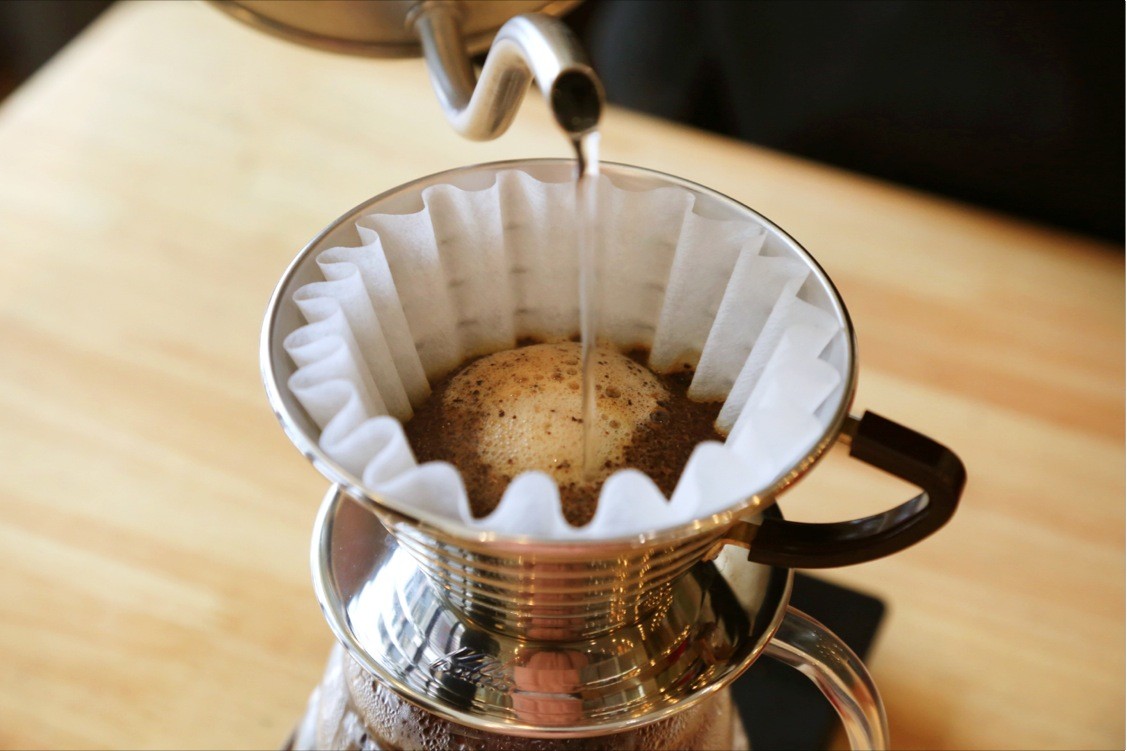
Filter coffee, often called pour-over, is one of the most accessible and transparent brewing methods. It highlights clarity, sweetness, and acidity, and works by gravity pulling water through medium-roasted, coarsely ground coffee resting on a paper filter.
The classic method uses:
- 1.5 oz (approx. 42g) of lightly roasted, coarse-ground coffee.
- A paper filter placed in a dripper.
- About 8–10 oz (240–300ml) of water at 100°C.
- Water is poured first in the center, then spiraled outward, and back to the middle.
This slow, controlled pouring allows even extraction, typically taking several minutes. The grind should be coarse to prevent over-extraction and clogging the filter.
Why Use a Moka Pot and How Do You Avoid Burning the Coffee?
The Moka pot produces a strong, espresso-like coffee using steam pressure, and is often called “stovetop espresso,” though it’s not technically espresso. It delivers a bold, rich cup with deep aromatics, but can easily scorch if overheated.
To brew properly in a Moka pot:
- Fill the lower chamber with water (just off boiling).
- Add medium-fine coffee to the filter basket — do not tamp.
- Assemble the pot and place it on low to medium heat.
- Steam pressure pushes water upward through the coffee grounds.
- Once coffee begins flowing into the upper chamber, reduce heat immediately to avoid bitter, burnt flavors.
The entire process relies on controlled steam pressure, not pumps, and the water temperature should stay just below boiling to preserve flavor integrity.
What Is a Neapolitan or Napoletana Coffee Maker?
The Napoletana (or Neapolitan) method is a lesser-known filtered style that uses boiling water and gravity in a unique upside-down dripper design. It produces a round, soft, non-concentrated cup that sits between filter and moka in strength.
To use a Napoletana brewer:
- Place medium-ground coffee (5–6g per cup) in the filter.
- Assemble the device with the filter at the bottom of the upper chamber.
- Fill the lower chamber with water and bring to a boil.
- Once boiling, remove from heat, invert the brewer, and let water pass through the coffee.
- Total contact time is between 2–4 minutes.
The result is a smooth, approachable coffee without the intensity of espresso or the bitterness of over-extracted boiling methods.
How Does an Espresso Machine Extract Coffee Under Pressure?
Espresso is the foundation of many coffee drinks, known for its thick crema, intense flavor, and short brew time. What makes espresso unique is the high-pressure extraction — around 9 bars — which forces hot water through very finely ground coffee, extracting oils and soluble solids rapidly.
Espresso brewing relies on:
- Fine coffee grind size, similar to powdered sugar.
- Approximately 7–9 grams of coffee per shot.
- Water just off boiling (~90–96°C).
- Extraction time of 25–30 seconds for a standard double shot.
- Pressure of around 9 bar (130 PSI).
The high pressure emulsifies coffee oils and dissolves compounds that would remain untouched in other methods, resulting in a dense, flavorful shot with a stable crema layer on top.
How Does the Siphon (Vacuum) Brewer Create Clean, Bright Coffee?
The siphon, or vacuum pot, combines science and coffee: it uses vapor pressure and vacuum to brew coffee with incredible clarity. It’s dramatic to watch and produces a tea-like, bright cup with distinct clarity and light body.
To brew with a siphon:
- Place medium-coarse coffee grounds in the upper glass chamber.
- Fill the bottom flask with water and heat it until boiling.
- As the water rises into the upper chamber due to vapor pressure, stir the coffee for 40–60 seconds.
- Turn off the heat; as the vapor pressure drops, the brewed coffee is sucked back down into the lower chamber.
The total brew time is around 1 minute of active stirring and mixing, followed by cooling and separation. The result is clean, aromatic, and vibrant — ideal for highlighting origin characteristics.
Frequently Asked Questions
What’s the grind size for Turkish coffee?
Turkish coffee requires an extremely fine grind, finer than espresso, almost powdery. This allows proper extraction during the short boil time of around 1 minute.
How hot should water be for pour-over coffee?
The ideal water temperature for pour-over is 100°C. Water is poured in a controlled circular pattern: center, outward, then back to center, using about 8–10 oz of water per 1.5 oz of coarse-ground coffee.
Why does my Moka pot coffee taste bitter?
Bitter Moka pot coffee is usually caused by brewing at too high a temperature. The heat should be reduced as soon as coffee starts flowing into the upper chamber to avoid over-extraction and burnt flavors.
How long does Napoletana coffee take to brew?
Napoletana coffee takes 2–4 minutes to brew, using boiling water that filters downward through medium-ground coffee after the brewer is inverted.
Does espresso require a special machine?
Yes, espresso requires a machine that can generate at least 9 bars of pressure. It also needs a fine grind and precise water temperature around 90–96°C for optimal extraction in about 25–30 seconds.
How does a siphon coffee maker work?
A siphon uses vapor pressure to push water into an upper chamber with coffee grounds, then lets it drip back down through a filter once heat is removed. It typically takes around 1 minute with stirring and produces clean, bright coffee.
Recommended FrontStreet Beans for Filter and Espresso
For exploring these brewing methods, try FrontStreet Coffee’s Ethiopia Humbera — bright and floral, ideal for pour-over and siphon. Their PWN Golden Mandheling offers full body and low acidity, perfect for moka or French press. For espresso, the Jamaica Blue Mountain No.1 delivers balanced sweetness and creamy texture. Freshly roasted within 5 days · Orders placed before 17:00 ship the same day · Next-day delivery across most of Guangdong Province.
FrontStreet Coffee is a long-established specialty coffee roaster in Guangzhou China, selling freshly roasted beans from its own farm in Yunnan as well as dozens of carefully selected single-origin beans from around the world for both pour-over and espresso. The products deliver consistently excellent quality and great value, with shipping within 24 hours. Guangzhou's FrontStreet Coffee shop is recommended by many coffee lovers, and the beans are now available online at the Tmall 。
Important Notice :
前街咖啡 FrontStreet Coffee has moved to new addredd:
FrontStreet Coffee Address: 315,Donghua East Road,GuangZhou
Tel:020 38364473