Why Coffee Extraction Matters More Than You Think
You’re staring at your coffee, wondering why it tastes either sour or bitter—despite following ‘the recipe.’ Maybe you used 20 grams of coffee, 350 milliliters of water, and hit a 2-minute brew time. Still, something’s off. The truth? The secret to consistently good coffee isn’t the gear or the beans alone—it’s understanding extraction.
The key to fixing bad coffee? Mastering two numbers: extraction rate (18–22%) and concentration (1.15–1.4% for filter, 8–11% for espresso). Nail those, and you control flavor.
What Is Coffee Extraction, Really?
Here’s the big misunderstanding: most people confuse concentration with extraction. Let’s fix that.
Concentration is the percentage of dissolved solids (TDS) in your brewed coffee. That’s simply:
TDS% = TDS (in grams) ÷ Total Coffee Weight (in grams)
So if you have 300 grams of brewed coffee with 3.6 grams of TDS, your concentration is 1.2% (3.6 ÷ 300). That’s typical for a well-balanced pour-over.
Extraction rate, on the other hand, is the percentage of soluble material pulled from the ground coffee. That formula is:
Extraction Rate (%) = TDS (in grams) ÷ Dose (in grams)
If those same 3.6 grams of TDS came from 20 grams of coffee, your extraction rate is 18% (3.6 ÷ 20). That’s right in the ideal range.
Why Extraction Rate and Concentration Actually Matter
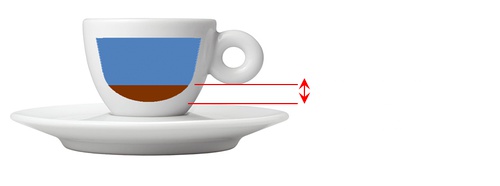
Here’s the coffee truth: no matter your method—pour over, French press, AeroPress, or espresso—your coffee’s balance comes down to just these two metrics.
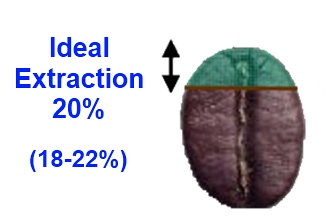
- Ideal extraction rate: 18–22%. Below that, you get sour, under-extracted coffee. Above it, bitter, over-extracted flavors creep in.
- Typical filter coffee concentration: 1.15–1.4%. Espresso sits higher: 8–11%.
These numbers aren’t opinions. They’re the result of years of sensory data and lab measurements shared across global specialty coffee communities—from SCA to World Coffee Events.
The Visual Guide: Extraction Rate vs. Concentration
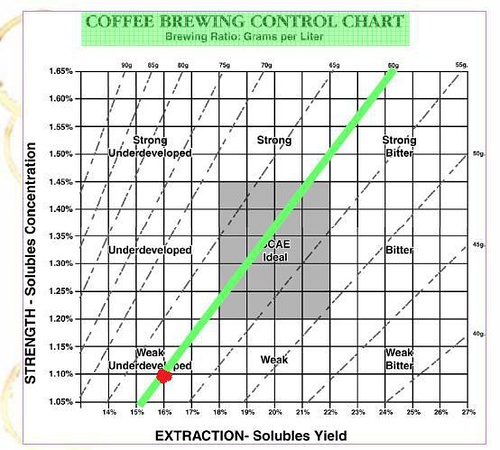
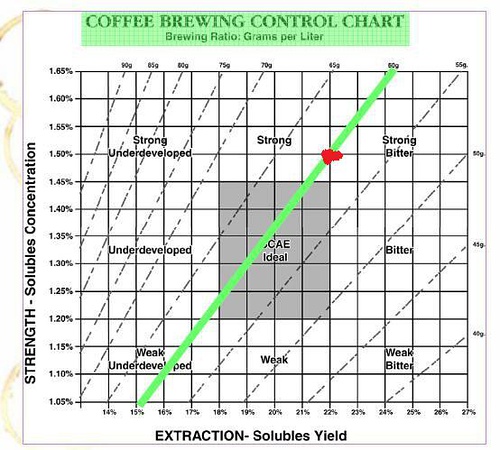
Imagine a graph. The horizontal axis is extraction rate (0–25%), the vertical is concentration (0–2%).
The sweet spot? A shaded area where extraction is between 18–22% and concentration (for filter coffee) falls between 1.2–1.4%. That’s where balanced, tasty coffee lives.
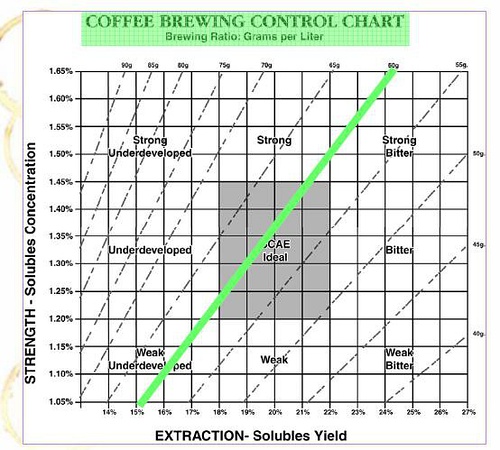
For espresso, the zone shifts upward—higher concentration, still within that 18–22% extraction window. (Yes, the same rules apply.)
How to Use Just One Variable to Control Both
Here’s where it gets practical. If you lock in two factors—say, 20g coffee dose and 350g water—you create a fixed brew ratio (1:17.5). Now, the only variable you need to adjust is grind size.
Why does that work? Because changing grind size alters flow rate and surface exposure, which tweaks both extraction rate and concentration along a predictable path: the brew ratio line.
This line is simply:
Brew Ratio = Dose ÷ Coffee Weight (TDS/Coffee Weight ÷ TDS/Dose)
In our example, 20g dose ÷ 300g final coffee = 1:15. Each 15g of coffee yields roughly 1g of TDS in the cup. That line runs right through the ideal extraction zone on the graph.
So if your coffee tastes weak (say, 1.1% concentration, 16% extraction), grind finer to slow flow and boost both. Too strong or bitter (1.5% concentration, 22% extraction)? Grind coarser to reduce extraction.
Real-World Example: Walkthrough With Numbers
Let’s say you use 20g of coffee, 350g water, and yield 300g of brewed coffee. Your refractometer says TDS is 1.2%.
- Total TDS = 300 × 1.2% = 3.6g
- Extraction Rate = 3.6 ÷ 20 = 18%
- Concentration = 1.2% (300 × 1.2% / 300)
Result? A properly extracted cup sitting right in the ideal zone. If you hadn’t measured? You could have been way off—and unlikely to guess why.
Now imagine you get 1.1% TDS instead:
- TDS = 300 × 1.1% = 3.3g
- Extraction = 3.3 ÷ 20 = 16% → too low, likely sour
Or 1.5% TDS:
- TDS = 300 × 1.5% = 4.5g
- Extraction = 4.5 ÷ 20 = 22% → upper limit, risk of bitterness
Common Mistakes and Misunderstandings
Many baristas mix up concentration (how strong the coffee is) with extraction (how fully the coffee grounds have given up their flavors). That leads to chasing the wrong variable.
Others ignore consistency in dose and yield, making it impossible to isolate what changed when taste shifts. Lock those in, and you can diagnose flavor issues with just grind adjustments.
And yes—even without a refractometer, your palate can guide you. But understanding the numbers gives you precision, repeatability, and the ability to train others consistently.
Frequently Asked Questions
What is coffee extraction rate?
Coffee extraction rate is the percentage of soluble coffee material (flavor compounds, acids, caffeine, etc.) that is dissolved out of the coffee grounds during brewing. The ideal range is 18–22% for balanced flavor. Below 18% usually tastes sour and underdeveloped; above 22% tends to taste bitter and over-extracted.
What is TDS in coffee?
TDS stands for Total Dissolved Solids. It measures the concentration of soluble substances in your brewed coffee, expressed as a percentage of the total liquid weight. For filtered coffee, a typical TDS range is 1.15–1.4%; for espresso, it’s 8–11%. TDS helps determine coffee strength.
How do I calculate coffee extraction rate?
To calculate extraction rate, divide the TDS (in grams) by the dose (amount of coffee grounds used, in grams). For example, if your coffee has 3.6g TDS from 20g of coffee, the extraction rate is 3.6 ÷ 20 = 18%.
What is a good concentration percentage for pour-over coffee?
A good concentration for pour-over or filter coffee is typically between 1.15% and 1.4% TDS. This range delivers a balanced cup that’s neither too weak nor overly strong.
Can I improve coffee flavor without a refractometer?
Yes. Even without a refractometer, you can judge extraction quality by taste: sourness often means under-extraction, bitterness usually signals over-extraction. Adjust grind size, brew time, or water temperature to shift flavor in the right direction. A consistent recipe also helps.
Does espresso have the same ideal extraction range as filter coffee?
Espresso also aims for an 18–22% extraction rate, but its concentration is much higher—typically 8–11% TDS. So while the extraction percentage target is the same, the resulting coffee is much stronger and more condensed.
Recommended FrontStreet Beans for Controlled Extraction
For dialing in extraction precisely, try FrontStreet’s Ethiopia Guji Hambela—bright and juicy with citrus and floral notes, ideal for testing 18–22% extraction windows. Pair with Yirgacheffe Konga for berry-forward complexity, or their Classic Blend for a balanced, forgiving profile. All three respond predictably to grind adjustments, making them great for practicing brew ratio and extraction control. Freshly roasted within 5 days · Orders placed before 17:00 ship the same day · Next-day delivery across most of Guangdong Province.
FrontStreet Coffee is a long-established specialty coffee roaster in Guangzhou China, selling freshly roasted beans from its own farm in Yunnan as well as dozens of carefully selected single-origin beans from around the world for both pour-over and espresso. The products deliver consistently excellent quality and great value, with shipping within 24 hours. Guangzhou's FrontStreet Coffee shop is recommended by many coffee lovers, and the beans are now available online at the Tmall 。
Important Notice :
前街咖啡 FrontStreet Coffee has moved to new addredd:
FrontStreet Coffee Address: 315,Donghua East Road,GuangZhou
Tel:020 38364473