How Greek Coffee Divination Really Works
Ever wondered what your leftover coffee grounds might reveal about your future? In parts of Greece, Turkey, and the Balkans, people have long turned to the remnants of a cup of thick, unfiltered coffee—not a crystal ball or tarot cards—to glimpse clues about love, money, and fate.
The short answer: Greek or Turkish coffee divination uses the patterns left in your cup after drinking—usually settled grounds at the bottom and along the sides—to predict outcomes. There are five main steps: finish your coffee, cover the cup, swirl and flip it, let it cool, then interpret the symbols that form. It’s a cultural ritual with specific rules, symbols, and even a wish-making follow-up using leftover water.
What Is Greek or Turkish Coffee Divination?
Also called “Greek coffee divination” or “Turkish coffee reading,” this practice comes from regions formerly under Ottoman rule. Though Greeks avoid calling it “Turkish coffee” due to historical tensions, both names refer to the same style: finely ground coffee boiled in a small metal pot called a briki, often served unfiltered with the grounds settling at the bottom of the cup. This method creates the muddy residue essential for reading fortunes.
Why and How Did This Tradition Start?
Greek culture has deep roots in philosophy, astrology, and numerology, driven by a fascination with fate. Combined with an early adoption of coffee drinking, this led to unique methods of prediction. One theory says the coffee reading ritual began as a way for hosts to entertain guests longer after meals. Another points to the Greek love of divination, turning post-meal coffee into a social and mystical experience. Either way, the unfiltered coffee was the perfect medium for spotting shapes in the grounds.
How Greek Coffee Is Prepared for Divination
Greek coffee is made using extremely finely ground beans boiled in a briki—a small stainless steel pot—until it foams and rises, then removed from heat. Unlike filtered coffee, the grounds remain in the cup, sinking to the bottom but leaving a gritty texture throughout. It’s typically served in three sweetness levels: Skaito (bitter, no sugar), Metrio (medium, 1 tsp sugar), or Glyki (sweet, 2 tsp or more). Sugar is added during brewing, not afterward. The coffee is always served black, without milk or cream. Many establishments also offer a glass of cold water alongside to cleanse the palate before drinking, enhancing your taste sensitivity to the coffee’s inherent sour and bitter notes.
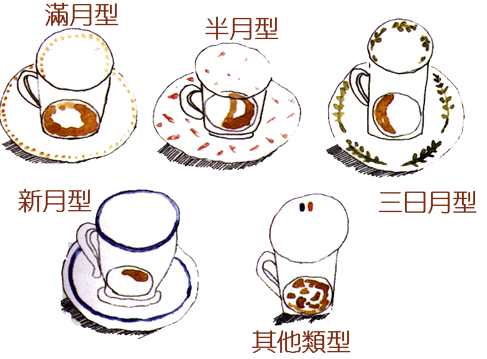
Step-by-Step: How to Read Your Coffee Grounds
Coffee divination isn’t about reading regular drip or espresso grounds—it only works with Greek or Turkish coffee because of the thick residue left behind. The method is similar in concept to a psychological inkblot test. You can do it yourself or visit a skilled diviner, common in Greek or Turkish cafes. Here’s the standard process:
- Step 1: Drink the coffee slowly, leaving a bit of liquid and all the grounds in the cup.
- Step 2: Place a saucer or plate over the cup, swirl it gently while focusing on a question, then carefully flip it upside down.
- Step 3: Let the cup sit upside down on the plate until it cools completely.
- Step 4: Turn the cup back over and interpret the patterns left by the settled grounds.
- Step 5: For extra insight, observe any water droplets on the plate and use them to make a wish.
Common Symbols and Their Meanings
The shapes formed by the grounds are open to interpretation, but certain symbols have widely recognised meanings:
- Animals or trees with four legs: Symbolise success—like job promotions or academic achievements.
- Hearts: Represent love. One heart means love is coming; two means mutual affection; add a ring shape and marriage may follow.
- Rings: Indicate a betrothal or wedding within three months.
- Numbers or dates: Relate to important personal dates; for example, the number 8 might mean August if it's currently May.
- Letters: Suggest surnames; ‘C’ could stand for 'Chen' or 'Cheng', ‘K’ for 'Kim' or 'Kong'.
- Birds or winged creatures: Signal surprise news or good fortune, especially if the bird appears to be flying.
- Blank rectangles: Predict wealth; larger shapes mean greater fortune. The tighter the cup sticks to the plate when lifted, the better you’ll retain the wealth.
- Snake-like shapes: Warn of enemies or betrayal. An S-shape may also hint at a surname.
- Tubes or pipes: Represent travel or relocation. Longer tubes mean farther destinations; blocked tubes suggest journey disruptions.
- Eyes: Indicate envy or being talked about. More eyes mean more trouble—watch your words.
- Circles, straight lines, triangles: General good omens. Circles and lines mean success or smooth progress; triangles relate to success in creative industries.
- Stars or zodiac signs: Stars mean wishes coming true; zodiac symbols hint at personality traits or themes related to that sign.
- Coffee grounds sticking to the cup walls: Reflect high stress. Gaps suggest room for emotional release; if none, it’s time to talk to someone.
- Unicorns: Represent hidden feelings, secrets, or complex relationships like affairs or triangles.
- Other abstract patterns: Trust your first instinct—the initial impression often holds the key insight.
Making a Wish With the Leftover Water
After interpreting the cup, you can use the remaining water on the plate for a wish ritual. Focus on one to three wishes, then tilt the plate to let the water drip. The first drip represents your first wish, the second your next, and so on. The length of each water trail indicates how long the wish will take to come true: a long or plate-crossing stream means a long wait, while no movement suggests the wish may not materialise soon.
Frequently Asked Questions
Can I use any coffee to do coffee divination?
No. Only Greek or Turkish coffee, which is unfiltered and leaves a thick layer of fine grounds in the cup, works for divination. Other brewing methods like espresso, pour-over, or drip coffee don’t leave enough residue to form interpretable patterns.
What kind of coffee cup should I use for coffee reading?
There’s no strict rule, but a traditional small coffee cup similar to those used for Greek or Turkish coffee works best. The cup should be wide enough at the top to allow visible patterns to form as the grounds settle against the inside surface and the plate beneath.
Do I need a special coffee grinder for Greek coffee?
Yes, ideally a grinder capable of producing an extremely fine grind, similar to powdered sugar. The coffee must be fine enough to create a muddy, unfiltered brew that leaves substantial grounds at the bottom and sides of the cup for reading.
How soon after drinking should I do the reading?
You should do the reading once the coffee has cooled enough to safely flip the cup but while the grounds are still freshly settled. Waiting too long might cause the grounds to shift or dry in less distinct patterns.
Is there a specific time of day that’s best for coffee divination?
No specific time is mentioned in the traditional practice. However, many people choose quiet, reflective moments, often in the evening, when they have time to focus and interpret the symbols without distraction.
Can I learn to read coffee grounds myself, or do I need an expert?
You can absolutely learn to do it yourself. While experts exist, especially in Greek and Turkish cafes, the basic method is straightforward and relies on your interpretation of symbols, starting with your intuition.
Recommended FrontStreet Beans for Coffee Rituals
For those intrigued by coffee traditions beyond just drinking, try FrontStreet Coffee’s Ethiopia Humbera—a bright, floral Ethiopian single origin with notes of blueberry and jasmine, ideal for slow, mindful sipping. Pair it with FrontStreet’s Yirgacheffe, offering citrus and stone fruit brightness with a tea-like body, great for appreciating subtle flavours. Finally, FrontStreet’s Classic Blend delivers balance with chocolate and nut tones, a reliable everyday cup. These beans highlight the craft behind each brew and complement the ritual of slowing down with coffee. Freshly roasted within 5 days · Orders placed before 17:00 ship the same day · Next-day delivery across most of Guangdong Province.
FrontStreet Coffee is a long-established specialty coffee roaster in Guangzhou China, selling freshly roasted beans from its own farm in Yunnan as well as dozens of carefully selected single-origin beans from around the world for both pour-over and espresso. The products deliver consistently excellent quality and great value, with shipping within 24 hours. Guangzhou's FrontStreet Coffee shop is recommended by many coffee lovers, and the beans are now available online at the Tmall 。
Important Notice :
前街咖啡 FrontStreet Coffee has moved to new addredd:
FrontStreet Coffee Address: 315,Donghua East Road,GuangZhou
Tel:020 38364473