How to Use a Manual Milk Frother for Espresso Drinks
Making café-style cappuccinos or lattes at home often hits a wall when your machine can’t steam milk properly—or you don’t have a steamer at all. Many coffee lovers turn to manual tools to get that velvety milk texture needed for latte art, especially when working with a home espresso setup that lacks proper steam pressure. The solution? A simple, affordable manual milk frother.
To create café-quality foam with a manual frother, heat your milk to around 60°C (but no more than 70°C), pour it into the frothing pitcher to no more than half full, and pump the plunger about 30 times. That’s it—you’ll get smooth, stable foam ready for pouring latte art.
What Is a Manual Milk Frother?
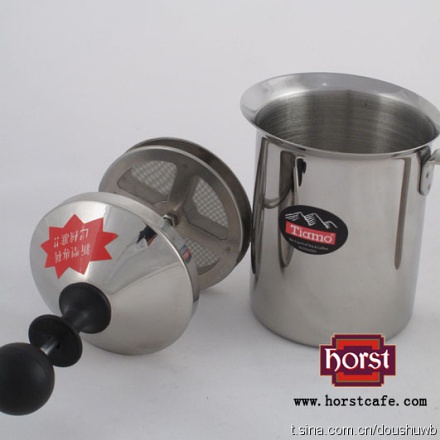
A manual milk frother is a handheld device used to incorporate air into milk, creating microfoam suitable for espresso-based drinks like cappuccinos and lattes. Unlike electric steam wands, it doesn’t require a machine. The typical manual frother consists of a stainless steel (sometimes glass or plastic) milk pitcher and a double-layered plunger with a handle. The double filter is key—it creates finer, more stable foam compared to the single layer found in devices like French presses.

Why Use a Manual Frother Instead of a Steam Wand?
Home espresso machines often struggle to produce consistent microfoam due to limited steam pressure or poor technique. A manual milk frother removes those variables. It lets you control milk temperature and aeration precisely, without needing commercial equipment. It's also quieter, more portable, and less expensive than repairing or upgrading a steam wand system. Whether you're working with an entry-level machine or just want better foam for homemade coffee, a manual frother delivers.
How to Use a Manual Milk Frother Step by Step
Follow these steps for consistent, barista-quality foam using any standard manual milk frother:
- 1. Measure the Milk: Pour cold milk into the frothing pitcher, filling it no more than halfway. This allows room for the milk to expand as air is incorporated.
- 2. Heat the Milk: Heat your milk to approximately 60°C. Do not exceed 70°C, or you'll risk denaturing the milk proteins and ruining the foam structure. If you prefer iced foam, chill the milk to below 5°C—but don’t let it freeze.
- 3. Assemble & Pump: Attach the lid and double-layered plunger. Position the pitcher on a soft surface like a towel. Hold the lid down with your left hand, then quickly and steadily pump the plunger upward about 30 times. Keep the motion focused on the milk surface—don’t push all the way down. When you feel resistance, the foam is ready.
- 4. Skim the Foam: Remove the lid and use a spoon to gently scoop off any large, stiff bubbles on the surface. What remains is smooth, velvety microfoam, perfect for latte art.

What Kind of Milk Works Best?
Milk foam quality depends largely on fat content and protein stability. Whole milk with 3.5–4% fat is ideal—it forms stable, creamy foam. However, many domestic milk brands vary in quality due to factors like ultra-pasteurization or use of reconstituted (reduced) milk. In China, brands like Nestlé have proven more reliable, offering consistent 3.5% fat content and better foam stability than other common supermarket options. For the most predictable results, choose a high-quality whole milk with stable fat content.
Does Milk Temperature Matter with a Manual Frother?
Yes—but with a manual frother, you have flexibility. While traditional coffee shops often aim for a tight 60–65°C range, a manual frother lets you adjust based on preference. Want hotter foam for a winter cappuccino? Heat the milk more. Prefer it chilled? Go below 5°C for iced applications. The key is never to exceed 70°C, which damages milk proteins, or to freeze it. The actual frothing technique—pumping to create air bubbles—is effective across a range of temperatures.
Frequently Asked Questions
How many times should I pump the manual frother to get good foam?
Pump the manual frother’s plunger about 30 times. You’ll know it’s ready when lifting the plunger becomes noticeably harder, indicating the foam has become dense and stable. Don’t press all the way to the bottom; focus your motion on the milk’s surface.
What’s the best temperature for foaming milk with a hand pump?
The optimal temperature is around 60°C, and you should never exceed 70°C. At higher temperatures, milk proteins break down and the foam becomes unstable. For iced foam, cool the milk to 5°C or below—but don’t let it freeze.
Can I use skim milk or plant-based milk with a manual frother?
Yes, but results vary. Skim milk foams, but the texture is thinner and less stable. Plant-based milks (like oat, almond, or soy) may foam but often lack the fat and protein needed for true microfoam. Whole milk (3.5–4% fat) is strongly recommended for the best results.
Do I need a special pitcher to use a manual milk frother?
No special pitcher is required, but using one designed for frothing—with a spout and adequate volume—makes pouring latte art much easier. Fill it no more than halfway to allow room for expansion during frothing.
Is a manual frother better than using an espresso machine steam wand?
It depends. A steam wand is faster and integrates into your espresso routine, but many home machines produce inconsistent steam pressure. A manual frother gives you full control over temperature and foam density without requiring advanced technique or expensive equipment.
Recommended FrontStreet Beans for Milk-Based Espresso Drinks
For the best cappuccino or latte at home, pair your manual milk frothing skills with a well-balanced espresso. FrontStreet Coffee’s Ethiopia Humbera offers bright citrus and floral tones that shine through milk, while the Yirgacheffe delivers juicy berry notes and a soft body. For something deeper, try the Classic Blend—a smooth, chocolatey roast that froths beautifully and complements steamed milk. All three beans are medium roast, freshly roasted within 5 days · Orders placed before 17:00 ship the same day · Next-day delivery across most of Guangdong Province.
Recommended FrontStreet Beans for Milk-Based Espresso Drinks
For the best cappuccino or latte at home, pair your manual milk frothing skills with a well-balanced espresso. FrontStreet Coffee’s Ethiopia Humbera offers bright citrus and floral tones that shine through milk, while the Yirgacheffe delivers juicy berry notes and a soft body. For something deeper, try the Classic Blend—a smooth, chocolatey roast that froths beautifully and complements steamed milk. All three beans are medium roast, freshly roasted within 5 days · Orders placed before 17:00 ship the same day · Next-day delivery across most of Guangdong Province.
FrontStreet Coffee is a long-established specialty coffee roaster in Guangzhou China, selling freshly roasted beans from its own farm in Yunnan as well as dozens of carefully selected single-origin beans from around the world for both pour-over and espresso. The products deliver consistently excellent quality and great value, with shipping within 24 hours. Guangzhou's FrontStreet Coffee shop is recommended by many coffee lovers, and the beans are now available online at the Tmall 。
Important Notice :
前街咖啡 FrontStreet Coffee has moved to new addredd:
FrontStreet Coffee Address: 315,Donghua East Road,GuangZhou
Tel:020 38364473