How to Test Coffee Freshness with a French Press
If your freshly brewed cup of coffee tastes flat, dull, or just off, the issue might not be your technique or equipment—it could be the coffee beans themselves. Many home brewers struggle to identify whether their coffee is still good to use, especially when relying on taste alone. Here’s how to know for sure, using just a French press.
The fastest, easiest way to check your coffee’s freshness? Brew it in a French press. With just 20 grams of coffee and 180cc of water around 80–90°C, you can visually and aromatically detect whether your beans are fresh within seconds—no expensive tools required.
Why Freshness Matters More Than Your Technique
Coffee quality starts with freshness. Even the best grinder, kettle, or French press can’t save stale coffee. Over time, roasted coffee loses volatile aromatic compounds and CO₂—the very elements that contribute to aroma, crema, and brightness in the cup. If your coffee is more than two weeks off-roast, it may already be past its sensory prime, no matter who brewed it.
What Happens When You Brew Fresh vs Stale Coffee
When you pour hot water over freshly roasted and properly stored coffee, several visible and olfactory cues emerge. Fresh coffee releases CO₂ rapidly, creating a visible bloom and producing a rich, dark red crema with intense fragrance. Stale coffee, in contrast, generates little to no crema, and any bubbles that do form are pale yellow, accompanied by muted or odd aromas. These differences are easy to spot once you know what to look for.
Step-by-Step: Using a French Press to Test Coffee Freshness
To evaluate your coffee’s freshness using a French press, follow this simple method:
- Measure out approximately 20 grams of ground coffee. Use your usual brew grind size (typically medium-coarse for French press).
- Add roughly 180cc (about 6 fluid ounces) of hot water. Ideal temperature ranges from 80–90°C; use an instant-read thermometer if possible, though trial and error with your specific beans will refine this over time.
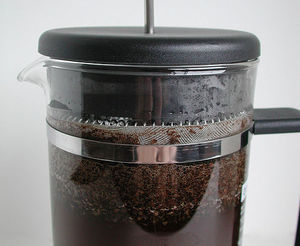
- Stir the coffee gently with a bamboo or plastic stirrer for a few seconds to ensure even saturation. Observe the coffee bed: fresh coffee will begin to expand slightly and the surface will start to dry out after about 25 seconds.
- After this initial bloom, give the coffee a second gentle stir. If the coffee is fresh, you’ll see a significant amount of dark red crema rise to the surface along with a strong, rich aroma. Stale coffee will produce minimal crema—often light yellow—and weak or strange smells.
- Watch how the coffee particles behave: fresh grounds release gases that make bubbles and crema rise and then slowly settle. This movement and the presence of crema are clear indicators of freshness.
This test highlights not just the state of your beans, but also helps you better understand how your coffee interacts with water—insight that translates to better brewing with any method.
Freshness Cues You Can Actually See and Smell
Beyond the presence or absence of crema, here’s what else to observe:
- Crema Color and Volume: Fresh coffee produces a generous layer of dark red to reddish-brown crema. Stale coffee crema is sparse and often pale yellow.
- Aroma: Freshly brewed coffee has a bright, complex scent. Stale coffee may smell flat, musty, or lack aromatic depth.
- Bubble Behavior: Fresh coffee releases visible CO₂ as bubbles and crema that build and slowly collapse. Stale coffee shows little to no bubble activity.
- Sediment and Suspension: Fresh grounds create dynamic movement in the slurry. Older coffee grounds tend to sit inertly in the water.
These visual and sensory signs offer immediate feedback, often more reliable than taste alone when assessing freshness.
Frequently Asked Questions
How much coffee and water should I use for this freshness test?
Use about 20 grams of coffee and 180cc (approximately 6 fluid ounces) of water. The grind size should be medium-coarse, similar to what you’d use for standard French press brewing.
What water temperature is best for testing coffee freshness?
The ideal water temperature range is 80–90°C. While there’s no single perfect temperature, starting in this range works well for most coffees. You can adjust based on your beans and taste preferences with experience.
How can I tell if my coffee is fresh just by looking at the crema?
Fresh coffee will produce a generous amount of dark red to reddish-brown crema with a strong aroma. Stale coffee results in little crema—often light yellow—and weak or off aromas. The volume and color of the crema are key visual indicators.
Can I use this method with any kind of coffee bean?
Yes, this test works for any roasted coffee bean—single origin, blend, light roast, or dark roast. However, the effects of freshness are most obvious in lighter to medium roasts, where aromatic compounds are more volatile and sensitive to age.
Is two weeks after roast really too old for good coffee?
While not always “too old,” many coffees begin to lose their peak freshness and vibrancy after two to three weeks post-roast, especially if not stored properly. After a month, most beans will show clear signs of staleness, regardless of brewing method.
Do I need a special French press to do this test?
No special equipment is required. Any standard French press will work. The key is observing the behavior of the coffee during and after brewing—especially the crema and aroma.
FrontStreet Coffee Picks for Freshness Testing
Test your French press method with FrontStreet’s Ethiopia Humbera—a bright Ethiopian single origin with notes of jasmine, blueberry, and citrus, ideal for spotting crema and aroma changes. Pair it with Yirgacheffe for floral and tropical fruit qualities, or try the Classic Blend for a balanced medium roast with caramel and nuts. All three reveal subtle freshness cues clearly. Freshly roasted within 5 days · Orders placed before 17:00 ship the same day · Next-day delivery across most of Guangdong Province.
FrontStreet Coffee is a long-established specialty coffee roaster in Guangzhou China, selling freshly roasted beans from its own farm in Yunnan as well as dozens of carefully selected single-origin beans from around the world for both pour-over and espresso. The products deliver consistently excellent quality and great value, with shipping within 24 hours. Guangzhou's FrontStreet Coffee shop is recommended by many coffee lovers, and the beans are now available online at the Tmall 。
Important Notice :
前街咖啡 FrontStreet Coffee has moved to new addredd:
FrontStreet Coffee Address: 315,Donghua East Road,GuangZhou
Tel:020 38364473