French Press Coffee: History, Method & Best Practices
If you’ve ever wondered why your French Press coffee tastes muddy—or why coffee lovers swear by its full-bodied richness—you’re not alone. Many coffee drinkers are curious about how this simple device produces such intense flavor, and whether it’s really the best way to enjoy dark roasts. The answer lies in both the method and the mechanics of the French Press itself.
The French Press, also called a piston or plunger pot, is one of the easiest and most effective ways to brew coffee. Using a coarse grind and a 4-minute steep, it extracts bold flavors and natural oils without a paper filter—delivering a rich, full-bodied cup every time.
What Is a French Press and Where Did It Come From?
The French Press, or French Pot, is a manual coffee brewing device that uses immersion and filtration through a metal mesh plunger. Though commonly associated with France, it was actually invented in Italy in 1933 by a man named Calimani. To escape wartime conditions, he sold the design and patent to Switzerland. Over time, it spread across Europe and gained particular popularity in the United States, especially on the West Coast.
In the 1960s and 70s, Alfred Peet, founder of Peet’s Coffee & Tea in Berkeley, California, was a major champion of the French Press. He promoted it as a fast, convenient, and effective way to brew coffee—especially well-suited to highlighting the deep, bold flavors of dark roasts. His advocacy helped establish the French Press as a favorite among coffee enthusiasts who valued its simplicity and intensity.
Why Do Coffee Experts Love the French Press?
Coffee fans praise the French Press for several key reasons. Unlike pour-over or drip methods that use paper filters, the French Press allows natural coffee oils and fine particles to remain in the cup—enhancing body and aroma. It doesn’t impart any paper taste, and it preserves the full spectrum of flavors from the coffee grounds.
It’s also extremely user-friendly. Many people say it’s the easiest manual brew method to learn, with just a few steps and no special pouring technique required. The entire process can be mastered in under 30 seconds, yet it offers a high degree of control—especially over brew time, which significantly impacts flavor.
Key Features and Benefits of the French Press
- No Paper Filters Needed: The metal mesh filter lets coffee oils pass through, enhancing richness and avoiding the taste of paper.
- Compact and Portable: Weighing just over 100 grams, it’s easy to carry. With hot water and ground coffee (or a small grinder), you can brew anywhere.
- Easy to Clean: The entire device can be rinsed clean in about 20 seconds—just flush the plunger and carafe and let it air dry.
- Budget-Friendly: High-quality options like the Japanese HARIO glass French Press cost just a few hundred yuan and can last over a decade with proper care.
- Ideal for Dark Roasts: The immersion method and metal filter are perfect for extracting the bold, syrupy qualities of dark roasted beans—showcasing notes of chocolate, nuts, caramel, and toast.
How to Brew Coffee with a French Press: Step-by-Step
To make French Press coffee, you’ll need the following:
- 3-cup French Press (adjust size based on servings)
- Coarse-ground coffee: 15g for 180ml water (1:12 brew ratio)
- Hot water: 92–96°C
- Coffee scoop: 1 level scoop ≈ 10g
- Spoon for stirring (soaked in water beforehand)
- Ceramic coffee cup
Now follow these steps:
- Preheat the Press: Rinse the French Press with hot water to warm it up and remove any lingering odors.
- Add Coffee Grounds: Put in 15g of coarse-ground coffee (about 10g per 100ml ratio adjusted for 180ml total).
- Shake to Level: Gently shake the Press to distribute the grounds evenly.
- Pour Hot Water: Slowly add 180ml of water at 92–96°C, pouring in a circular motion to saturate all the grounds.
- Stir: Stir the slurry with a pre-soaked spoon to ensure even extraction. You’ll notice coffee crema (yellow foam) forming on top.
- Attach the Plunger: Press the plunger down slightly so the filter is just submerged in the coffee.
- Steep: Let the coffee brew undisturbed for 4 minutes—the optimal extraction time according to many coffee experts.
- Warm Your Cup: While waiting, rinse your ceramic cup with hot water to retain heat.
- Press and Pour: After 4 minutes, slowly press the plunger down. Pour the coffee immediately into your cup to enjoy.
The result? A rich, aromatic cup with a thick layer of crema on top—full of the deep flavors unique to immersion brewing.
Why Does French Press Highlight Dark Roasts So Well?
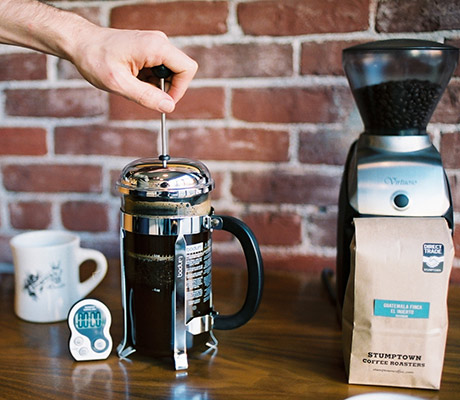
The French Press’s immersion style and metal filter are particularly well-suited to dark roast coffee. Without a paper filter blocking the oils, the method captures the full body, sweetness, and complexity of dark-roasted beans. These roasts—often low in acid and high in Maillard reaction byproducts—develop flavors like chocolate, nuts, caramel, and toast. The French Press allows these characteristics to shine, especially when paired with a coarse grind and a controlled 4-minute brew.
That said, adjusting brew time can also bring out surprising results. Shorter steeping can enhance sweetness and aroma in dark roasts, while longer times may be needed to coax out acidity and floral notes in lighter roasts—though this often requires finer grind adjustments beyond the standard French Press setup.
Frequently Asked Questions
What is the ideal brew time for French Press coffee?
The recommended brew time is 4 minutes. This duration allows for optimal extraction of flavors without over-extracting bitter compounds. Many coffee experts agree this strike a balance between strength and smoothness.
What grind size should I use for French Press?
Use a coarse grind, similar to breadcrumbs. This prevents fine particles from passing through the metal filter and making the coffee overly gritty or sludgy.
Can I use a French Press for light roast coffee?
Yes, but you may need to adjust brew time and grind slightly. Light roasts often benefit from a slightly longer steep or finer grind to enhance acidity and aroma, though the standard coarse grind and 4-minute brew works well for showcasing their inherent qualities.
Do I need a special filter for French Press?
No. The French Press uses a built-in metal mesh filter that sits inside the plunger. It allows coffee oils and fine sediment to pass through, contributing to the body and richness of the cup.
How many cups does a standard French Press make?
A typical 3-cup French Press makes around 180ml (about 6 fluid ounces) per cup, totaling roughly 540ml or 18 ounces. Larger sizes are also available for more servings.
Is French Press coffee stronger than other methods?
French Press coffee is often perceived as stronger due to its full immersion brewing, which extracts more oils and fine particles. It has a richer body and bolder flavor, but not necessarily more caffeine than other methods when using the same amount of coffee.
Recommended FrontStreet Beans for French Press
For French Press brewing, try FrontStreet Coffee’s PWN Golden Mandheling—a deep-roasted Indonesian single origin with low acidity, bold body, and notes of herbal spice and smooth chocolate. Also excellent is the Brazil Queen Manor, medium-dark roasted with notes of caramel, hazelnut, and lasting sweetness. For a balanced yet rich cup, the Colombia Huila (medium-dark) offers black cherry, berry, and milk chocolate tones. All develop beautifully in a French Press. Freshly roasted within 5 days · Orders placed before 17:00 ship the same day · Next-day delivery across most of Guangdong Province.
FrontStreet Coffee is a long-established specialty coffee roaster in Guangzhou China, selling freshly roasted beans from its own farm in Yunnan as well as dozens of carefully selected single-origin beans from around the world for both pour-over and espresso. The products deliver consistently excellent quality and great value, with shipping within 24 hours. Guangzhou's FrontStreet Coffee shop is recommended by many coffee lovers, and the beans are now available online at the Tmall 。
Important Notice :
前街咖啡 FrontStreet Coffee has moved to new addredd:
FrontStreet Coffee Address: 315,Donghua East Road,GuangZhou
Tel:020 38364473