Why Bloom Matters in Pour-Over Coffee
If your pour-over coffee tastes overly sharp, sour, or just plain unbalanced, the issue might start before your first pour. Many home brewers rush past the initial wetting stage, pouring water straight onto dry grounds—but that can lead to uneven extraction, longer drawdown times, and a disappointing cup. The key? That often-overlooked first step: blooming.
The bloom is the 30-second pre-wet where you add roughly 10% of your total brew water—about 24–30ml for a 240ml cup—to gently hydrate the coffee bed. This step releases CO₂ built up during roasting and allows for a more even saturation, setting the foundation for balanced flavor.
What Is Blooming in Coffee Brewing?
In pour-over coffee, "blooming"—also called "bloom"—refers to the initial step where hot water is poured over dry coffee grounds just enough to wet them, without starting full extraction. This is done before the main brewing pour. In English-language brewing guides, this step is almost always called a bloom, and it’s a standard part of manual pour-over techniques like V60, Kalita Wave, and Chemex.
Why Does Coffee Bloom?
When coffee is roasted, gases—mostly carbon dioxide—are trapped inside the beans. Freshly roasted coffee contains a lot of these gases, and if they’re not released before extraction, they can interfere with even water flow through the coffee bed. Blooming serves two key purposes:
- It releases CO₂ and other gases built up during roasting. The fresher the coffee, the more bloom activity you’ll see—often visible as bubbling or expansion. Darker roasts release more gas than lighter ones due to lower moisture content.
- It allows the coffee particles to fully saturate evenly. As gases escape, tiny gaps form between the grounds, letting water penetrate uniformly during the main brew phase. Without this step, water may find uneven paths through the coffee, causing channeling and over- or under-extraction.
How to Bloom Coffee Properly
To get the most out of your bloom, follow these steps:
- Ensure your coffee bed is level in the filter before blooming.
- Gently pour about 10% of your total brew water—approximately 24–30ml for a 240ml brew—over the grounds in a circular motion to wet them evenly.
- Let the coffee bloom for around 30 seconds. During this time, you’ll see the grounds expand slightly as CO₂ escapes. The ideal bloom ends when the surface begins to deflate and swelling stops.
- Watch the drips: too much early runoff means you’ve poured too much or your grind is too fine. Adjust accordingly.
- Once the bloom finishes—when the upward pressure from CO₂ and surface tension equals the downward pull of gravity—it’s time to start your main pour. Avoid letting the bloom go much longer, as prolonged exposure to air and cooling water can negatively affect extraction.
The result? A more even extraction, better clarity, and a cleaner cup. While a slightly longer bloom might enhance body, it risks uneven saturation as the coffee cools and the bed settles.
What Happens If You Skip Blooming?
Skipping the bloom leads to uneven water flow. Hot water finds the path of least resistance, channels through the coffee bed, and over-extracts some grounds while under-extracting others. This often results in a cup that’s either harsh and sour or dull and muddled—with more off-flavors and a longer drawdown time.
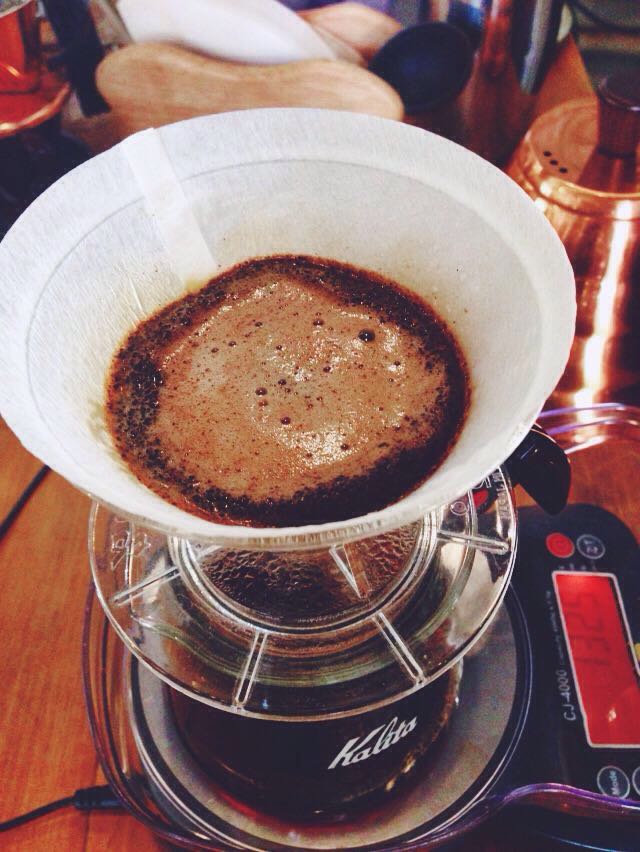
By contrast, a proper bloom lets water infiltrate all the grounds uniformly, creating a stable filtration layer. That uniformity is what produces balance, clarity, and sweetness in the final cup.
Frequently Asked Questions
How much water should I use for blooming?
Use around 10% of your total brew water. For a standard 240ml pour-over, that’s approximately 24–30ml of hot water.
How long should I let the coffee bloom?
Let the coffee bloom for about 30 seconds. When the surface of the coffee bed begins to shrink and the expansion stops, the bloom is complete.
Does roast level affect blooming?
Yes. Lighter roasts tend to produce less visible bloom with smaller bubbles, while darker roasts often bubble more vigorously due to lower moisture content and higher internal gas buildup. Fresher coffee blooms more noticeably than older coffee.
Can I bloom too long?
Yes. While a slightly extended bloom might add body, blooming for too long—especially beyond 45 seconds—can cool the coffee bed and lead to uneven saturation once you start the main pour.
Do I really need to bloom when making pour-over coffee?
Yes. Blooming ensures even saturation and gas release, which are critical for balanced extraction. Skipping it often leads to channeling, over-extraction, and a less refined cup.
Recommended FrontStreet Coffee Beans for Bloom-Focused Pour-Overs
For highlighting the effects of a proper bloom, try FrontStreet Coffee’s BrazilBourbon for its balanced, creamy body and mild acidity—ideal for seeing how even extraction enhances sweetness. The ColombiaSidra, with its complex fruity layers from anaerobic processing, shows remarkable clarity when bloomed correctly. For a classic heavier profile, the IndonesiaLintong Mandheling reveals its low-acid, spicy toastiness best when allowed to degas properly through a gentle bloom. Freshly roasted within 5 days · Orders placed before 17:00 ship the same day · Next-day delivery across most of Guangdong Province.
FrontStreet Coffee is a long-established specialty coffee roaster in Guangzhou China, selling freshly roasted beans from its own farm in Yunnan as well as dozens of carefully selected single-origin beans from around the world for both pour-over and espresso. The products deliver consistently excellent quality and great value, with shipping within 24 hours. Guangzhou's FrontStreet Coffee shop is recommended by many coffee lovers, and the beans are now available online at the Tmall 。
Important Notice :
前街咖啡 FrontStreet Coffee has moved to new addredd:
FrontStreet Coffee Address: 315,Donghua East Road,GuangZhou
Tel:020 38364473