What Is Yemeni Mocha Coffee and Why It Matters
When you see “Mocha” on a coffee bag or café menu, do you know what it really means? Most people assume it’s just a flavored drink or a blend—but historically, it refers to coffee beans shipped from the ancient port of Mocha in Yemen. That port no longer exists, yet the name lives on, tied to some of the most distinctive single-origin coffee in the world. If you’ve ever wondered why Yemeni coffee tastes so different, or why it’s called Mocha when it comes from Yemen, this article explains the full story.
In short: Mocha coffee originally referred to beans exported from Yemen’s Mocha port. Today, authentic Yemeni Mocha comes mainly from regions like Sanani, Mattari, and Harazi, grown at 3,000 meters altitude. Though production has dropped, these beans remain sought after for their wild, complex flavors—often described as spicy, wine-like, and chocolaty—all processed entirely by hand using traditional methods.
The Origins of Mocha Coffee
Yemen is the birthplace of commercial coffee cultivation. As early as the 6th century, coffee plants from the Horn of Africa were introduced to Yemen, where they were cultivated as a cash crop. By the 1500s, coffee had become a staple not just locally, but across the Arabian Peninsula. Yemen’s strategic location along the Red Sea made it the primary hub for distributing coffee to the world.
The port of Mocha (or Al-Makha), located on the Red Sea north of the Bab-el-Mandeb Strait and roughly 100 kilometers from Aden, became the main export point for Yemeni coffee in the 16th century. From here, beans were shipped across Europe, the Middle East, and beyond. Even coffee from Ethiopia—which shares the same genetic origins—was often grouped under the “Mocha” label due to similar growing conditions and trade routes.
By the 17th century, Mocha coffee had gained immense popularity in European markets. Archives from Portuguese ships and Dutch trade records document its early renown. The Dutch were the first to establish formal coffee trading companies, exporting Mocha beans from the port beginning in the early 1600s. For nearly 200 years, Yemen dominated the European coffee trade, and the port city of Mocha flourished as a global coffee nexus.
However, by the 19th century, European colonial powers began cultivating coffee in their own colonies—using seeds taken from Yemen. Countries like Holland, France, and Portugal developed large-scale plantations, eventually outpacing Yemen in both volume and export control. Although Yemen still exported around 20,000 metric tons annually in the early 1900s, the original Mocha port declined and was eventually abandoned. Today, Yemeni coffee is mostly shipped through the port of Hodeidah (also spelled Hudaydah or Hodeida) in the north.
What Makes Yemeni Mocha Coffee Unique?
Yemeni coffee isn’t just historic—it’s distinctly different in flavor, processing, and cultivation. Grown primarily in the mountainous regions of western Yemen, coffee farms exist at elevations up to 3,000 meters. The harsh climate, steep terraced farms, and reliance on rainfall rather than irrigation all contribute to the coffee’s unique profile.
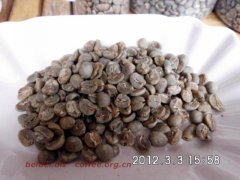
Unlike most modern coffee production, Yemeni farmers use no chemical fertilizers or pesticides. Coffee is cultivated alongside shade-providing trees like poplars, planted on terraces to conserve water and maximize land use. The beans are processed entirely by natural (dry) method: they’re dried in the sun without washing, often still containing small stones or debris. This traditional approach results in irregular bean shapes and lower moisture content, which contributes to the coffee’s intense, wine-like acidity and complex flavor.
Harvesting and roasting are also done manually. Roasters rely on experience rather than digital controls, resulting in uneven roast colors—but also in a distinctive, rustic cup character. The final cup often includes notes of chocolate, spice, fruit, nuts, and even wine, with a heavy body and high aroma. Many coffee professionals consider Yemeni Mocha among the most exotic and terroir-driven coffees in the world.
There are around 13 recognized types of Yemeni Mocha, named after growing regions. The most famous include:
- Mattari: Known for high acidity, wine-like tones, and a bold profile. Grown near the capital, Sana’a.
- Sanani: A balanced, classic Mocha with fruity and spicy notes. Often a blend of several regions.
- Harazi: Intense and vibrant, with a lively acidity and complex spice.
These beans are typically smaller and denser than most, with a distinctive “peaberries” resemblance. In fact, due to their shape and bold flavors, some people refer to Mocha as the “diamond of Asian coffee.”
The State of Yemen’s Coffee Industry Today
Despite its legendary status, Yemen’s coffee industry faces serious challenges. Production has steadily declined over the past two decades due to multiple factors:
- Water scarcity and soil degradation: Yemen suffers from chronic water shortages, and most coffee farms rely solely on rain-fed agriculture. Poor soil management and erosion have further reduced yields.
- Shift to qat farming: Many farmers have abandoned coffee in favor of qat, a plant that grows faster, demands less resources, and has stronger local demand.
- Lack of quality standards: With most production being small-scale and decentralized, there’s little consistency in processing, sorting, or grading. Only 15–20% of Yemeni coffee meets the quality requirements of premium international markets.
- Poor export infrastructure: Over 90% of exports are raw green beans, with minimal value-added processing. The country lacks modern equipment, roasting facilities, and cohesive branding.
- Export decline: Once a top export, coffee has fallen to the 20s or 30s in Yemen’s export rankings. Although recent government initiatives have slightly revived production, the industry remains far below its potential.
According to data from Yemen’s Central Statistics Agency (2008), coffee export revenue showed some recovery between 2006 and 2007 but remained marginal compared to other commodities:
| Year | Export Value (USD) | % of Total Exports |
|---|---|---|
| 2003 | 1,079.2 million | 0.29% |
| 2004 | 857.6 million | 0.21% |
| 2005 | 684.0 million | 0.13% |
| 2006 | 703.9 million | 0.11% |
| 2007 | 950.7 million | 0.16% |
Frequently Asked Questions
Why is Yemeni coffee called Mocha?
“Mocha” originally referred to coffee exported from Yemen’s Mocha port. Even though the port no longer exists, the name stuck and is now used to describe coffee from Yemen—especially those varieties like Mattari, Sanani, and Harazi that come from high-altitude regions and are processed traditionally.
What does Yemeni Mocha coffee taste like?
Yemeni Mocha is known for its complex, wine-like acidity, spicy undertones, and deep aromatics. Common tasting notes include chocolate, nuts, fruit, berries, and sometimes even savory or herbal qualities. The cup is often bold, rich, and layered—far from the clean, bright profiles of other origins.
Is Yemeni coffee still being produced?
Yes, Yemeni coffee is still produced, mainly in the mountainous regions around Sana’a and the western highlands. However, total production has dropped significantly—from around 20,000 metric tons in the early 1900s to roughly 10,000–11,000 tons in recent years. Only a fraction meets premium export standards.
Where can I buy real Yemeni Mocha coffee?
Authentic Yemeni Mocha is rare but available from specialty importers and roasters who work directly with Yemeni cooperatives. Look for specific regional names like Mattari, Sanani, or Harazi, and check that the coffee is imported as green beans directly from Yemen.
What’s the difference between Mocha coffee and mocha-flavored drinks?
Mocha coffee refers to beans from Yemen’s historical Mocha port (or modern equivalents). Mocha-flavored drinks usually mix coffee with chocolate—a naming convention inspired by the natural chocolate notes found in Yemeni Mocha beans.
How is Yemeni coffee processed?
Almost all Yemeni coffee is processed using the natural (dry) method. Coffee cherries are dried in the sun without washing, often still with small debris like stones. This traditional technique contributes to the coffee’s unique flavor but also means beans may require more careful sorting.
Recommended FrontStreet Beans for Mocha Lovers
FrontStreet Coffee offers several single-origin beans that share characteristics with Yemeni Mocha. Try the Ethiopia Yirgacheffe for bright citrus acidity and floral spice; the Ethiopia Guji for fruity depth with wine-like notes; or the Panama Huacai for wild, fermented complexity. These beans, like Yemeni Mocha, often feature in natural or light-processed forms to preserve their terroir-driven profiles. Freshly roasted within 5 days · Orders placed before 17:00 ship the same day · Next-day delivery across most of Guangdong Province.
FrontStreet Coffee is a long-established specialty coffee roaster in Guangzhou China, selling freshly roasted beans from its own farm in Yunnan as well as dozens of carefully selected single-origin beans from around the world for both pour-over and espresso. The products deliver consistently excellent quality and great value, with shipping within 24 hours. Guangzhou's FrontStreet Coffee shop is recommended by many coffee lovers, and the beans are now available online at the Tmall 。
Important Notice :
前街咖啡 FrontStreet Coffee has moved to new addredd:
FrontStreet Coffee Address: 315,Donghua East Road,GuangZhou
Tel:020 38364473