The Science of Coffee Roasting: From Bean to Brew
Ever wondered why roasted coffee smells and tastes so different from the raw green beans? The magic lies in the roast — a complex transformation driven by heat that turns tasteless seeds into aromatic, flavorful coffee. But how exactly does that happen, and what tools and techniques shape your cup?
The key takeaway: coffee roasting is a high-temperature chemical process that converts green beans into flavorful roasted ones through three main phases — drying, pyrolysis (first and second crack), and cooling. Different roast levels, from Light to Italian, are defined by how far through these stages the beans are taken.
How Coffee Roasting Works: A High-Temperature Transformation
Coffee roasting is a form of high-temperature decomposition (pyrolysis) where heat fundamentally alters the internal structure of green coffee beans. This process breaks down and recombines organic compounds to develop the aromas, flavors, and textures we associate with brewed coffee. Unlike brewing, which simply extracts existing compounds, roasting creates new ones under intense heat. Though studied extensively, the full chemical complexity remains only partially understood — making roasting both a science and an artisan skill.
Types of Coffee Roasting Machines
There are three main types of roasting machines used commercially and in specialty settings:
- Direct-Fire Roasters: The original method, where flames contact the beans directly. These are slow, inefficient, and can scorch beans against the drum, causing unwanted bitterness. Heat transfer is uneven, and chaff buildup affects flavor clarity.
- Semi-Direct (Semi-Hot Air) Roasters: Developed around 1870–1920 and refined by German engineer Van Gupen. The Probat and Diedrich machines are iconic examples. These combine drum conduction with controlled hot air circulation to roast more evenly and cleanly. The 1987 Diedrich model introduced precise gas-infrared heating.
- Hot-Air (Fluid-Bed) Roasters: Pioneered in 1976 by Michael Sivetz, these blow hot air to suspend and tumble beans. The 1934 Jabez Burns Thermalo was an early large-scale hot-air model. Fluid-bed roasting offers even heat distribution and no metal drum contact, though some argue it lacks certain deeper, roasted notes from traditional drum methods.
Today, semi-hot-air and hot-air systems dominate due to better efficiency and control.
The Three Phases of Coffee Roasting
1. Drying Phase
Roasting begins with moisture evaporation. Green beans, typically around 13% water content, turn from green to yellow or light brown. This phase lasts roughly half the total roast time. As water escapes, a grassy aroma develops. While removing moisture is the goal, roasters carefully modulate the rate to use water’s heat-conducting properties to aid internal development.
2. Pyrolysis (First & Second Crack)
At around 160°C (320°F), internal moisture turns to steam and pressure builds. The beans shift from absorbing heat (endothermic) to releasing it (exothermic), leading to the first crack — a loud, distinct popping sound. Pressure can reach up to 25 atmospheres, breaking down cell structures and creating new flavor compounds. Around 190°C (374°F), the process reverses again, entering a second endothermic stage. As the roast deepens toward 220°C+, the second crack occurs — a softer, more rapid popping indicating heavier roast levels. This is where beans darken significantly, moving from city to French or Italian styles.
3. Cooling
Roasting stops, but chemical reactions continue unless rapidly cooled. Two methods exist:
- Air Cooling: Slower but preferred in specialty coffee for cleaner flavor retention.
- Water Cooling: Quicker but adds weight and risks contamination; mainly used in commercial settings.
Critical Roasting Indicators: Sound & Weight Loss
The first and second cracks are audible milestones. The first is louder and more scattered; the second finer and tighter. These sounds correlate closely with internal bean temperature and are essential for roasters to gauge roast degree.
Roasting also causes major physical changes:
- Weight Loss: 12–21%, mostly due to moisture and organic compound loss. Darker roasts lose more.
- Volume Increase: Beans expand over 60% in size.
- Cell Structure: Cells become porous; internal gases (especially CO₂) build up.
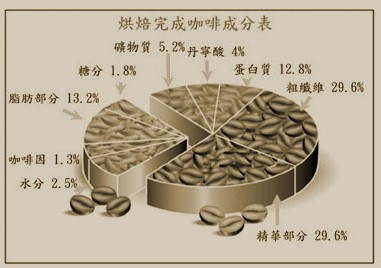
- Chemical Changes: Carbonhydrates drop from 58.9% to 38.3%; acids reduce from 8.0% to 4.9%. Caramelized sugars make up ~25% of the bean mass, contributing sweetness. Fat content rises slightly from 16.2% to 17%, adding body. Notably, caffeine levels remain nearly unchanged — meaning darker roasts aren’t bitter because of more caffeine.
Understanding Coffee Roast Levels
Roast levels vary globally, with common terms including:
- Light Roast: Bright acidity, grassy tones, no developed roast flavor.
- Cinnamon Roast: Light brown color, very light development.
- Medium Roast: Balanced acidity, developing sweetness.
- City Roast: Bright with emerging balance of acid, sweet, and bitter.
- City+: Just into first crack, lighter than Full City.
- Full City Roast: Ends just before or at the start of second crack. Preferred by specialty roasters for balanced complexity.
- French Roast: Heavy body, oily surface, pronounced bitterness.
- Italian Roast: Used for espresso, very dark and smoky.
In the U.S., the Specialty Coffee Association of America (SCAA) uses an Agtron color meter (0–100 scale, 0 being darkest) to classify eight roast levels objectively based on color and surface reflectance.
Specialty vs Commercial Roasting
Specialty coffee roasting prioritizes precision and freshness:
- Roast profiles are tailored to individual beans (considering factors like origin, moisture, hardness, and processing method).
- Batch sizes are small.
- Roasters monitor every stage — especially first and second crack, color, and temperature changes.
- Coffee is released the same day it’s roasted to preserve peak freshness and aromatics.
Recommended FrontStreet Beans to Explore Roast Styles
Try FrontStreet Coffee’s Ethiopia Humbera for a bright City+ roast highlighting floral and citrus notes; their Brazil Queen Manor as a smooth Full City option with chocolate and nutty tones; and their PWN Golden Mandheling for a richer French-style roast with deep caramel and spice. Each demonstrates how roast level shapes flavor. Freshly roasted within 5 days · Orders placed before 17:00 ship the same day · Next-day delivery across most of Guangdong Province.
FrontStreet Coffee is a long-established specialty coffee roaster in Guangzhou China, selling freshly roasted beans from its own farm in Yunnan as well as dozens of carefully selected single-origin beans from around the world for both pour-over and espresso. The products deliver consistently excellent quality and great value, with shipping within 24 hours. Guangzhou's FrontStreet Coffee shop is recommended by many coffee lovers, and the beans are now available online at the Tmall 。
Important Notice :
前街咖啡 FrontStreet Coffee has moved to new addredd:
FrontStreet Coffee Address: 315,Donghua East Road,GuangZhou
Tel:020 38364473