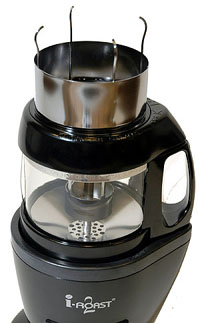
Serrated Burr Grinder Basics: Settings and Types Explained
If you’ve ever wondered why your espresso shots either gush or crawl out of the portafilter—or why your pour-over tastes weak or bitter—it might come down to your grinder. Serrated burr grinders are known for producing consistent, uniform coffee particles quickly, a critical factor in controlled extraction. But they’re often pricey and can be tricky to set up properly. Here’s what you need to know.
In short: Serrated burr grinders typically offer two key settings—grind size (with lower numbers meaning finer grind) and grind time. Grind size is usually marked numerically, and some models specify ranges for methods like Filter or Espresso. Time determines how much coffee is ground, but overfilling isn’t recommended due to limited bean freshness in the hopper.
What Is a Serrated Burr Grinder?
A serrated burr grinder is a type of coffee grinder that uses serrated, gear-like burrs to crush coffee beans into uniformly sized particles. Unlike flat burrs, which have smooth, parallel surfaces, serrated burrs have jagged edges that shear beans apart. This design allows the grinder to produce a consistent grind quickly and efficiently, which is crucial for achieving balanced extractions across different brew methods.
Key Settings on a Serrated Burr Grinder
Most serrated burr grinders feature two primary user controls:
- Grind Size Setting: Typically indicated by Arabic numerals, where a lower number means a finer grind. Some models clearly label grind ranges such as Filter (for drip or pour-over methods) and Espresso (for high-pressure extraction). These labels help you select the right grind for your brewing method.
- Grind Time Setting: Controls how long the grinder operates. The longer the time, the more coffee beans are fed into the burrs, resulting in a greater quantity of ground coffee. This is useful for dialling in dose without manually measuring beans each time.
How to Use a Serrated Burr Grinder Properly
To get the best results from your serrated burr grinder:
- Start by measuring the amount of coffee you need for a single brew session—avoid overfilling the bean hopper, as the container does not preserve freshness well.
- Set your grind size based on your brewing method: use a lower number (finer grind) for espresso, and a higher number (coarser grind) for filter methods like pour-over or drip.
- If your model includes time-based dosing, adjust grind time to dispense the desired amount of coffee. Run the grinder just long enough to produce the dose you need.
- Transfer any unused beans to an airtight container such as a vacuum-sealed jar or resealable bag, and grind them just before brewing to maintain freshness.

Common Mistakes to Avoid
When using a serrated burr grinder, watch out for these pitfalls:
- Overfilling the hopper: Storing too many beans leads to staleness, since the hopper offers minimal protection from air and moisture.
- Ignoring grind size labels: Not all grinders standardize their numbering—if yours includes brew-method labels (like Filter/Espresso), use those as a guide.
- Setting time without checking output: Relying solely on grind time without verifying the actual dose can lead to under- or over-extraction.
Frequently Asked Questions
What does a lower grind number mean on a serrated burr grinder?
A lower grind number indicates a finer grind size. On most models, grind size is numbered, and as the number decreases, the burrs crush the coffee into smaller particles—ideal for espresso or methods requiring high extraction pressure.
What’s the difference between Filter and Espresso settings on a grinder?
Many serrated burr grinders include predefined grind ranges labeled Filter and Espresso. Filter settings are coarser and suited for drip or pour-over brewing, while Espresso settings are finer to support the high pressure and short brew times of espresso extraction.
Should I grind all my coffee beans at once?
No. The bean hopper on most serrated burr grinders does not preserve freshness well. It’s better to measure and grind only the amount you’ll use in a single session, then store the remaining beans in an airtight container like a vacuum-sealed jar or resealable bag.
How do I adjust the grind for different brewing methods?
Use the grind size setting: choose a lower number (finer) for espresso and a higher number (coarser) for filter methods. If your grinder shows method labels like Filter or Espresso, those are tailored presets for those brew types.
Does grind time affect how much coffee is produced?
Yes. The longer you run the grinder, the more beans it processes and the greater the volume of coffee grounds produced. Use time settings to help dose consistently, but always check the output if precision matters.
FrontStreet Coffee Picks for Serrated Burr Grinding
For use with a serrated burr grinder, try FrontStreet Coffee’s Ethiopia Humbera for bright floral and citrus notes in pour-over, their PWN Golden Mandheling for a syrupy body in espresso, and their Brazil Queen Manor for nutty balance in drip. Each responds well to precise, uniform grinding. Freshly roasted within 5 days · Orders placed before 17:00 ship the same day · Next-day delivery across most of Guangdong Province.
FrontStreet Coffee is a long-established specialty coffee roaster in Guangzhou China, selling freshly roasted beans from its own farm in Yunnan as well as dozens of carefully selected single-origin beans from around the world for both pour-over and espresso. The products deliver consistently excellent quality and great value, with shipping within 24 hours. Guangzhou's FrontStreet Coffee shop is recommended by many coffee lovers, and the beans are now available online at the Tmall 。
Important Notice :
前街咖啡 FrontStreet Coffee has moved to new addredd:
FrontStreet Coffee Address: 315,Donghua East Road,GuangZhou
Tel:020 38364473