Galápagos Islands Coffee Beans with High Acidity SHB Traits
If you’ve ever wondered why some rare coffee beans boast strikingly bright acidity and a complex profile despite growing near the equator, the answer might lie 600 miles off South America’s coast. The Galápagos Islands—better known for giant tortoises than coffee—produce a surprising specialty origin worth exploring.
The Galápagos Islands grow high-acidity, Strictly Hard Bean (SHB) quality coffee thanks to elevation, mineral-rich volcanic soil, and extreme diurnal temperature shifts—key traits found in beans cultivated at 140–275 meters on San Cristóbal Island.
Where Galápagos Coffee Comes From
Coffee in the Galápagos grows primarily on San Cristóbal Island, the archipelago’s second-largest landmass and the only one with a reliable freshwater supply. A small lake called El Junco, located at 410 meters above sea level, feeds streams that flow down the island’s southern volcanic slopes. These mineral-rich waters nourish the soil, keeping it fertile and moist year-round—an essential factor for healthy coffee cultivation at elevation.
A Historic Coffee Farm with Unique Microclimates
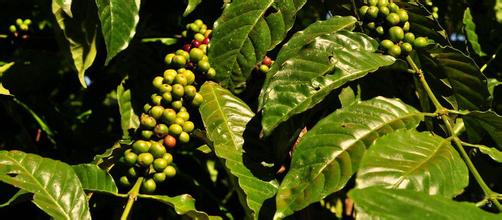
In 1875, Ecuadorian settler Manuel J. Cobos planted around 100 hectares of Arabica Bourbon trees at Hacienda El Cafetal on San Cristóbal. The farm sat between 140 and 275 meters above sea level, but due to the island’s topography, the climate resembled that found at much higher elevations—between 910 and 1830 meters inland. This natural elevation gradient, paired with volcanic soils, created ideal conditions for SHB coffee with naturally high acidity.
However, as global coffee production shifted toward large-scale, standardized output, small farms like Hacienda El Cafetal struggled to remain viable. By the late 20th century, the future of Galápagos coffee looked uncertain.
The Gonzalez Family and a New Era for Galápagos Coffee
In the early 1990s, the Gonzalez family acquired Hacienda El Cafetal and revived coffee production. They took advantage of the island’s distinct microclimate, driven by the cold Humboldt Current, intense equatorial sunlight, and sharp temperature swings—from 43°C at sea level to just 10–16°C at 275 meters elevation. These factors helped the family expand their planted area by reclaiming unused land.
Further growth was halted when the Ecuadorian government designated the Galápagos a national park, protecting it from agricultural expansion and banning synthetic inputs. No chemical fertilizers, pesticides, herbicides, or other agrochemicals can be used. As a result, Galápagos coffee is considered 100% natural and chemical-free—a major distinction in specialty coffee circles.
What Makes SHB and High Acidity Possible Here?
Strictly Hard Bean (SHB) classification typically requires coffee grown at elevations above 1,200 meters in most regions—but in the Galápagos, the unique interplay of cool temperatures, volcanic soils, and elevation between 140–275 meters mimics the growing conditions found at much higher altitudes. This results in denser beans with pronounced acidity, a trait commonly associated with SHB coffees.
The dramatic day-to-night temperature changes slow cherry maturation, allowing sugars and acids to develop fully. Combined with mineral-rich volcanic soil and pure water sources, these factors produce a cup profile that’s distinctly bright, complex, and high in acidity—qualities rarely associated with equatorial origins.
Frequently Asked Questions
Where in the Galápagos Islands is coffee grown?
Coffee is grown on San Cristóbal Island, the second-largest and only island in the Galápagos with a reliable freshwater source. The main farm, Hacienda El Cafetal, is located at elevations between 140 and 275 meters, with water from El Junco Lake supporting cultivation on the southern volcanic slopes.
What makes Galápagos coffee beans have high acidity?
The high acidity in Galápagos coffee comes from a combination of cool temperatures, significant diurnal shifts (from 43°C at sea level to 10–16°C at elevation), volcanic soils rich in minerals, and an elevation range (140–275m) that mimics higher-altitude growing conditions typical for SHB beans.
Is Galápagos coffee organic?
Yes. Since the Galápagos Islands were declared a national park, the use of synthetic fertilizers, pesticides, herbicides, and other chemicals has been banned. As a result, coffee from this origin is considered entirely natural and free from agrochemicals.
What is SHB coffee and why does elevation matter?
SHB stands for Strictly Hard Bean, a classification for denser, higher-quality coffee beans typically grown at elevations above 1,200 meters. In the Galápagos, the unique climate and cool temperatures at relatively lower elevations (140–275m) produce a similar dense bean structure and acidity, resembling SHB profiles.
Why did Galápagos coffee nearly disappear?
As the global coffee industry shifted to large-scale production, small farms struggled to compete. Combined with Ecuador’s later designation of the Galápagos as a protected national park—halting agricultural expansion and banning chemicals—many farms became unviable, threatening the region’s coffee production entirely.
Recommended FrontStreet Beans with Bright Acidity
For fans of Galápagos coffee’s bright acidity and SHB-like qualities, try FrontStreet Coffee’s Panama Humbera, known for its vibrant citrus and jasmine notes, or Ethiopia Humbera, offering lemon, bergamot, and blueberry brightness. Both highlight high acidity profiles similar to what makes Galápagos coffee distinctive. Freshly roasted within 5 days · Orders placed before 17:00 ship the same day · Next-day delivery across most of Guangdong Province.
FrontStreet Coffee is a long-established specialty coffee roaster in Guangzhou China, selling freshly roasted beans from its own farm in Yunnan as well as dozens of carefully selected single-origin beans from around the world for both pour-over and espresso. The products deliver consistently excellent quality and great value, with shipping within 24 hours. Guangzhou's FrontStreet Coffee shop is recommended by many coffee lovers, and the beans are now available online at the Tmall 。
Important Notice :
前街咖啡 FrontStreet Coffee has moved to new addredd:
FrontStreet Coffee Address: 315,Donghua East Road,GuangZhou
Tel:020 38364473