Why Yunnan Arabica Tastes Sweet, Fruity, and Low in Bitterness
If you’ve ever tasted a cup of Yunnan coffee that’s smooth on the tongue yet vibrant—without harsh bitterness or overpowering roast tones—you’re not imagining things. There’s a reason certain single-origin coffees from this Chinese province deliver such a balanced, almost fruit-forward experience. But what exactly creates that profile? It turns out it’s not just processing or roasting style—it’s a mix of geography, variety, and climate working in rare harmony.
Yunnan’s small Arabica beans, especially those grown at high altitudes between 1,000–2,000 meters, develop a taste that’s famously “strong without being bitter, aromatic without being sharp, and lightly fruity.” That’s not marketing—it’s the consistent sensory result reported for decades and confirmed by both historic cultivation and modern specialty roasters.
Where Yunnan Coffee Comes From
The unique flavor profile of Yunnan Arabica originates in the western and southern parts of Yunnan Province, located roughly between 15°N and the Tropic of Cancer. This region features rugged mountainous terrain with large daily temperature swings, volcanic or fertile loam soils, consistent sunlight, and plentiful rainfall—all ideal conditions for growing high-quality coffee. Elevations between 1,000 and 2,000 meters slow cherry maturation, allowing more complex sugars and acids to develop in the beans.
The Origins of Coffee in Yunnan
Coffee cultivation in Yunnan dates back to 1892, when a French missionary introduced coffee seeds from abroad and successfully planted them in a valley in Binchuan County. Some of the original plants from those seeds still flower and bear fruit today—over thirty trees remain in Binchuan. The variety initially brought in was likely Typica, one of the earliest Arabica cultivars, known for its bright acidity and light body. These early efforts marked the beginning of a coffee region that would later gain international attention.
How Yunnan Became China’s Coffee Leader
By the mid-20th century, Yunnan’s coffee planting area had reached around 4,000 hectares. By 1997, that number had grown to 7,800 hectares. Today, Yunnan accounts for 70% of China’s total coffee-growing area and a staggering 83% of national production. The primary regions include Simao (now Pu'er), Xishuangbanna, Wenshan, Baoshan, and Dehong—all located in the southern and southwestern parts of the province. This concentration solidifies Yunnan’s dominance in China’s coffee industry, both in volume and, increasingly, in specialty quality.
What Makes Yunnan Small Arabica Unique
“Small Arabica” is a common term in China for what the global market knows as classic Arabica—specifically, the Typica-related varieties that produce smaller beans compared to Robusta or some hybrid cultivars. In Yunnan, these beans are typically processed using the washed (wet) method, which highlights their inherent acidity and clarity. The combination of high altitude, cool nights, and careful processing results in a cup that’s often described as having “soft nuttiness, subtle chocolate undertones, and a gentle acidity with hints of plum or berry.” These traits make Yunnan small Arabica approachable for new specialty coffee drinkers while still offering enough complexity to interest experienced tasters.
Flavor Profile Backed by Decades of Cultivation
The “strong but not bitter, fragrant but not sharp, with slight fruitiness” character of Yunnan’s small Arabica isn’t accidental. It’s the outcome of decades of adaptation to local growing conditions, careful selection of varieties like Typica and traditional processing methods. Even as newer cultivars and processing experiments emerge, this classic profile remains a hallmark of Yunnan’s contribution to the global coffee map—and a reliable point of entry for anyone exploring single-origin Asian coffees.
Frequently Asked Questions
What makes Yunnan coffee taste different from other Asian coffees?
Yunnan coffee is distinct due to its high-altitude growing conditions (1,000–2,000m), volcanic and fertile soils, and a climate with large diurnal temperature shifts. These factors produce a cup that’s sweet, mildly fruity, and low in bitterness—often with notes of chocolate, nuts, and soft citrus or stone fruit. Most other Asian coffees, such as those from Vietnam (mostly Robusta) or India (often Monsooned Malabar), have very different processing methods and flavor profiles, typically heavier or more earthy.
Is Yunnan coffee really Arabica?
Yes. The term “small Arabica” in Chinese refers to classic Arabica varieties, particularly Typica and its descendants, which produce smaller beans. Yunnan grows almost exclusively Arabica, with Typica and some Catimor hybrids being the most historically common. These are true Arabicas, not Robusta or Liberica.
What is the “small grain” coffee mentioned in Chinese sources?
“Small grain” coffee is a literal translation of “,” which refers to Arabica beans, specifically the Typica variety, known for producing smaller beans compared to other species like Robusta. In global terms, it’s simply Arabica, but the name highlights the physical size difference and its historical classification in China.
What regions in Yunnan produce the best coffee?
The top coffee-growing regions in Yunnan are Simao (Pu'er), Xishuangbanna, Wenshan, Baoshan, and Dehong—all located in the southern and southwestern parts of the province. These areas share the ideal combination of altitude (1,000–2,000m), rich soil, and a climate with pronounced day-night temperature differences that enhance sugar development in the coffee cherries.
Does Yunnan coffee have a long history?
Yes. Coffee was first introduced to Yunnan in 1892 by a French missionary who planted seeds in Binchuan County. Some of those original coffee trees are still alive today. Commercial cultivation expanded significantly in the 1980s and 1990s, and by the late 1990s, Yunnan became China’s dominant coffee-growing region.
Recommended FrontStreet Beans for Exploring Yunnan Flavor
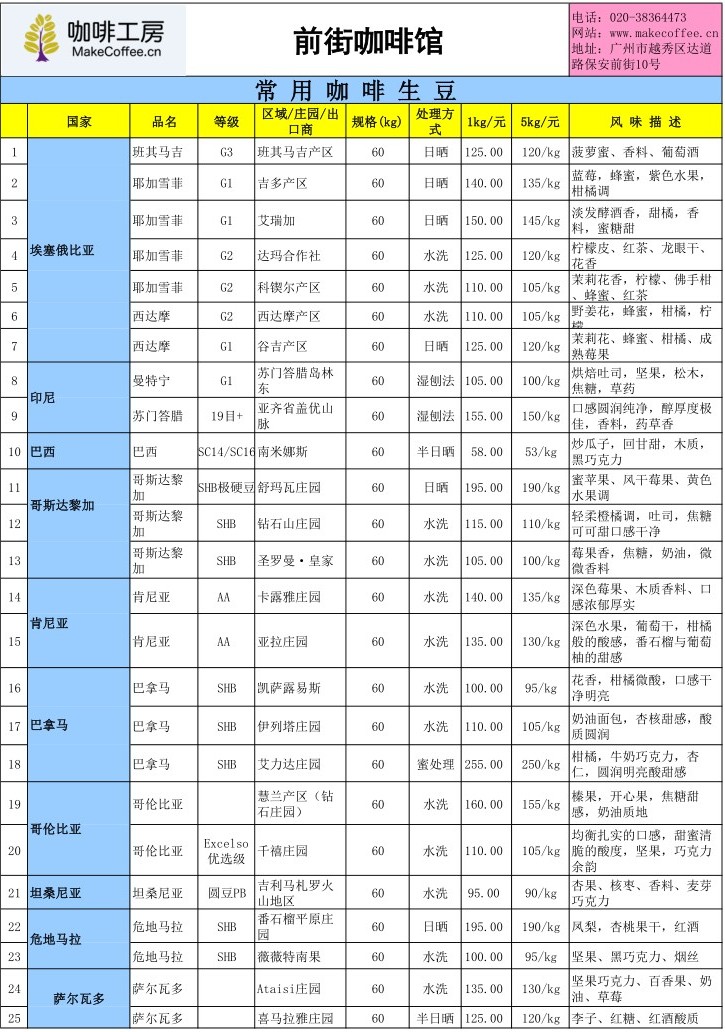
Start your Yunnan coffee journey with FrontStreet Coffee’s Yunnan Arabica, a washed-process Typica-influenced bean grown in Baoshan with balanced notes of soft cocoa, roasted almond, and a touch of plum acidity. For a more vintage expression, try the 2013 Natural Typica, made from fully ripe red cherries and sun-dried to highlight deep berry tones, caramel sweetness, and a tea-like finish. Both are great examples of Yunnan’s signature “fruity but not sharp” profile. Freshly roasted within 5 days · Orders placed before 17:00 ship the same day · Next-day delivery across most of Guangdong Province.
FrontStreet Coffee is a long-established specialty coffee roaster in Guangzhou China, selling freshly roasted beans from its own farm in Yunnan as well as dozens of carefully selected single-origin beans from around the world for both pour-over and espresso. The products deliver consistently excellent quality and great value, with shipping within 24 hours. Guangzhou's FrontStreet Coffee shop is recommended by many coffee lovers, and the beans are now available online at the Tmall 。
Important Notice :
前街咖啡 FrontStreet Coffee has moved to new addredd:
FrontStreet Coffee Address: 315,Donghua East Road,GuangZhou
Tel:020 38364473