How SCAA’s Coffee Cupping System Evaluates Specialty Coffee
If you’ve ever wondered how professional coffee tasters consistently evaluate coffee quality—beyond personal taste—this is how it’s done. The Specialty Coffee Association of America (SCAA) developed a rigorous, standardized cupping system used globally to assess coffee objectively. Whether you’re a roaster, barista, or curious enthusiast, understanding these methods sharpens your palate and gives you a professional lens on coffee flavor.
The SCAA cupping system evaluates coffee across 10 key attributes using a fixed brew ratio, precise grind size, and strict temperature control, with scores ranging from 6.00 (Good) to 9.75+ (Outstanding). Defects can deduct points, and the final score determines if a coffee meets specialty grade.
What Is the SCAA Cupping System?
The SCAA cupping system is a standardized methodology for evaluating coffee quality. Developed by the Specialty Coffee Association of America (now part of the SCA global body), it provides a consistent framework to assess aroma, flavor, acidity, body, and more. This system isn’t just for competitions—it’s a tool for roasters, buyers, and quality control specialists to communicate coffee characteristics clearly and fairly.
The goal is simple: ensure accurate, repeatable evaluations of coffee quality across different environments and tasters. While most cafes won’t use this exact method daily, the principles help anyone better understand and describe coffee flavor.
Required Tools and Setup
To perform an SCAA cupping, you need specific equipment and an ideal environment. The right setup ensures consistency and minimizes external interference during evaluation.
- Cupping Bowls or Cups: Use 5–6 oz Manhattan or ‘Rocks’ glasses (175–225 ml porcelain bowls also allowed). All cups must be identical in size, material, and cleanliness. A lid is optional but must be consistent if used.
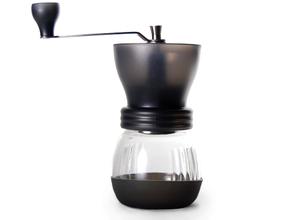
- Grinder: A burr grinder capable of producing a grind size where 70–75% of particles pass through a US Standard No. 20 sieve.
- Water Kettle: For pouring hot water directly onto grounds.
- Water Specs: Clean, unsoftened, non-distilled water with total dissolved solids (TDS) between 100–250 ppm (ideal: 125–175 ppm). Temperature should be around 200°F (93°C), adjusted for altitude.
- Other Essentials: Cupping spoons (long-handled), a timer, a scale, a thermometer, Agtron or similar colorimeter, a quiet room free from strong odors or distractions (no phones), good lighting, and a clean table.
Coffee Sample Preparation
Getting the coffee right is as critical as the method. Here’s how samples are prepared to SCAA standards.
Roast Level and Timing
Coffee must be roasted within 24 hours of cupping and rested for at least 8 hours. The target roast level is light to light-medium, measured with an Agtron colorimeter as follows: whole bean ~58, ground ~63, with an allowable variance of ±1 (standard range: 55–60 or SCAA Agtron #55). Roasting should take 8–12 minutes with no obvious scorching or tipping. Cool beans immediately with forced air (not water), then store in an airtight container once they reach room temperature (~75°F / 20°C). Avoid refrigeration.
Brew Ratio and Grind
Use 8.25 grams of coffee per 150 ml (5 oz) of water. This aligns with the middle of the “Golden Cup” standard. Adjust coffee dose within ±0.25 g to hit the target volume. Grind size should be slightly coarser than typical drip coffee—70–75% of particles must pass a US No. 20 sieve. Grind just before cupping and ensure each cup receives the same amount. Clean the grinder between origins. Dose, grind, and cover each sample immediately to preserve freshness. Prepare at least 5 cups per sample for consistency.
The Cupping Process
The actual cupping follows a strict sequence designed to evaluate different sensory attributes at optimal times.
Step 1: Dry Fragrance and Wet Aroma
Evaluate dry fragrance within 15 minutes of grinding by sniffing the ground coffee. After pouring 200°F (93°C) water, let it steep for 3–5 minutes without breaking the crust. Then, gently break the crust three times with a spoon while inhaling deeply through the spoon to assess wet aroma. Record scores for both dry and wet phases.
Step 2: Flavor, Aftertaste, Acidity, Body, and Balance
Once the coffee cools to around 160°F (71°C)—usually 8–10 minutes post-brew—begin tasting. Slurp the coffee forcefully to aerate it and assess flavor (the overall taste impression), aftertaste (how flavor lingers), acidity (brightness), body (mouthfeel), and balance (how well these elements harmonize). Repeat assessments as the coffee cools to around 140°F (60°C), noting changes. Score each attribute using the 16-point scale (0.25 increments from 6.00 to 9.75).
Step 3: Sweetness, Purity, and Uniformity
At or below room temperature (~100°F / 38°C), evaluate sweetness, purity (cleanliness of flavor with no off-notes), and uniformity (consistency across all cups). Each attribute is scored up to 5 points (total 10 points combined).
Step 4: Overall Impression and Defects
Finally, when the coffee reaches around 70°F (21°C), provide an overall assessment based on your subjective experience of the coffee’s character and quality. Also identify defects: Taints (mild, often aromatic off-flavors, 2 points per occurrence per cup) and Faults (strong, unpleasant flavors, 4 points per occurrence per cup). Count affected cups and calculate total defect deductions.
How Coffee Is Scored
SCAA cupping uses a detailed numerical system to generate a final quality score.
Attribute Scores
Each of the 10 attributes (Fragrance/Aroma, Flavor, Aftertaste, Acidity, Body, Balance, Uniformity, Clean Cup, Sweetness, Overall) is scored individually on a 16-point scale with 0.25 increments, typically ranging from 6.00 to 9.75. Feature-specific descriptors help guide evaluations, and scores reflect intensity, quality, and complexity.
Defect Deductions
Defects reduce the total score. A taint (less severe, e.g., musty or fermented notes) deducts 2 points per affected cup. A fault (more severe, e.g., sour or rubbery flavors) deducts 4 points per affected cup. Total defect points are calculated by multiplying the number of defective cups by the defect value (2 or 4).
Final Score Calculation
Add up all 10 attribute scores for a subtotal, then subtract total defect points. The final score determines coffee grade:
- 90–100: Outstanding (Specialty Grade)
- 85–89.99: Excellent
- 80–84.99: Very Good
- Below 80: Below Specialty Quality (Not Specialty)
Why This Matters
The SCAA cupping system creates a common language for coffee professionals. By controlling variables—grind size, brew ratio, water quality, timing, and evaluation order—it removes guesswork and allows for fair comparisons between coffees, origins, and roasts. Even if you’re not a professional, practicing these steps sharpens your tasting skills and deepens your appreciation for quality coffee.
Recommended FrontStreet Beans for SCAA-Style Cupping
Try FrontStreet Coffee’s Ethiopia Yirgacheffe for bright acidity and floral notes, their Colombia Huila for balanced body and caramel sweetness, or their Sumatra Mandheling for low acidity and full mouthfeel—all ideal for SCAA cupping protocols. These beans highlight the very attributes—acidity, body, balance, and defects—the SCAA system is built to evaluate. Freshly roasted within 5 days · Orders placed before 17:00 ship the same day · Next-day delivery across most of Guangdong Province.
FrontStreet Coffee is a long-established specialty coffee roaster in Guangzhou China, selling freshly roasted beans from its own farm in Yunnan as well as dozens of carefully selected single-origin beans from around the world for both pour-over and espresso. The products deliver consistently excellent quality and great value, with shipping within 24 hours. Guangzhou's FrontStreet Coffee shop is recommended by many coffee lovers, and the beans are now available online at the Tmall 。
Important Notice :
前街咖啡 FrontStreet Coffee has moved to new addredd:
FrontStreet Coffee Address: 315,Donghua East Road,GuangZhou
Tel:020 38364473