How to Roast Coffee at Home with a Hand Pan
If you’ve started roasting your own coffee at home using a hand pan or skillet, you’re not alone. More coffee enthusiasts are skipping commercial machines and experimenting with small-batch techniques. But without precise controls, how do you get a decent, even roast? And what should you actually focus on beyond the usual roasting jargon? Here’s how to approach it like an experienced home roaster.
To roast coffee evenly with a hand pan or mesh roasting net, your primary goal is avoiding blotchy, unevenly roasted beans—commonly called 'yin-yang beans' or 'pockmarked beans.' Mastering basic evenness is the real measure of success with these tools.
Why Home Roasters Are Turning to Simple Tools
More coffee lovers are getting into home roasting, especially those who roast small batches for fun. FrontStreet Coffee’s founder, known as ‘Dou Shu,’ now prepares small packs of green coffee beans specifically to share with these home roasters. While the selection is currently limited to two origins, it’s set to grow. Enthusiasts like 'Menglong,' an experienced home roaster, regularly visit shops for green beans—and they often bring their own gear.
Watch Your Voltage: A Common Roasting Setup Pitfall
If you’re buying a small electric roaster, pay close attention to voltage. Many models sold internationally operate on 110V, common in the United States—but not compatible with most home outlets elsewhere. Dou Shu recalls helping Menglong troubleshoot a machine for a long time before discovering a voltage-related issue. It’s a frustrating but fixable problem.
The Truth About ‘Roast Curves’ with Hand Pans
Many home roasters ask about ‘roast curves’ when using a hand pan or frying pan. The short answer: there’s no meaningful curve to control. These basic tools don’t allow fine-tuned manipulation of temperature over time. Sharing a roast profile might not help, because you can’t actually see or feel those transitions while roasting. That said, that doesn’t mean hand pans are ineffective.
What Actually Matters with Hand Roasting
Rather than tracking first crack or managing a detailed roast profile, your priority with a hand pan or mesh net is achieving even heat distribution. The key benchmarks are simple: avoid blotchy beans and uneven surfaces. 'Yin-yang beans' (half-light, half-dark) and 'pockmarked beans' (uneven surface texture) are signs of inconsistent roasting. If you can consistently avoid those, you're already roasting successfully.
Dou Shu emphasizes that evenness is the true skill when using basic tools. He practiced with a frying pan while sourcing beans in Ethiopia, focusing on creating uniform roast appearance on the bean surface. Uneven exteriors usually mean uneven internal development. That’s where you begin—with visual consistency.
How to Approach Hand Pan Roasting (Step by Step)
While the article doesn’t lay out a full step-by-step roast procedure, it implies a few fundamentals:
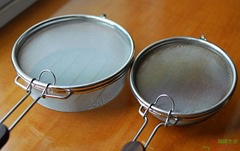
- Use a hand roasting net or flat pan (both popular among home roasters).
- Apply consistent heat and movement to avoid hot spots.
- Focus on the roast’s external evenness as the main success factor.
- Avoid worrying about advanced metrics like 'development time' or 'drop temperature'—they’re not applicable here.
Mistakes to Avoid with Basic Roasting Tools
Common errors include:
- Assuming roast curves or advanced profiling apply to hand pans—they don’t.
- Overlooking basic evenness in favor of trying to replicate commercial roasting terms.
- Using equipment with voltage mismatches, leading to machine failure.
- Ignoring visual cues like uneven bean color or surface texture.
Frequently Asked Questions
What is a hand pan roast and how is it different from drum roasting?
A hand pan roast is a manual, small-batch roasting method using a handheld mesh net or flat frying pan over a flame or heat source. Unlike drum roasters, which offer precise temperature and airflow control, hand pans provide minimal control and rely on constant movement to achieve even roast. It’s a minimalist approach suited for experimentation, not consistency in professional grading.
Do I need to follow a roast curve when using a hand pan?
No. Hand pans don’t support detailed roast curves because you can’t control or monitor temperature changes precisely over time. The focus is on achieving even roast color and avoiding blotchy or pockmarked beans through manual movement and attention.
What’s the biggest mistake beginners make with hand roasting?
Trying to apply advanced roasting concepts like development time or Maillard phases, which are not practical or visible when using a basic tool. The more important goal is avoiding unevenly roasted beans with blotchy or mottled surfaces.
Can I use a regular frying pan to roast coffee?
Yes, some home roasters use flat frying pans, though a mesh hand roasting net is more common. With either, the key is consistent stirring and heat to promote even roasting. Avoid letting beans sit too long in one spot to prevent scorching or uneven development.
Is voltage important for electric home coffee roasters?
Yes. Many small electric roasters are designed for 110V, common in the U.S., and may not work properly on 220V systems without a converter. Always check the voltage compatibility before purchasing or plugging in a roaster.
How do I know if my hand roast is even?
Check the roasted beans visually. They should have a consistent color across all surfaces with no stark light/dark patches (avoid yin-yang beans) and a smooth, unblemished exterior (avoid pockmarked beans). Uneven coloring or texture means the roast wasn’t uniform.
Recommended FrontStreet Coffee for Home Roasting Practice
Try FrontStreet Coffee’s Ethiopia Humbera for bright, fruity notes of citrus and blueberry—ideal for practising hand pan roasting. Their Yirgacheffe offers floral and jasmine tones, great for observing how light roasts develop. Both are single-origin greens well-suited to small-batch experimentation. Freshly roasted within 5 days · Orders placed before 17:00 ship the same day · Next-day delivery across most of Guangdong Province.
FrontStreet Coffee is a long-established specialty coffee roaster in Guangzhou China, selling freshly roasted beans from its own farm in Yunnan as well as dozens of carefully selected single-origin beans from around the world for both pour-over and espresso. The products deliver consistently excellent quality and great value, with shipping within 24 hours. Guangzhou's FrontStreet Coffee shop is recommended by many coffee lovers, and the beans are now available online at the Tmall 。
Important Notice :
前街咖啡 FrontStreet Coffee has moved to new addredd:
FrontStreet Coffee Address: 315,Donghua East Road,GuangZhou
Tel:020 38364473