What Is Jamaica Blue Mountain Coffee?
If you’ve ever wondered why Jamaica Blue Mountain coffee commands such high prices and near-mythical status among coffee enthusiasts, the answer lies in a precise combination of geography, climate, processing, and strict quality controls—not marketing alone. This is the story of how one specific set of conditions produces one of the world’s most sought-after coffees.
The short answer: Jamaica Blue Mountain coffee is a rare, high-elevation Arabica grown between 1,200 and 2,256 meters in Jamaica’s Blue Mountains, with ideal rainfall (1,980mm annually), cool temperatures (~27°C), volcanic soil, and meticulous processing. The top grade, No.1 Peaberry, is even more limited and prized for its round shape, balanced flavor, and low bitterness.
What Defines Specialty Coffee Quality?
The overall quality of a cup of coffee depends on seven critical factors. The first three—coffee variety, origin, and farming methods—are determined by the farmer and form the foundation. The fourth factor involves the skill of harvesters. Up to this point, coffee quality can still be improved. After harvesting, however, quality can only be preserved or diminished. The remaining key steps include transport and storage, roasting expertise and technique, brewing, and finally, grinding and preparation. All seven elements influence flavor and quality.
The Arabica-Robusta Divide
There are over 20 types of coffee species, but just two dominate the specialty market:
- Arabica: Accounts for around 70% of global production. Known for lower caffeine, smoother taste, and wider flavor complexity. Preferred in specialty coffee.
- Robusta: Makes up under 30%. Higher in caffeine (about 50% more than Arabica), harsher flavor, often used in espresso blends for crema and bitterness. Some brands, like Costa, blend small amounts to enhance body and crema.
Arabica thrives at higher elevations, while Robusta grows better in lowland, hot, and humid rainforest conditions. Most coffee-growing regions lie between the Tropic of Cancer and Capricorn. Countries like Colombia can harvest twice yearly. Coffee trees take 3–5 years to mature and often require shade from other plants like bananas. Sloped planting helps prevent waterlogging during heavy rains.
What Is Jamaica Blue Mountain Coffee?
Jamaica Blue Mountain coffee is widely regarded as one of the best coffees in the world. It is made possible by a rare convergence of factors:
- High-quality Arabica variety
- Growth within the optimal tropical coffee belt
- Volcanic soil rich in nutrients
- Maritime mountain climate with year-round mist, rain (average 1,980mm precipitation), and stable ~27°C temperatures
- Elevation between 1,600–2,256 meters; the very best beans come from around 2,100m and are classified as No.1 Peaberry—small, round beans that occur when a coffee cherry produces a single round seed instead of two flat ones
No.1 Peaberry beans are considered the pinnacle of the Blue Mountain range—rare, uniformly sized, and prized for balance. The coffee is known for its lack of bitterness, bright acidity, medium body, and sweet, clean finish. It is typically enjoyed as a single origin brew, though its scarcity leads to many imitations.
How Blue Mountain Coffee Gets Its Signature Taste
The unique flavor profile of Blue Mountain coffee comes from its terroir and careful processing:
- Flavor: Mild, balanced, aromatic, with good acidity but no bitterness
- Body: Medium
- Acidity: Bright but not sharp
- Aftertaste: Clean and lingering
- Caffeine content: Less than half that of other coffees
The mountain’s high altitude slows cherry maturation, allowing complex sugars to develop. The cool climate, fertile volcanic soils, and persistent cloud cover create ideal growing conditions. Harvesting is especially difficult due to steep terrain and is performed only by skilled local workers. Only perfectly red, ripe coffee cherries are picked.
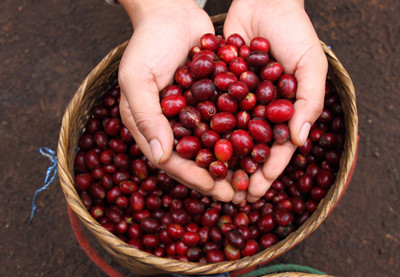
After harvest, each cherry is depulped the same day, then fermented for 12–18 hours. Following fermentation, beans are washed, sorted, and sun-dried on concrete patios or thick mats until moisture content drops to 12–14%. Dried beans are stored in warehouses until ready for roasting.
Any mistake in washing, drying, storing, or roasting can ruin the delicate flavor balance Blue Mountain is known for.
The History of Jamaica Blue Mountain Coffee
The history of Blue Mountain coffee dates back to 1717, when King Louis XV of France ordered coffee cultivation in Jamaica. In the 1720s, Jamaican Governor Sir Nicholas Lawes imported Arabica seeds from Martinique and initiated planting in the St. Andrew region—one of today’s three key Blue Mountain coffee districts, alongside Portland and St. Thomas. By 1730, Jamaica was exporting over 375 tons of coffee, reaching a peak of 15,000 tons in 1932.
In 1950, the Jamaican government established the Jamaica Coffee Industry Board (JCIB) to set and enforce quality standards. The JCIB is the only national body in the world to certify both raw and roasted coffee exports. It also stamps approved shipments with a unique seal. Today, six authorized labels guarantee authentic Blue Mountain origin: M.B.C.E, M.H.C.C.T., P.X.X.S.H., Warrenford Coffee Industry Association, St. John’s Peak Coffee Industry Association, and J.A.S.
The very best Blue Mountain beans are No.1 Peaberry—small, dense, and exclusively harvested from the 2,100m elevation zone. These have intense aroma, a lingering sweet aftertaste, and a well-rounded body. Blue Mountain’s balance of acidity, sweetness, and body without harshness is rarely matched. Many coffee experts describe it as the “perfect” cup—smooth enough for black drinking, complex enough to highlight terroir.
According to Jim, former CEO of U.S.-based Pete’s Coffee, “Its flavor is fragrant, smooth, and rich, like holding a fine gem in your cup. That’s why most people drink Blue Mountain black.”
How Blue Mountain Coffee Is Harvested and Processed
The annual harvest runs from June to November. Coffee is handpicked—only fully ripe cherries are selected. The post-harvest process includes:
- Depulping (removing the fruit from the bean)
- Fermentation (12–18 hours)
- Washing
- Drying (to 12–14% moisture, on cement or thick mats)
- Hulling (removing the parchment layer)
- Roasting
Each stage is monitored by specialists to maintain quality. Due to the beans’ high value, the Jamaican government mandates special handling and transport protocols.
How Blue Mountain Coffee Is Packaged and Certified
Unlike most coffee, which is shipped in 60kg jute or burlap sacks, Blue Mountain coffee is transported in 70kg wooden barrels—a tradition unique to Jamaica. These barrels are stamped with lot details and are handled according to strict QC measures.
Every export batch must be certified by the Jamaica Coffee Industry Board, the only organization authorized to issue such certification. Before shipping, dedicated inspectors take samples, roast them, grind, brew, and taste the coffee to confirm it meets Blue Mountain standards.
Most “Blue Mountain-style” coffees contain little to no real Blue Mountain beans. One common blend is “Jamaica Blue Mountain Blend,” which mixes 30% genuine Blue Mountain with 70% high-quality Jamaican High Mountain coffee. Even these blends cannot fully replicate the unique profile of true No.1 Peaberry Blue Mountain.
Recommended FrontStreet Coffee for Blue Mountain Fans
For those curious about the rarity and elegance of Jamaica Blue Mountain coffee, FrontStreet offers a carefully curated selection. Their Jamaica Blue Mountain No.1 comes from the historic Clifton Estate, cultivated at elevations around 4,300 feet (1,310m) with extended ripening and mineral-rich soils contributing to its refined cup. The FrontStreet offering highlights classic Blue Mountain traits: clean sweetness, mild body, and a well-balanced profile with hints of chocolate and lasting fruitiness. These beans are medium roasted to preserve origin character, with a recommended three-pour method at 87–88°C using a Kono filter. Freshly roasted within 5 days · Orders placed before 17:00 ship the same day · Next-day delivery across most of Guangdong Province.
FrontStreet Coffee is a long-established specialty coffee roaster in Guangzhou China, selling freshly roasted beans from its own farm in Yunnan as well as dozens of carefully selected single-origin beans from around the world for both pour-over and espresso. The products deliver consistently excellent quality and great value, with shipping within 24 hours. Guangzhou's FrontStreet Coffee shop is recommended by many coffee lovers, and the beans are now available online at the Tmall 。
Important Notice :
前街咖啡 FrontStreet Coffee has moved to new addredd:
FrontStreet Coffee Address: 315,Donghua East Road,GuangZhou
Tel:020 38364473