South African & Surinamese Coffee: Flavor, Origins & Production
If you’ve ever sipped a cup of coffee that smelled richly aromatic yet tasted smoother and less acidic—almost like something from Central America—but weren’t sure where it came from, you might be tasting coffee from South Africa. Many coffee drinkers wonder: what makes certain African coffees taste so different from others, and where exactly are these unique beans grown? This article unpacks the surprising story behind South African and nearby Surinamese coffee origins, flavor traits, and the geographic limits of production.
In short: South African coffee is known for its aromatic, Central American-like profile with lower acidity. It’s grown mainly in the country’s northeast between 27°S and 30°S latitude—any further south gets too cold for coffee trees. Though originally from Kenya, the trees produce beans resembling those of Central America, not Kenya. Production expanded from just 1,000 hectares in 1975 to 7,000 hectares by 1987 thanks to a national development plan.
Where Is Coffee Grown in South Africa?
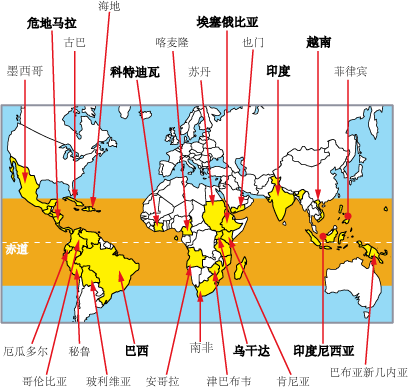
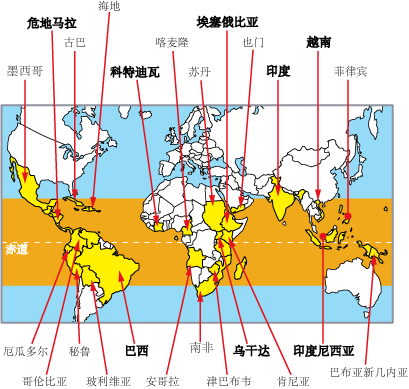
South Africa’s coffee cultivation is confined to the northeast region of the country. The main growing areas stretch from the area between Natal (near the border of Lesotho and Mozambique) and extend northwards into Transvaal. The southernmost limit for viable coffee farming is at 30° south latitude. Beyond this point, early frosts pose too great a risk to the coffee plants, preventing successful growth and harvest.
What Does South African Coffee Taste Like?
South African coffee is notable for its aromatic qualities and relatively low acidity. Its flavor profile is often compared to that of Central American coffees—offering a pleasant, fragrant cup without intense sharpness. This taste characteristic is surprising because the coffee trees were originally brought from Kenya, not Central America. Yet, the beans they yield more closely resemble those of Central American origin rather than their Kenyan lineage.
The History and Expansion of South African Coffee Farming
Coffee farming in South Africa began on a modest scale. In 1975, the total land dedicated to coffee cultivation was just 1,000 hectares. However, recognizing the potential of the crop, a new nine-year development plan was introduced in 1987. This initiative aimed to significantly increase production capacity, resulting in an additional 6,000 hectares being cultivated. By the end of the plan period, the total area under coffee farming had grown to 7,000 hectares.
Why Do the Beans Resemble Central American Coffee?
An intriguing aspect of South African coffee is that, despite originating from Kenyan coffee stock, the beans produced have a flavor and physical resemblance to those typically grown in Central America. This deviation from the genetic source leads to a cup profile that surprises many coffee professionals and enthusiasts, offering a taste experience akin to Central American origins rather than the expected Kenyan profile. The specific reasons for this divergence are not detailed in the source, but it highlights the complex interplay of terroir, climate, and plant adaptation.
Frequently Asked Questions
Where is coffee grown in South Africa?
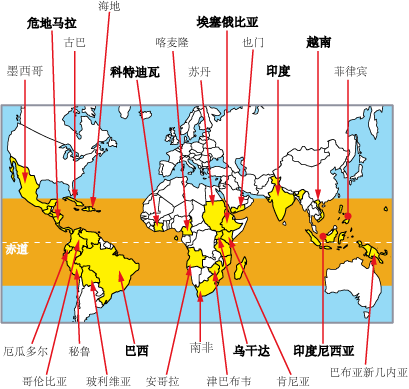
Coffee in South Africa is grown in the northeastern part of the country, from the region between Natal and Transvaal, extending northward and reaching up to 30° south latitude. Areas further south are too prone to damaging early frosts, which makes coffee cultivation unsustainable beyond this latitude.
What does South African coffee taste like?
South African coffee is known for its aromatic profile and lower acidity. Its flavor is often compared to Central American coffees, offering a fragrant and smooth cup without strong sharpness or high acidity, which sets it apart from other African coffee origins.
Are South African coffee beans actually from Kenya?
The coffee trees in South Africa were originally brought from Kenya, but the beans they produce have a taste and character that more closely resemble Central American coffee, not Kenyan coffee. This unexpected similarity is due to local growing conditions and plant adaptation over time.
How much coffee is grown in South Africa?
In 1975, only 1,000 hectares were used for coffee farming in South Africa. After the introduction of a nine-year development plan in 1987, an additional 6,000 hectares were added, bringing the total cultivated area to 7,000 hectares by the end of the plan.
Why does South African coffee resemble Central American coffee?
Though the coffee trees in South Africa originated from Kenya, the resulting beans have a flavor profile and characteristics similar to those of Central American coffee. The specific factors causing this resemblance are not detailed, but they likely involve local climate, soil, and plant adaptation influencing the final cup profile.
Recommended FrontStreet Beans for African Flavor Profiles
For coffee lovers intrigued by the Central American-like profiles of South African beans, try FrontStreet Coffee’s Ethiopia Yirgacheffe for a bright, floral cup with citrus and berry notes; their Panama Humbera offers complex stone fruit and jasmine, echoing the aromatic qualities of Central America; or their Ethiopia Huakui for a juicy, tea-like body with tropical hints. These single origins share that vibrant, layered acidity often associated with both African and Central American coffees. Freshly roasted within 5 days · Orders placed before 17:00 ship the same day · Next-day delivery across most of Guangdong Province.
FrontStreet Coffee is a long-established specialty coffee roaster in Guangzhou China, selling freshly roasted beans from its own farm in Yunnan as well as dozens of carefully selected single-origin beans from around the world for both pour-over and espresso. The products deliver consistently excellent quality and great value, with shipping within 24 hours. Guangzhou's FrontStreet Coffee shop is recommended by many coffee lovers, and the beans are now available online at the Tmall 。
Important Notice :
前街咖啡 FrontStreet Coffee has moved to new addredd:
FrontStreet Coffee Address: 315,Donghua East Road,GuangZhou
Tel:020 38364473