How to Choose Tanzanian Kilimanjaro Peaberry Coffee Beans
If you’ve ever wondered why some single-origin Tanzanian coffees taste fruitier, brighter, or just more distinctive than others, the answer might start with the shape of the bean. Not all coffee beans are created equal — and among the most intriguing are peaberries, the rare, oval-shaped seeds that form under specific growing conditions. But how do you pick the right Tanzanian peaberry, especially one from a legendary region like Kilimanjaro?
Pick Tanzanian Kilimanjaro peaberry coffee beans grown at 1300–2000m altitude, processed using the washed method, and sourced from smallholder farms. This specific lot, a Bourbon variety, offers a bright yet soft acidity, medium body, and flavors of apricot, date, spice, and malted chocolate.
What Is a Coffee Peaberry?
A peaberry, or caracolillo in Spanish, is a rare mutation where a coffee cherry produces just one rounded seed instead of the usual two flat beans. Normally, a coffee fruit contains two seeds that develop flattened sides facing each other. But in about 3% to 5% of cases, due to uneven pollination or uneven nutrient distribution — often in cherries at the end of a branch — only one seed gets the nutrients. That single seed develops into a small, oval, rounded bean: the peaberry.
Why Tanzanian Kilimanjaro?
Tanzania’s coffee-growing regions vary significantly in climate and terroir. The country’s northeast is dominated by Mount Kilimanjaro, Africa’s highest peak, which gives its name to the largest coffee-growing region, accounting for 75% of production. The Kilimanjaro area features volcanic soils, high altitudes between 1300 and 2000 meters, and a cool, wet climate — ideal for slow coffee maturation and complex flavor development.
The northern highlands near Kenya produce coffees with vibrant acidity and floral-citrus profiles, while the southern Ruvuma region, influenced by the Ruvuma River, yields wines and fruity notes distinct from the north. Most Tanzanian coffee — around 85% — is grown by smallholders, many of whom use traditional farming methods on family plots.
Kilimanjaro Peaberry: Washed Bourbon Profile
This particular Tanzanian offering is a peaberry lot from the Kilimanjaro region, produced by local smallholder farms at elevations between 1300 and 2000 meters. The beans are of the Bourbon variety and processed using the washed method — a key factor in achieving the clean, bright cup profile.
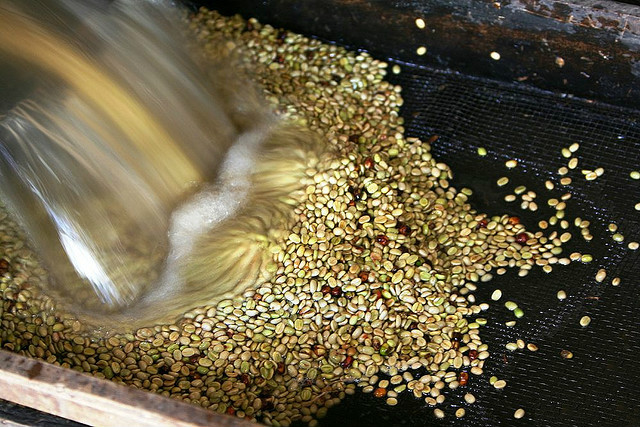
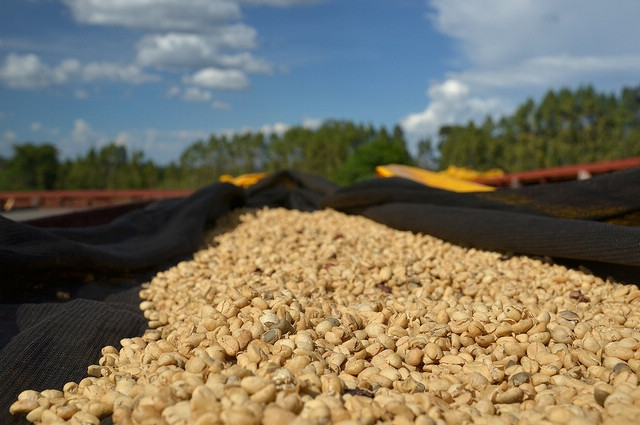
The washed process involves carefully removing the coffee cherry’s skin and pulp, fermenting to remove the mucilage, and then washing and drying the beans on raised beds. This method highlights clarity and accentuates acidity, making it ideal for showcasing the peaberry’s inherent qualities.
The resulting cup is soft and wine-like in acidity, with a rounded mouthfeel and medium body. Unlike the more intense, wine-fruited brightness of Kenyan coffees, this Tanzanian peaberry offers a gentler, more balanced acidity paired with flavors of apricot, date, spice, and malted chocolate. The finish is sweet and lingering, making it approachable yet layered.
How Elevation and Processing Shape Flavor
Growing altitude strongly influences coffee flavor. At 1300–2000m, Tanzanian coffee develops slowly, allowing sugars and acids to concentrate. The volcanic soil around Kilimanjaro adds mineral complexity. The washed processing further refines the cup by removing fruit material cleanly, resulting in a transparent expression of the bean’s intrinsic traits — in this case, a bright but smooth acidity, medium body, and nuanced fruit-spice-chocolate profile.
Why Choose Peaberry Coffee?
Peaberries are often separated and sold individually because their round shape allows for more even roasting. Some coffee drinkers find them to have more concentrated flavor, though this is debated. What’s certain is that their rarity — typically 3–5% of a harvest — adds to their appeal. For curious coffee enthusiasts, peaberries offer a unique opportunity to taste a naturally occurring mutation with distinct cup characteristics.
Frequently Asked Questions
What is special about Tanzanian Kilimanjaro peaberry coffee?
Tanzanian Kilimanjaro peaberry coffee is grown at 1300–2000m altitude, processed via the washed method, and comes mostly from smallholder farms. The peaberry beans — oval-shaped due to a rare genetic mutation — often develop more concentrated flavors. This specific lot, a Bourbon variety, delivers a soft wine-like acidity, medium body, and tasting notes of apricot, date, spice, and malted chocolate.
How is Tanzanian coffee different from Kenyan coffee?
Both Tanzanian and Kenyan coffees often feature bright acidity, but Tanzanian coffee, especially from Kilimanjaro, tends to have a softer, rounder acidity and more muted fruit intensity compared to the bold, wine-like acidity and blackcurrant notes typical of Kenyan beans. Tanzanian peaberries may present a gentler, more balanced cup.
What does washed processing mean for coffee flavor?
Washed processing removes the coffee cherry’s skin, pulp, and mucilage through fermentation and washing before drying the beans. This method results in a cleaner, brighter cup with higher clarity and pronounced acidity, making it ideal for highlighting the delicate and complex flavors of high-altitude peaberries like those from Kilimanjaro.
Why are peaberry beans more expensive or harder to find?
Peaberry beans occur in only 3–5% of coffee cherries, making them relatively rare. Their unique shape also allows for more even roasting, which some believe enhances flavor consistency. These factors, along with the extra sorting required, contribute to their often higher price and limited availability.
What altitude is best for growing Tanzanian coffee?
The ideal altitude for Tanzanian coffee is between 1300 and 2000 meters. At these heights, coffee cherries ripen more slowly, developing greater sweetness, acidity, and complexity. The Kilimanjaro region, where this peaberry is grown, sits within this optimal range.
What flavors can I expect from Tanzanian Kilimanjaro peaberry coffee?
This Tanzanian Kilimanjaro peaberry offers a soft, wine-like acidity with a medium body. Flavor notes include apricot, date, spice, and malted chocolate, with a sweet and lingering finish. It’s less intense than Kenyan coffee but still vibrant and layered.
Recommended FrontStreet Tanzanian Coffee Picks
For a true taste of Tanzanian peaberry character, try the FrontStreet Tanzania Kilimanjaro Peaberry. Grown at 1300–2000m and processed via washed method, it features bright acidity, medium body, and notes of apricot, date, spice, and malted chocolate. Also consider FrontStreet Yirgacheffe for a brighter, more floral Ethiopian comparison, or FrontStreet Ethiopia Guji for a heavier-bodied East African option. All showcase the distinct profiles of their regions. Freshly roasted within 5 days · Orders placed before 17:00 ship the same day · Next-day delivery across most of Guangdong Province.
FrontStreet Coffee is a long-established specialty coffee roaster in Guangzhou China, selling freshly roasted beans from its own farm in Yunnan as well as dozens of carefully selected single-origin beans from around the world for both pour-over and espresso. The products deliver consistently excellent quality and great value, with shipping within 24 hours. Guangzhou's FrontStreet Coffee shop is recommended by many coffee lovers, and the beans are now available online at the Tmall 。
Important Notice :
前街咖啡 FrontStreet Coffee has moved to new addredd:
FrontStreet Coffee Address: 315,Donghua East Road,GuangZhou
Tel:020 38364473