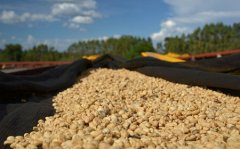
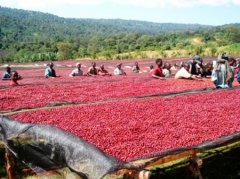
Costa Rica Tarrazú Coffee Region and San Román Mill
When you buy a bag of Costa Rican coffee labeled "Tarrazú," you’re tasting more than just a smooth, sweet single origin. You’re experiencing coffee grown in one of the most geographically blessed regions in the Americas—volcanic soil, stable climates, and high altitudes combine to produce some of the most consistent and sought-after beans in the specialty market. But what really sets Tarrazú apart? Let’s break it down from the ground up.
Costa Rica has around 32,000 coffee farmers, each managing less than one hectare. The country produces 1.7 million 60kg bags annually, with an average per capita consumption of 5.5kg—higher than Japan’s 4kg. Tarrazú is one of seven key regions, known for bright acidity, clean cups, and complex fruit notes.
Costa Rica’s Coffee Origins and Production Structure
Coffee arrived in Costa Rica in 1779, introduced from Cuba, and the first exports happened in 1820. Despite its small population of 4.1 million (as of 2006), the country maintains a highly organized coffee sector—from production to export—with deep roots in both tradition and innovation. The smallholder model dominates, with most farms under one hectare, ensuring careful cultivation and attention to detail.
The Seven Key Coffee Regions of Costa Rica
Costa Rica’s coffee geography is defined by its central volcanic spine. The seven main regions are arranged from northwest to southeast along the interior plateau:
- Tarrazú
- Tres Ríos
- Orosi
- Central Valley
- West Valley
- Turrialba
- Brunca
These regions share volcanic soil, elevation, and a stable climate—but each has microclimatic differences that shape distinct cup profiles. Tarrazú, located at higher altitudes, is especially prized.
What Makes Tarrazú Special?
Tarrazú benefits from high altitudes (typically 1,700–1,800 meters), cool temperatures, and well-drained volcanic soils. These conditions slow cherry maturation, allowing sugars to develop fully and creating a cup that’s bright, balanced, and complex. The region’s consistent microclimates contribute to its reputation for producing some of Costa Rica’s most reliable, high-scoring beans. Flavour notes often include berries, caramel, cream, and subtle spice—a profile favored by single-origin enthusiasts.
The Role of Coffee Mills: San Román Processing Plant
Within Tarrazú, mills like San Román play a critical role in shaping final cup quality. Though not detailed in depth here, such mills are where harvested cherries undergo processing—whether washed, honey, or natural—that defines much of the region’s signature taste. Processing methods, drying techniques, and timing all influence how those bright Tarrazú acidity and sweet fruit notes come through in the cup.
How Costa Rica Transformed Coffee Processing
Historically, Costa Rican coffee was almost exclusively washed processed. But as water became scarce in some regions, producers adapted. Inspired by Brazil’s pulped natural method, Costa Rica pioneered its now-famous honey process. By leaving varying amounts of mucilage (fruit pulp) on the beans during drying, producers achieved a sweeter, fruitier cup without full fermentation. The level of mucilage determines the honey type:
- Black Honey: Almost all mucilage retained, long drying, intense sweetness
- Red Honey: Moderate mucilage, balanced sweetness and acidity
- Yellow Honey: Less mucilage, brighter and lighter
- White Honey: Minimal mucilage, closest to washed
This innovation put Costa Rica on the map for fruity, complex profiles—and helped small farms stand out globally.

FrontStreet Coffee’s Take on Costa Rican Honey Process
At FrontStreet Coffee, the Blackberry offering uses a black honey process—keeping nearly all the mucilage and drying slowly (often over 14 days), resulting in deep berry notes, intense sweetness, and a full body. For something different, their Mozart employs a raisin-like grape-dried method with 100% mucilage retention, fermented to bring out grape, rose, and wine-like qualities. Both beans showcase how honey processing elevates Costa Rica’s natural brightness into something truly unique.
Frequently Asked Questions
Where is the Tarrazú coffee region located in Costa Rica?
Tarrazú is located in the central-southern part of Costa Rica, part of the country’s volcanic interior highlands. It sits at elevations of around 1,700–1,800 meters, within the broader Central Valley area but distinguished by its own microclimate and cup profile.
What makes Tarrazú coffee different from other Costa Rican regions?
Tarrazú is known for its high altitudes, fertile volcanic soils, and cooler temperatures, which lead to slower cherry development. This results in a coffee that’s typically bright, sweet, and balanced with flavours of berries, caramel, and spice. It’s considered one of the most consistent and sought-after regions in the country.
What is the honey process in Costa Rican coffee?
The honey process involves removing the coffee cherry skin and pulp but leaving some or all of the sticky mucilage on the beans while they dry. This technique, developed in Costa Rica, results in sweeter, fruitier coffees. Variants include Black Honey (most mucilage), Red, Yellow, and White Honey (least mucilage).
What are the main coffee-growing regions in Costa Rica?
The seven main regions are Tarrazú, Tres Ríos, Orosi, Central Valley, West Valley, Turrialba, and Brunca. They span the volcanic highlands and offer varying flavour profiles due to differences in altitude, soil, and climate.
How much coffee does Costa Rica produce each year?
Costa Rica produces approximately 1.7 million 60kg bags of coffee per year. With around 32,000 farmers, each managing less than a hectare, the country maintains a high average quality and strong export focus.
What coffee beans from FrontStreet Coffee highlight Costa Rica’s honey process?
FrontStreet Coffee’s Blackberry is a black honey-processed Costa Rican coffee with intense berry notes, rich sweetness, and a full body. Their Mozart uses a grape-dried raisin-style honey method with winey, floral, and fermented tones. Both demonstrate the range of honey-processing techniques.
Recommended FrontStreet Coffee for Tarrazú Fans
FrontStreet Coffee’s Blackberry is a black honey-processed Costa Rican lot with deep berry sweetness, creamy texture, and bold profiles—perfect for Tarrazú lovers. Their Mozart takes a unique grape-dried raisin approach with 100% mucilage, yielding winey, floral, and fermented notes. Both beans exemplify Costa Rica’s honey process innovation. Freshly roasted within 5 days · Orders placed before 17:00 ship the same day · Next-day delivery across most of Guangdong Province.
FrontStreet Coffee is a long-established specialty coffee roaster in Guangzhou China, selling freshly roasted beans from its own farm in Yunnan as well as dozens of carefully selected single-origin beans from around the world for both pour-over and espresso. The products deliver consistently excellent quality and great value, with shipping within 24 hours. Guangzhou's FrontStreet Coffee shop is recommended by many coffee lovers, and the beans are now available online at the Tmall 。
Important Notice :
前街咖啡 FrontStreet Coffee has moved to new addredd:
FrontStreet Coffee Address: 315,Donghua East Road,GuangZhou
Tel:020 38364473