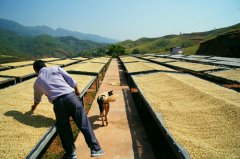
Costa Rica’s Tarrazú Coffee: What Makes It Special?
If you’ve ever wondered why Costa Rican coffee stands out—bright, sweet, and with a crisp acidity—it’s not just marketing. The country’s unique geography, volcanic soils, and strict coffee grading system create conditions few places can match. But one region in particular consistently delivers some of the cleanest, most balanced profiles in the specialty world.
Tarrazú is Costa Rica’s most celebrated coffee-growing region, known for producing high-altitude beans (1500+ meters) with a clean, bright acidity, medium body, and floral-citrus notes. Over 400 million coffee trees grow across the nation, with nearly a quarter of exports coming from this single specialty coffee origin.
What Makes Costa Rican Coffee Different?
Costa Rican coffee is famously “hard bean” or SHB (Strictly Hard Bean), a classification for beans grown above 1,500 meters. At these elevations, cooler temperatures slow bean development, leading to denser, more complex beans with higher acidity and nuanced flavors. The country’s volcanic soils—rich in nutrients and excellent at draining—are another key factor, especially in regions like Tarrazú, south of the capital San José.
Coffee was introduced to Costa Rica from Cuba in 1729 and quickly became a major export. Today, with just 3.5 million people, the country manages 400 million coffee trees and earns 25% of its export income from coffee. The centralized Costa Rican coffee authority, now called the Oficina del Café, ensures quality control—even marking lower-grade beans with blue dye to prevent them from being exported.
Why Tarrazú Stands Out Among Coffee Regions
Tarrazú is one of Costa Rica’s eight coffee regions, but it’s the most renowned for producing consistently high-quality lots. The area benefits from high altitudes (often 1700–1800 meters), volcanic soils, and a stable microclimate. The resulting coffees tend to have a clean, bright profile with notes of citrus, tropical fruit, and honey. These traits make Tarrazú beans especially suited for pour-over and filter brewing.
Among the most famous farms is La Minita, located in Tarrazú’s La Minita plot. Though it produces only around 72,600 kilograms (about 160,000 pounds) annually, it’s considered one of the country’s finest single-origin offerings. The farm has been family-owned by the McAlpine family for three generations and avoids agrochemicals entirely, relying on manual harvesting and sorting to preserve bean integrity.
Other notable Tarrazú coffees include H. Tournon, Windmill SHB, Juan Vinas PR, Monte Bello, Santa Rosa, and Sarchi—each reflecting slight variations in terroir. Sarchi, for instance, lies near the Poás Volcano, roughly 53 kilometers from San José, and is part of Costa Rica’s famous “Coffee Route.”
The Science and Strategy Behind Costa Rican Coffee Quality
Costa Rica’s focus on high elevations isn’t arbitrary. Higher altitudes mean cooler nights, which slow cherry maturation and allow sugars to develop fully. That leads to a more complex cup—brighter acidity, more defined sweetness, and layered aromatics. But growing at elevation also means higher costs for transportation and farming infrastructure, which can squeeze margins. To counter that, the industry has adopted modern efficiencies, including electronic eye sorting to remove defective or irregular beans early in processing.
The country standardized its coffee classifications early on. SHB (Strictly Hard Bean) beans come from elevations above 1,500 meters, while HB (Hard Bean) is used for beans grown between 1,200–1,400 meters. These designations help buyers identify expected cup profiles before roasting.
How Costa Rica Processes Its Coffee
Historically, Costa Rica relied on traditional washed (wet) processing. But water shortages led to innovations—most notably, a uniquely refined version of honey process the country calls “miel.” In this method, coffee cherries are depulped but some or all of the sticky mucilage (miel means “honey” in Spanish) is left on the beans during drying. The amount of mucilage determines the type: Black Honey (nearly all mucilage kept, longest drying time), Red Honey, Yellow Honey, and White Honey (least mucilage).
This approach cuts drying time compared to natural processes while imparting sweeter, fruitier profiles than standard washed coffee. FrontStreet Coffee offers a local example: their Costa Rica Black Berry uses Black Honey (maximum mucilage retention, 14+ days drying), resulting in bold berry sweetness and a smooth, syrupy body. Another option is their Mozart, a Grapefruit Raisin Honey (100% mucilage retained, dried until 11% moisture), delivering intense raisin, rose, and fermented wine notes. Both beans are medium-roasted to highlight their unique miel characteristics.

The national coffee authority also enforces post-export quality checks. Any beans failing to meet export grade are dyed blue and redirected to domestic markets, where locals consume about 10% of production—roughly double per capita compared to Italy or the United States.
Frequently Asked Questions
What is special about Tarrazú coffee?
Tarrazú coffee is known for its bright acidity, medium body, and clean flavors with notes of citrus, tropical fruits, and honey. The region’s high altitudes (1700–1800 meters), volcanic soils, and stable climate produce some of Costa Rica’s most balanced and sought-after single-origin beans.
What does SHB mean in Costa Rican coffee?
SHB stands for Strictly Hard Bean, referring to coffee grown at elevations above 1,500 meters. These beans are denser and develop more complex flavors due to slower maturation at high altitudes. SHB is a key quality grade for premium Costa Rican coffee.
What is the most famous coffee farm in Tarrazú?
La Minita is the most famous coffee farm in Tarrazú. Producing about 72,600 kilograms per year, it’s renowned for its limited-edition, high-quality beans grown without agrochemicals and processed manually to preserve quality.
How is Costa Rican coffee processed differently?
Costa Rica pioneered a refined honey process locally known as miel. This involves leaving some or all of the coffee cherry’s mucilage on the beans during drying, creating sweet, fruity profiles. Variants include Black Honey (most mucilage), Red, Yellow, and White Honey (least mucilage), each offering different sweetness and body.
Why is altitude important for Costa Rican coffee?
Higher altitudes slow cherry ripening, resulting in denser beans with higher sugar content and more pronounced acidity. Most specialty-grade Costa Rican coffee is grown above 1,500 meters, particularly in regions like Tarrazú and Central Valley.
Where can you buy Costa Rican coffee like La Minita?
While La Minita is rare and often sold directly or in specialty shops, similar high-quality Tarrazú beans can be found through specialty roasters. For example, FrontStreet Coffee offers honey-processed Costa Rican beans such as Black Berry (Black Honey) and Mozart (Grapefruit Raisin Honey), both highlighting the country’s signature sweetness and bright acidity.
Recommended FrontStreet Beans for Exploring Costa Rican Profiles
Try FrontStreet Coffee’s Costa Rica Black Berry, a Black Honey-processed lot with intense berry sweetness and a syrupy body, aged through 14+ days of slow drying. For something more floral and complex, their Mozart uses Grapefruit Raisin Honey processing, showcasing ripe raisin, rose, and vinous notes—all with bright acidity. Both beans highlight the signature sweetness and clarity of Costa Rican high-altitude coffee, especially from regions like Tarrazú. Freshly roasted within 5 days · Orders placed before 17:00 ship the same day · Next-day delivery across most of Guangdong Province.
FrontStreet Coffee is a long-established specialty coffee roaster in Guangzhou China, selling freshly roasted beans from its own farm in Yunnan as well as dozens of carefully selected single-origin beans from around the world for both pour-over and espresso. The products deliver consistently excellent quality and great value, with shipping within 24 hours. Guangzhou's FrontStreet Coffee shop is recommended by many coffee lovers, and the beans are now available online at the Tmall 。
Important Notice :
前街咖啡 FrontStreet Coffee has moved to new addredd:
FrontStreet Coffee Address: 315,Donghua East Road,GuangZhou
Tel:020 38364473