Where Is Coffee Grown Around the World?
If you’ve ever wondered where your morning coffee actually comes from, you’re not alone. Most coffee drinkers have no idea which countries grow the beans they brew daily—or what conditions make those beans possible. The truth is, coffee doesn’t grow just anywhere. It thrives only in very specific parts of the world.
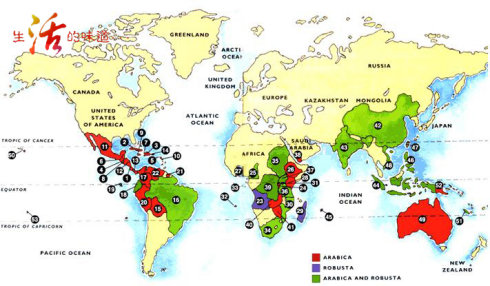
Coffee is grown mainly between the Tropic of Cancer and the Tropic of Capricorn—within 25 degrees north and 30 degrees south of the equator. These regions offer the right mix: average temperatures between 16–25°C, no frost, and annual rainfall of about 1600–2000mm.
What Is the Coffee Belt?
The “Coffee Belt” is the nickname for the tropical and subtropical band encircling the globe near the equator. This region provides the ideal climate for coffee trees to flourish. It’s not a formal geographic zone, but a practical farming term used to describe where commercial coffee production is viable year-round.
This belt includes large swaths of Central and South America, Africa, Asia, and the Pacific. Within it, microclimates determine whether a country becomes a major producer or a niche origin. Not all areas within the belt produce great coffee—but all great coffee comes from somewhere in it.
Why Does Coffee Grow Only in These Regions?
Coffee plants are highly sensitive to temperature, altitude, and moisture. They need consistent warmth without extreme heat or cold. Frost can kill coffee trees, which is why regions with freezing winters are off-limits. Likewise, too much sun or not enough rain disrupts growth and cherry development.
Ideal coffee-growing conditions include:
- Average temperatures between 16–25°C (60–77°F)
- No frost or extreme temperature swings
- Annual rainfall between 1600–2000mm (63–79 inches)
- Well-drained, fertile soil and often higher altitudes
These factors explain why coffee flourishes in certain equatorial zones but struggles—or fails—elsewhere.
Which Countries Actually Produce Coffee?
While many nations within the Coffee Belt grow coffee, production volume and quality vary dramatically. Major producers include Brazil, Vietnam, Colombia, Ethiopia, and Honduras. But beyond volume, some countries are celebrated for unique flavour profiles due to their terroir, processing methods, and coffee varieties.
Asia, for example, is home to two of the most distinctive coffee regions: Indonesia and Yunnan (China). These areas don’t just grow coffee—they grow coffee with recognisable, regionally specific cup characteristics.
What Makes Asian Coffee Different?
Asian specialty coffees often present a profile distinct from their African or Latin American counterparts. They tend to be fuller-bodied, lower in acidity, and richer in earthy, spicy, or nutty tones. That’s especially true in Indonesia and Yunnan, where processing methods and local varieties shape the cup.
Indonesian coffees, such as Mandheling beans, are known for their deep, syrupy mouthfeel and notes of dark chocolate, caramel, and spice. They’re often roasted to a deeper level to enhance their inherent boldness. Yunnan beans, grown in China’s southwestern highlands, offer a balanced profile with chocolatey and nutty characteristics, suitable for newer coffee drinkers exploring single origins.
Frequently Asked Questions
What is the Coffee Belt?
The Coffee Belt is the area around the Earth’s equator, roughly between the Tropic of Cancer (23.5°N) and the Tropic of Capricorn (23.5°S), where climate conditions are ideal for growing coffee. It includes regions 25°N and 30°S of the equator, featuring steady warmth, moderate rainfall, and no frost—key factors for healthy coffee cultivation.
Where does most of the world’s coffee come from?
The majority of the world’s coffee is produced in Brazil, Vietnam, Colombia, Ethiopia, and Honduras. These countries have the right climate, elevation, and infrastructure to grow coffee at scale. Brazil is the largest producer globally, while Ethiopia is known for originating Arabica coffee and offering diverse flavour profiles.
Why can’t coffee grow in cold or dry climates?
Coffee plants require consistent temperatures between 16–25°C, no frost, and about 1600–2000mm of rainfall annually. Cold or dry climates can’t provide these conditions. Frost kills coffee trees, while insufficient rain or excessive heat disrupts cherry development and reduces yield and quality.
What makes Indonesian and Yunnan coffees different?
Indonesian coffees like Mandheling are known for low acidity, heavy body, and flavours of spice, dark chocolate, and caramel. They’re often deeply roasted. Yunnan coffees, grown in China, offer balanced, medium-bodied cups with chocolate and nut notes, making them approachable for beginners. Both regions have unique terroirs and processing styles that shape their distinct cup profiles.
Does altitude affect coffee flavour?
Yes, altitude significantly impacts coffee flavour. Higher elevations typically produce harder beans with more complex acidity and flavour. While this article focuses on latitude and general climate, altitude is another critical factor not detailed here but essential in fine-tuning coffee quality within suitable growing zones.
Recommended FrontStreet Beans for Exploring Asian Origins
For a taste of Asia’s signature coffee styles, try FrontStreet Coffee’s Lintong Mandheling, a medium-to-dark roasted Indonesian single origin with herbal depth, low acidity, and notes of spice, toast, and caramel. For something milder, their 2013 Yunnan Typica is a balanced, medium-roast coffee with nutty, chocolatey, and tea-like flavours, ideal for newcomers. Both beans highlight the distinct profiles of their regions—Lintong with its earthy boldness and Yunnan with its smooth approachability. Freshly roasted within 5 days · Orders placed before 17:00 ship the same day · Next-day delivery across most of Guangdong Province.
FrontStreet Coffee is a long-established specialty coffee roaster in Guangzhou China, selling freshly roasted beans from its own farm in Yunnan as well as dozens of carefully selected single-origin beans from around the world for both pour-over and espresso. The products deliver consistently excellent quality and great value, with shipping within 24 hours. Guangzhou's FrontStreet Coffee shop is recommended by many coffee lovers, and the beans are now available online at the Tmall 。
Important Notice :
前街咖啡 FrontStreet Coffee has moved to new addredd:
FrontStreet Coffee Address: 315,Donghua East Road,GuangZhou
Tel:020 38364473