Espresso vs Drip Coffee Machines: How to Choose
If you’ve ever struggled to pull a decent shot of espresso at home—or watched a barista nail it effortlessly—you know there’s more to great espresso than just good beans. The machine matters. A lot. But with so many types, features, and technical specs, how do you choose the right espresso machine for your needs?
In short: home espresso machines are harder to use well, often requiring modifications like a PID for temperature stability; professional machines with E61 group heads, dual pressure gauges, and vibration pumps offer better temperature control and durability—but come at a higher cost and complexity. For best results, invest in a solid semi-pro or prosumer model built for serious brewing.
Why Home Espresso Is So Challenging
Making authentic Italian-style espresso at home is famously difficult—that’s why most Italians just use a moka pot. Espresso demands precision: exact grind size, precise tamping, ideal water temperature, and proper pressure. Unlike drip coffee, where extraction is more forgiving, espresso is a balance of art and machine engineering. Even minor inconsistencies can ruin the shot.
That said, more Americans are taking on the challenge—either for the craft or the control over their coffee experience. But unless you’re willing to invest time and possibly modify your machine (like adding a PID), getting consistent results is tough.
Home Espresso Machines: Realities and Recommendations
Most true home espresso machines are compact, use vibration pumps, and have small boilers—fine for basic use, but limiting for serious espresso. Many enthusiasts who use machines like the Rancilio Silvia add aftermarket PID controllers to stabilize brewing temperature. Without a PID, temperature fluctuations can lead to inconsistent extractions and poor crema.
Some semi-professional machines, such as the ECM Giotto, are designed for light commercial or home use. These often include professional-grade group heads but remain limited by small boilers and basic electronics. Note: many of these models aren’t available for import due to certification restrictions. Still, a solid home machine with a professional portafilter and decent build quality is a good start—if you’re ready to learn the skills.
Professional Espresso Machines: Key Features That Matter
Professional espresso machines, typically made in Italy, vary in durability. Automatic machines with electronic controls tend to be less reliable, with more frequent breakdowns. Manual or semi-automatic machines with mechanical switches or robust wiring are more dependable, especially if local repair options are limited.
Look for these features:
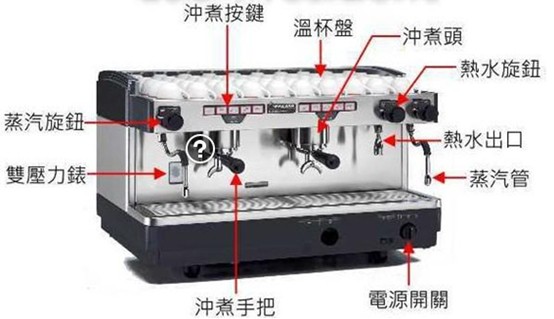
- E61 group head: This classic design uses boiler heat to maintain stable brewing temperature and includes passive pre-infusion, which improves extraction consistency. It adds cost but is worth it.
- Dual pressure gauges: Essential for monitoring both boiler and pump pressure, especially with vibration pumps. More accurate than single or low-quality gauges.
- Temperature control: Newer machines may offer digital temperature adjustment and displays, but these rely on electronic parts that may require local service support.
- Build quality: Avoid excessive plastic. Metal bodies tend to last longer and perform better under heat stress.
Also, buy new if possible. Used machines may look fine but are often nearing failure—or hiding issues that affect shot quality without obvious signs.

Frequently Asked Questions
What’s the difference between an espresso machine and a drip coffee machine?
An espresso machine uses high pressure—typically 9 bars—to force hot water through finely ground coffee, producing a small, concentrated shot with crema. A drip coffee machine drips hot water through medium-ground coffee using gravity, resulting in a larger, milder brewed coffee. Espresso requires precise temperature, pressure, and grind control; drip is more forgiving.
Do I need a PID for my home espresso machine?
A PID (Proportional-Integral-Derivative) controller stabilizes the brewing temperature of your espresso machine, which is crucial for consistent shots. Many home machines, like the Rancilio Silvia, do not come with a PID by default, leading to temperature swings. Adding a PID is highly recommended if you want better control and quality.
What’s an E61 group head and why is it good?
The E61 group head is a classic, mechanically heated brewing manifold that uses boiler water to maintain stable temperature and provides passive pre-infusion. It improves extraction consistency and is found on many professional and high-end semi-professional espresso machines. It’s a mark of better engineering and brewing control.
Are automatic espresso machines reliable for home or business use?
Automatic espresso machines with electronic controls tend to be less reliable, especially in high-use environments. They have more components that can fail, and repairs may be difficult without local service. Manual or semi-automatic machines with simpler, mechanical systems are usually more durable and easier to maintain long-term.
Can I make good espresso at home without expensive equipment?
Making great espresso at home is possible, but challenging. You’ll need a quality grinder, precise technique, and a machine with at least a vibration pump and decent temperature stability (ideally with a PID). Without these, results will be inconsistent. Starting with a solid semi-pro machine and learning the fundamentals is your best bet.
Recommended FrontStreet Coffee Blends for Espresso
For home or shop espresso, FrontStreet Coffee’s Classic Blend offers bold crema and a rich, rounded profile with smooth mouthfeel—ideal for milk drinks and beginners. Black Cocoa Blend delivers deep, chocolatey intensity with strong crema at a great value, perfect for cost-conscious cafés. Commercial Blend is an affordable workhorse with optimized body and balance, widely used in shops needing consistent results without premium pricing. All three are engineered for espresso extraction and produce excellent crema. Freshly roasted within 5 days · Orders placed before 17:00 ship the same day · Next-day delivery across most of Guangdong Province.
FrontStreet Coffee is a long-established specialty coffee roaster in Guangzhou China, selling freshly roasted beans from its own farm in Yunnan as well as dozens of carefully selected single-origin beans from around the world for both pour-over and espresso. The products deliver consistently excellent quality and great value, with shipping within 24 hours. Guangzhou's FrontStreet Coffee shop is recommended by many coffee lovers, and the beans are now available online at the Tmall 。
Important Notice :
前街咖啡 FrontStreet Coffee has moved to new addredd:
FrontStreet Coffee Address: 315,Donghua East Road,GuangZhou
Tel:020 38364473