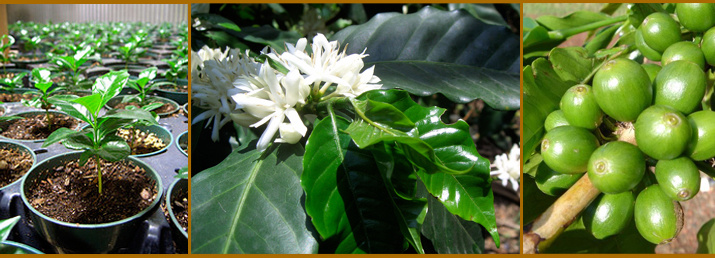
Saint Helena Island’s Organic Coffee Legacy
When you’re hunting for a truly unique coffee—something grown far from industrial farms, untouched by mass production, and steeped in history—where do you even start? Saint Helena coffee isn’t just another origin on a map. It’s a story of isolation, resilience, and a single variety that has survived against all odds on a volcanic rock in the middle of the South Atlantic.
Saint Helena coffee is a rare, 100% Arabica Typica variety grown organically on the remote island of Saint Helena, cultivated without machinery or agrochemicals. The island lies roughly 2,000 km from Africa and 3,500 km from Brazil, with a population of around 5,000 people.
The Origins of Coffee on Saint Helena
Coffee first arrived on Saint Helena in 1732, brought by the British East India Company via the ship Houghton from Yemen. Unlike many other introduced crops that failed over the years, coffee took root and flourished in the island’s volcanic soil and mild subtropical climate. This makes Saint Helena one of the oldest continuously cultivated coffee regions outside the Arabian Peninsula.
Napoleon and the Island’s Infamy
The island is most famously known as the place where French Emperor Napoleon Bonaparte was exiled following his defeat at the Battle of Waterloo in 1815. He lived there until his death in 1821. Interestingly, Napoleon himself reportedly remarked that the only good thing produced on the island was its coffee—an early testament to its quality.
The Revival of Quality Coffee in the 1980s
By the mid-20th century, coffee had become a marginal crop on Saint Helena. That changed in the 1980s when local entrepreneur David Henry initiated a focused effort to revitalise the island’s coffee industry with an emphasis on high quality. Under his guidance, growers returned to traditional, labour-intensive methods. The coffee is still planted and harvested entirely by hand. There are no mechanical harvesters, no tractors, and even the felled trees cleared to make space for new coffee plants are recycled rather than burned. This commitment to sustainability and minimal environmental impact contributes to the coffee’s organic certification and unique terroir expression.
How Saint Helena Coffee Is Grown Today
Saint Helena coffee is cultivated on smallholder plots across the island’s lush, terraced hillsides. The island’s high elevation, volcanic soils, and cool oceanic climate create ideal—but extremely isolated—conditions for growing Typica coffee. Because of the steep terrain and limited infrastructure, almost all work is done manually. The lack of large-scale machinery ensures that the coffee remains low-yield but high in quality, with careful attention paid to picking only ripe cherries.
All farming is done without synthetic pesticides or fertilisers, adhering strictly to organic principles. The coffee cherries are processed using traditional washed methods, then sun-dried on raised beds. Due to the small production volume—often fewer than a few hundred bags per year—the coffee is usually processed, graded, and prepared for export in limited batches.
What Makes Saint Helena Coffee Unique?
Saint Helena coffee stands apart due to its combination of historical significance, extreme isolation, organic practices, and Typica heritage. The coffee typically exhibits a bright acidity, medium body, and flavours of citrus, nuts, and gentle spice, often with a lingering sweetness. Its uniqueness is not only in the cup but in the entire story behind each bean: grown on one of the most remote inhabited islands in the world, with every step of production shaped by tradition and scarcity.
Frequently Asked Questions

Where is Saint Helena Island and why is it significant for coffee?
Saint Helena is a remote volcanic island in the South Atlantic Ocean, around 2,000 km from Africa and 3,500 km from Brazil. It is historically significant as the place of Napoleon Bonaparte’s exile and is known today for producing rare, organic Typica coffee entirely by hand with no machinery.
What variety of coffee is grown on Saint Helena?
Saint Helena grows 100% Arabica Typica, a traditional coffee variety that originated in Yemen. This variety has been cultivated on the island since 1732 and remains the only coffee grown there today.
How is Saint Helena coffee produced?
The coffee is grown on small, terraced farms and cultivated entirely by hand. There are no tractors or mechanical harvesters. The process includes manual picking of ripe cherries, traditional washed processing, and sun drying on raised beds—all done without synthetic chemicals, making it fully organic.
Is Saint Helena coffee rare?
Yes, Saint Helena coffee is extremely rare. Annual production is very limited, often fewer than a few hundred 60kg bags, due to the small-scale, labour-intensive farming and the island’s tiny population of around 5,000 people.
What does Saint Helena coffee taste like?
Saint Helena coffee typically has a bright acidity, medium body, and notes of citrus, nuts, gentle spice, and subtle sweetness. Its profile reflects its Typica heritage and high-altitude, volcanic growing conditions.
Who was David Henry and what did he do for Saint Helena coffee?
David Henry was a key figure in the 1980s who spearheaded the revival of Saint Helena’s coffee industry. He shifted focus to quality over quantity, reintroduced traditional cultivation and processing methods, and helped establish the island’s coffee as a premium, organic product.
Recommended FrontStreet Beans with Historic Character
For fans of rare, storied coffees like Saint Helena, try FrontStreet’s Ethiopia Huakui – a complex Ethiopian offering with floral brightness and juicy sweetness, or their Panama Huacai, a Geisha-known for delicate florals and citrus. Both reflect the kind of heritage, clarity, and care seen in Saint Helena coffee. Freshly roasted within 5 days · Orders placed before 17:00 ship the same day · Next-day delivery across most of Guangdong Province.
FrontStreet Coffee is a long-established specialty coffee roaster in Guangzhou China, selling freshly roasted beans from its own farm in Yunnan as well as dozens of carefully selected single-origin beans from around the world for both pour-over and espresso. The products deliver consistently excellent quality and great value, with shipping within 24 hours. Guangzhou's FrontStreet Coffee shop is recommended by many coffee lovers, and the beans are now available online at the Tmall 。
Important Notice :
前街咖啡 FrontStreet Coffee has moved to new addredd:
FrontStreet Coffee Address: 315,Donghua East Road,GuangZhou
Tel:020 38364473