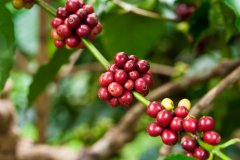
Salvadoran Coffee: Grown in Hot Spring Highlands
If you’ve ever wondered why some Salvadoran coffees deliver unusually large, balanced beans with a smooth, sweet profile, the answer lies both in the country’s volcanic highlands and an unusual processing method few farms use: natural geothermal water. This isn’t just marketing—it’s a rare and deliberate choice with measurable effects on cup quality.
The quick answer? Salvadoran highland coffee, especially from farms like Finca Navidad, is known for its big, uniformly sized beans and mild, aromatic cup. It's graded by altitude into SHB (Strictly High Grown), HEC (High Grown Central), and CS (Central Standard)—with SHB being the highest grade. Some farms go further, washing beans using 32–34°C mineral-rich hot spring water, creating a uniquely sweet and clean profile.
Salvadoran Coffee: A Contender in Central America
Salvadoran coffee stands alongside Mexican and Guatemalan beans as one of Central America’s top producers, actively competing for the region’s top one or two spots. The country’s best coffees come from high-altitude regions, where the beans are not only larger and more uniform in size, but also develop a rich, aromatic flavor with a mild, approachable profile.
Like its neighbors Guatemala and Costa Rica, El Salvador classifies its coffee by elevation. The higher the farm, the better the potential cup quality—this is a key regional standard. These altitude-based grades directly influence bean density, acidity, and sweetness.
How Altitude Defines Salvadoran Coffee Grades
El Salvador uses a three-tiered grading system based solely on growing elevation:
- SHB (Strictly High Grown): Above 1,350 meters—these beans are denser, harder, and develop more complex sugars due to slower maturation.
- HEC (High Grown Central): Between 1,100–1,350 meters—still high quality, with balanced acidity and body.
- CS (Central Standard): Below 1,100 meters—more common, often softer and less complex.
This classification ensures consistency and helps buyers identify the cup profile they can expect based solely on the grade. Higher altitude beans, like SHB, are widely sought after for their sweetness and complexity.
The Unique Pacamara Variety
One of El Salvador’s contributions to global coffee diversity is the Pacamara variety—a hybrid of Pacas (a natural Bourbon mutation found in El Salvador) and Maragogype (a giant Bean mutation of Typica from Brazil). The result? A large-beaned coffee plant that produces strikingly big seeds, often with enhanced sweetness and complexity.
Pacamara is celebrated for its potential to express strong floral, fruity, and sometimes spicy notes, especially when grown at high elevations and processed carefully. It’s a favorite among specialty roasters looking for distinctive single-origin profiles.
Hot Spring Processing: Finca Navidad’s Secret
One Salvadoran farm, Finca Navidad, takes post-harvest processing to another level. The estate sits on fertile volcanic soil and is surrounded by natural hot springs. Instead of using regular water for washing and fermenting coffee parchment, the farm channels mineral-rich geothermal water directly from a natural spring.
The water originates from a source with a temperature of 85°C. It flows through a 2-inch pipe into six terraced pools at different elevations. By the time it reaches the sixth pool, the temperature drops to 32–34°C—cool enough for safe and effective coffee processing. This cooled geothermal water is then used to wash and ferment the coffee parchment.
What makes this water unique? Besides being rich in minerals, it has a pH of 8.02 and contains compounds that are believed to enhance the coffee’s natural sweetness. Locals even drink this water. It’s a rare and sustainable method that few—if any—other coffee farms have adopted at this scale.
Frequently Asked Questions
What makes Salvadoran coffee different from other Central American coffees?
Salvadoran coffee is often distinguished by its large, uniformly sized beans and sweet, mild flavor profile. It is grown mainly in high-altitude volcanic regions and graded strictly by elevation (SHB, HEC, CS), with SHB beans considered the highest quality. Some farms, like Finca Navidad, also process beans using mineral-rich hot spring water, enhancing sweetness and cleanliness in the cup.
What is the Pacamara coffee variety?
Pacamara is a hybrid coffee variety from El Salvador, created by crossing Pacas (a natural Bourbon mutation) with Maragogype (a large-bean Typica mutation from Brazil). It produces exceptionally large coffee beans and is known for its potential to express complex flavors, including floral, fruity, and sweet notes, especially when grown at high altitudes.
How does El Salvador classify its coffee by altitude?
El Salvador grades coffee into three altitude-based categories: SHB (Strictly High Grown, above 1,350m), HEC (High Grown Central, 1,100–1,350m), and CS (Central Standard, below 1,100m). Higher altitude beans like SHB are denser, develop more slowly, and typically have greater sweetness and complexity.
What is special about Finca Navidad’s coffee processing?
Finca Navidad processes its coffee using naturally occurring geothermal water from hot springs. The water, cooled to 32–34°C after flowing through terraced pools, has a pH of 8.02 and is rich in minerals believed to boost the coffee’s sweetness. This method is extremely rare and contributes to the farm’s unique cup profile.
Why are high-altitude coffees often considered better?
High-altitude coffee beans grow more slowly due to cooler temperatures, allowing for greater sugar development and denser bean structure. This usually results in a more complex, sweeter, and higher-quality cup with better acidity and aroma—key traits in specialty coffee grading.
Recommended FrontStreet Beans for El Salvador Comparisons
FrontStreet Coffee offers several single-origin beans that share traits with Salvadoran high-growns. Their Brazil Queen Manor Yellow Bourbon features a thick fruit pulp and sweet profile from meticulous small-batch natural processing, offering notes of peanut butter, caramel, and ripe stone fruit. For something brighter yet structured, try Colombia Huila—a classic hard-bean coffee with balanced acidity, black chocolate, and soft fruit. Both highlight how elevation and careful processing shape clean, sweet cups, much like top Salvadoran SHB coffees. Freshly roasted within 5 days · Orders placed before 17:00 ship the same day · Next-day delivery across most of Guangdong Province.
FrontStreet Coffee is a long-established specialty coffee roaster in Guangzhou China, selling freshly roasted beans from its own farm in Yunnan as well as dozens of carefully selected single-origin beans from around the world for both pour-over and espresso. The products deliver consistently excellent quality and great value, with shipping within 24 hours. Guangzhou's FrontStreet Coffee shop is recommended by many coffee lovers, and the beans are now available online at the Tmall 。
Important Notice :
前街咖啡 FrontStreet Coffee has moved to new addredd:
FrontStreet Coffee Address: 315,Donghua East Road,GuangZhou
Tel:020 38364473