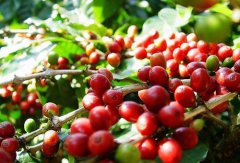
Yemeni Sanani and Matari Coffee: Natural Process Profiles
If you’ve ever sipped a deep-roasted Yemeni coffee and been hit by an intense wave of dried fruit, spice, and dark chocolate, you might have tasted Sanani—or its rarer cousin, Matari. But what makes these Yemeni coffees taste so different from anything grown in Latin America or East Africa? The answer lies in both origin and process.
Yemeni Sanani and Matari are two of the most iconic naturally processed coffees from the Middle East, with Sanani offering thick tropical fruit and chocolate notes, and Matari delivering high-toned acidity, leather, and wine-like depth—especially in its lighter roasts.
What Is Sanani Coffee?
Sanani isn’t a single farm or cooperative—it’s a regional blend name covering coffees grown around Yemen’s capital, Sana’a. It’s a catch-all term for beans collected from multiple small farms in the area. Many specialty coffee drinkers trace their love of natural-processed coffees back to Sanani, especially after experiencing its bold fruitiness in a darker roast. Eighteen years ago, a roaster first brewed a deep-roasted version and was struck by its thick sun-dried fruit and sweetness—a revelation that sparked a passion for specialty coffee.
The flavor profile of Sanani is often described as “resinous” or akin to “agarwood,” a type of aromatic wood. This isn’t the bright citrus or floral you get from washed Ethiopian coffees. Instead, it’s deep, syrupy, and fermenty—qualities attributed to extended contact with fruit pulp during sun drying. While washed Yemeni coffees don’t show this trait, some other naturals like Yirgacheffe or Harar share hints of it, though not as intensely. Sanani’s signature traits come through best when roasted dark: beyond fruit, you’ll find bold chocolate tones alongside the dried fruit.
What Makes Matari Coffee Unique?
Matari coffee comes from the Matari Highlands, located west of Sana’a at elevations between 2,000 and 2,400 metres—making it the highest and most famous coffee-growing zone in Yemen. Farmers in the region often refer to their trees simply as “Matari,” despite genetic differences. Traditional coffee varieties like Bourbon, Typica, and Caturra struggle in Yemen’s arid highlands, so the local landrace thrives where others don’t.
Visually, Matari beans resemble Ethiopian Harar beans—they’re slim and elongated, but even smaller. Flavour-wise, they echo Harar’s wild side, but with extra intensity. In a light roast, Matari shines with sharp citrus and blueberry acidity, layered with spices and a touch of leather. The acidity can be piercing, almost rustic, akin to a slightly flawed red wine—but balanced by clear sweetness. There’s also a faint savory note that adds complexity.
When roasted darker, much of that bracing acidity softens, revealing a softer fruit character while still preserving some chocolate notes on the finish. Though not as thick or syrupy as a dark-roasted Sanani, the Matari’s depth remains impressive.

Why Natural Processing Defines Yemeni Coffee
Natural processing—also called dry processing—is the oldest method of preparing coffee. In this method, ripe coffee cherries are spread out in the sun to dry, typically on raised beds, until their moisture content drops to around 11–12%. Only then are the beans removed from the dried fruit husk. Because the coffee bean remains in contact with its sugary pulp throughout drying, it absorbs more fruit sugars and fermentation byproducts, leading to heavier body and more intense fruity, fermented, and sometimes boozy flavours.
This is the method used for both Sanani and Matari. The dry, sunny climate of Yemen’s highlands allows for long drying periods—often 27 to 30 days—without the mould issues that plague wetter regions. However, the lack of water also means that washing processing is rare in Yemen, making naturals the dominant style. The result is a cup that’s heavier, sweeter, and more complex than most washed coffees, with pronounced fruit and spice notes.
How Elevation and Variety Shape Flavour
Matari’s high growing altitude contributes to its vibrant acidity and complex flavour spectrum. At 2,000–2,400 metres, the coffee trees experience cooler temperatures and slower maturation, allowing sugars to develop fully. Though traditional varieties dominate due to their hardiness, they produce a cup unlike anything from Ethiopia or Latin America.
Sanani, by contrast, is a blended profile from lower-altitude areas around Sana’a. Its thicker, syrupy body and heavy fruit notes are less about altitude and more about the extended fermentation effect of natural processing and the specific terroir of the Sana’a region.
Frequently Asked Questions
What is the difference between Sanani and Matari coffee?
Sanani is a regional blend from around Yemen’s capital, Sana’a, known for its thick, syrupy body and deep fruit and chocolate notes, especially in dark roasts. Matari comes from the high-altitude Matari Highlands west of Sana’a, and offers brighter acidity, wine-like tones, and spicy complexity, particularly in lighter roasts.
What processing method is used for Yemeni Sanani and Matari?
Both Sanani and Matari coffees are processed using the natural (dry) method, where ripe cherries are dried in the sun with the fruit pulp still attached. This enhances sweetness, body, and fermented fruit flavours.
Why is Matari coffee so acidic?
Matari’s high growing elevation (2,000–2,400m) slows ripening, leading to more developed acids. Its natural processing also preserves bright, sometimes sharp acidity, along with winey and spicy notes.
Does Sanani coffee taste better as a dark roast?
Yes. Sanani’s thick fruit and chocolate characteristics are more pronounced in darker roasts, where the roast amplifies its syrupy body and deepens its cocoa and dried fruit notes.
Is Matari coffee similar to Ethiopian Harar?
Yes, Matari visually and flavourfully resembles Harar, with its slim beans and wild, spicy profile. However, Matari tends to be more intense, with sharper acidity and a leathery edge not always found in Harar.
Why is natural processing common in Yemen?
Yemen’s dry, sunny climate and limited water resources make natural processing more practical than washed methods. The long drying periods allow for full fruit sugar absorption, creating Yemen’s signature bold, fruity cups.
Recommended FrontStreet Beans for Natural Yemeni Profiles
For fans of Yemeni-style naturals, try FrontStreet Coffee’s Ethiopia Huakui (Huakui), a natural-processed Ethiopian lot with bright berry, floral, and wine-like notes. Also consider FrontStreet’s Red Cherry, a Yirgacheffe natural with intense tropical fruit and fermentation sweetness. Both showcase the kind of fruit-forward complexity seen in Yemeni Sanani and Matari. Freshly roasted within 5 days · Orders placed before 17:00 ship the same day · Next-day delivery across most of Guangdong Province.
FrontStreet Coffee is a long-established specialty coffee roaster in Guangzhou China, selling freshly roasted beans from its own farm in Yunnan as well as dozens of carefully selected single-origin beans from around the world for both pour-over and espresso. The products deliver consistently excellent quality and great value, with shipping within 24 hours. Guangzhou's FrontStreet Coffee shop is recommended by many coffee lovers, and the beans are now available online at the Tmall 。
Important Notice :
前街咖啡 FrontStreet Coffee has moved to new addredd:
FrontStreet Coffee Address: 315,Donghua East Road,GuangZhou
Tel:020 38364473