Colombian Coffee Plant Morphology and Species Profile
If you’ve ever wondered what the coffee plant actually looks like—its leaves, cherries, and growth pattern—especially the kind grown in Colombia, you’re not alone. Most coffee drinkers never see the living plant behind their cup, yet its physical traits deeply influence farming, processing, and ultimately flavor. Here’s what the Colombian coffee plant really looks like, from branch to bean.
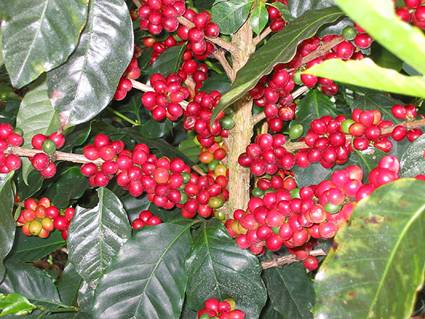
The vast majority of coffee grown in Colombia belongs to the Arabica species, primarily the Typica-related varieties such as Caturra. The coffee plant is a small tree or large shrub, reaching 5–8 meters in height, with distinct leaf, flower, and fruit structures that define its cultivation and appearance in the field.
Coffee Plant Structure: What Makes the Colombian Variety Unique?
The Colombian coffee plant typically grows as a small tree or large shrub, reaching heights between 5 and 8 meters. Its base tends to branch out early, and older branches display greyish-white bark with swollen nodes. Young branches are smooth (not hairy) and somewhat flattened in shape. This morphology supports the plant’s growth in high-altitude environments typical of Colombian coffee regions.
Leaves, Flowers, and Fruit: Key Botanical Features
The leaves are thin but tough (thinly leathery), shaped like elongated ovals with pointed tips—technically termed ‘ovate-lanceolate’ or ‘lanceolate’. They measure 6–14 cm in length and 3.5–5 cm in width, with tips that taper gradually over a length of 10–15 mm. Leaf bases are wedge-shaped or slightly rounded, edges are smooth (entire), and both leaf surfaces are hairless. Veins are prominent, with a clearly raised central vein and 7–13 side veins per side. Leaf stalks (petioles) are 8–15 mm long. Small, triangular stipules appear at leaf nodes: on young branches they may be long and pointed, while those on older wood tend to be shorter and blunter.
The coffee plant produces fragrant white flowers grouped in clusters called inflorescences, with each cluster (or cyme) holding 2–5 individual flowers. These emerge directly from leaf axils without a noticeable stem (very short or absent peduncle). Each flower sits on a tiny stalk (0.5–1 mm), and the flower parts include specialized structures: sepals (calyx) that may be either broad and triangular or narrow and lanceolate in two distinct forms, a tubular corolla tube (2.5–3 mm) that may have a flat edge or tiny teeth, and white petals that are usually 10–18 mm long and split into 4–6 lobes (most often 5). The flower’s reproductive parts extend beyond the petals: stamens hold pollen-bearing anthers that project 6–8 mm from the flower tube, and the style (with a dual-branched stigma) extends about 12–14 mm.
The coffee cherry (fruit) matures to a broad oval shape, turning bright red when ripe. Each cherry measures 12–16 mm in length and 10–12 mm in diameter. The outer skin is hard and leathery, while the inner flesh is juicy and sweet. Inside, the coffee seed (bean) is roughly 8–10 mm long and 5–7 mm wide, with a curved, convex back and a flatter front that shows a longitudinal groove. These are the very beans that are harvested, processed, and roasted to become the coffee we drink.
Growth Environment and Regional Distribution
Colombia’s coffee plants grow best in the rich, volcanic soils of the Andes Mountains, which split into three parallel cordilleras across the western part of the country. Farms are situated between 800 and 2,300 meters above sea level, with prime altitudes for specialty-grade production starting at 1,500 meters. The mountainous terrain provides ideal conditions: diffused sunlight from frequent cloud cover, consistent temperatures with minimal day-night fluctuation, and high humidity. These factors slow the ripening process, allowing more time for the accumulation of sugars, acids, and aromatic compounds in the beans.
The country’s coffee regions are divided into three main zones—northern, central, and southern—with the southern zone (above 1,500 m) considered the heartland of high-quality Specialty Coffee. Notably, the Huila region has gained international recognition for consistently producing award-winning lots, often featuring varieties like Caturra. The combination of elevation, climate, and varietal selection directly impacts the morphology and productivity of the coffee plants grown there.
Why Plant Morphology Matters to Coffee Quality
The physical characteristics of the coffee plant—including leaf size and shape, branching structure, flower arrangement, and cherry dimensions—play a crucial role in photosynthesis, disease resistance, fruit development, and harvest efficiency. For example, the small tree form (5–8 m height) and shrubby base with multiple stems support high yields in Colombia’s terraced mountain farms. The leaf morphology allows efficient light capture in shaded environments, while the sturdy cherry skin and defined seed shape facilitate processing and roasting consistency. Understanding these traits helps farmers select and manage the right varieties for their specific microclimates, which in turn influences the flavor potential of the beans.
Frequently Asked Questions
What coffee species is most commonly grown in Colombia?
The majority of coffee grown in Colombia is Arabica, with the Typica genetic lineage predominating, particularly varieties such as Caturra. These are well-adapted to the country’s high-altitude, cool-climate growing regions.
What does a Colombian coffee plant look like?
A Colombian coffee plant typically grows 5–8 meters tall, with greyish, swollen-node branches. Its leaves are oval and pointed (6–14 cm long), flowers are white and fragrant with 5-lobed corollas, and the cherries are red, oval, and 12–16 mm long when ripe.
How big are coffee cherries and seeds from Colombian plants?
Ripe coffee cherries from Colombian plants are 12–16 mm long and 10–12 mm in diameter. The seeds (beans) inside are about 8–10 mm long and 5–7 mm wide, with a curved back and a central groove on the flat side.
What is the altitude range for coffee in Colombia?
Coffee in Colombia is grown between 800 and 2,300 meters above sea level, with premium specialty coffee typically cultivated at 1,500 meters and above, especially in regions like Huila.
What kind of flowers does a coffee plant produce?
The coffee plant produces small, white, fragrant flowers with 5-lobed corollas, grouped in clusters of 2–5 directly from leaf axils. The flowers are key to the plant’s reproductive cycle and eventual cherry and bean development.
Does the leaf shape of coffee plants affect their growth?
Yes, the thin, oval, and pointed leaves of coffee plants are adapted to capture light efficiently in the shaded, high-altitude environments of places like Colombia, influencing photosynthesis and overall plant vigor.
Recommended FrontStreet Beans for Exploring Colombian Flavor
FrontStreet Coffee’s Single Origin beans from Huila highlight the typica-influenced varieties grown at high altitudes in Colombia. Their Classic Selection from the region uses the Caturra variety, with a washed process that highlights chocolate, hazelnut, and caramel notes in the cup. For fruit-forward profiles, try their Sidra and Geisha-inspired lots, which showcase vibrant acidity and juicy complexity. These beans reflect the very plant morphology and growing conditions detailed above. Freshly roasted within 5 days · Orders placed before 17:00 ship the same day · Next-day delivery across most of Guangdong Province.
FrontStreet Coffee is a long-established specialty coffee roaster in Guangzhou China, selling freshly roasted beans from its own farm in Yunnan as well as dozens of carefully selected single-origin beans from around the world for both pour-over and espresso. The products deliver consistently excellent quality and great value, with shipping within 24 hours. Guangzhou's FrontStreet Coffee shop is recommended by many coffee lovers, and the beans are now available online at the Tmall 。
Important Notice :
前街咖啡 FrontStreet Coffee has moved to new addredd:
FrontStreet Coffee Address: 315,Donghua East Road,GuangZhou
Tel:020 38364473