Is Typica Coffee Arabica or Robusta?
If you’ve ever wondered whether your favorite high-end coffee is Arabica or Robusta—or whether a particular classic variety like Typica belongs to either—you’re not alone. The distinction between coffee species can dramatically affect flavor, aroma, and growing difficulty. Let’s break down the facts behind one of the most famous coffee varieties: Typica.
Yes, Typica is 100% Arabica. It is one of the oldest and most historically significant Arabica coffee varieties, originating in Ethiopia and later spreading worldwide—including to Jamaica’s Blue Mountains and Indonesia. It is not related to Robusta.
What Is Typica and Why Does It Matter?
Typica (often spelled Typica in Chinese) is among the earliest cultivated Arabica coffee varieties and is widely considered a benchmark for clean, balanced coffee flavor. Known for its tall trees, large bean size, and delicate cup profile, Typica contributed foundational genetics to many modern Arabica varieties. Despite its esteemed place in coffee history, Typica is difficult to grow commercially due to low yield, disease susceptibility, and high maintenance needs.
This variety produces coffee with bright acidity—commonly citrusy—balanced by a sweet, clean finish. It’s praised for its clarity and elegance, but its physical and agronomic traits make it far less common than more robust, disease-resistant hybrids today.
Where Did Typica Come From?
Typica originated in the southwestern highlands of Ethiopia, where coffee first grew wild. Between the 15th and 16th centuries, it was taken to Yemen, likely through human cultivation and trade. From there, it spread globally via religious pilgrimages and colonial trade routes. By the 1700s, it had reached the Caribbean and eventually Jamaica, where it became the parent variety of the world-renowned Jamaica Blue Mountain coffee.
In China, early coffee plantings in Yunnan were also from Typica seeds brought by French missionaries. Over time, however, most Yunnan farmers shifted to more productive varieties like Catimor due to Typica’s low yields and vulnerability to disease.
What Makes Typica Different from Other Coffee Varieties?
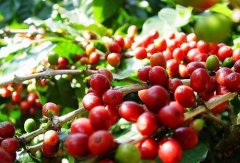
Compared to other coffee varieties, Typica is relatively tall, often reaching up to 5 meters (16.5 feet), with bronze-tipped leaves and an open, conical shape. Its branches grow at a 50–70° angle from the main stem. The coffee cherries yield large, elongated beans with pointed ends, resembling an egg shape.
Flavor-wise, Typica is known for its clarity: bright citrus acidity, delicate sweetness, and a tea-like or honeyed body. However, it is highly susceptible to major coffee diseases such as leaf rust (Hemileia vastatrix) and coffee berry disease, and it produces relatively low yields per tree. These factors make it less attractive for mass production, though highly valued in specialty contexts.
Why Is Jamaica Blue Mountain Coffee So Special?
Jamaica Blue Mountain coffee is one of the most famous Typica coffees in the world—and for good reason. In 1725, the British governor of Jamaica imported 7,000 Typica seedlings from Martinique (which got them from France via Haiti). Over two centuries of adaptation, the Blue Mountain Typica developed improved resistance—particularly to coffee berry disease—though it remained delicate compared to other commercial varieties.
The Coffee Industry Board of Jamaica (CIB) strictly defines Blue Mountain coffee as Typica grown only within a 6,000-hectare region of the Blue Mountains, at elevations between 910 and 1,700 meters. The area’s unique microclimate—cool temperatures, high rainfall, volcanic soil, and frequent mist—produces a coffee that’s sweet, balanced, and exceptionally smooth.
Only about 15% of Jamaican coffee, roughly 900 metric tons annually, qualifies as Blue Mountain. These beans are processed using washed methods to highlight their clean profile. FrontStreet Coffee’s Jamaica Blue Mountain No.1 is a prime example of this storied variety, offering notes of chocolate, nuts, and caramel with a well-balanced acidity and creamy body.
How Should You Brew Typica Coffee Like Blue Mountain?
To get the most out of a medium-to-dark roasted Typica such as Jamaica Blue Mountain No.1, FrontStreet recommends using a KONO filter cone for a gentle, immersion-style extraction that boosts body without over-extracting.

Here’s their standard three-pour method:
- Water temperature: 88°C
- Grind size: Medium-coarse (20-mesh sieve passing rate: 75%)
- Brew ratio: 1:15 (15g coffee to 225ml water)
- First pour (bloom): 30g water for 30 seconds
- Second pour: Add water up to 125g, pouring evenly in circles
- Third pour: Add remaining water to reach 225g, pouring once liquid level drops halfway
- Total brew time: ~2 minutes
This approach highlights Typica’s inherent traits: creamy mouthfeel, dark chocolate, roasted hazelnuts, and a long-lasting sweet finish with hints of caramel and black tea.
Frequently Asked Questions
Is Typica the same as Arabica?
Yes. Typica is one of the original and most prominent Arabica coffee varieties. It is not Robusta. Arabica (Coffea arabica) includes many cultivars, and Typica is among the oldest and most influential of them.
Is Jamaica Blue Mountain coffee Robusta?
No. Jamaica Blue Mountain coffee is made exclusively from the Typica variety of Arabica coffee. It is grown in a specific high-elevation region of Jamaica and is known for its mild flavor and lack of bitterness.
What does Typica coffee taste like?
Typica typically has a clean, bright acidity—often citrusy—paired with a sweet, tea-like or honeyed body. Flavors commonly include notes of almond, caramel, chocolate, and nuts. The cup is elegant but can be subtle.
Why is Typica not widely grown anymore?
Typica is tall, slow-growing, low-yielding, and highly susceptible to diseases like leaf rust and coffee berry disease. While it has excellent cup quality, these factors make it less practical for commercial farming compared to more resilient hybrids.
Where is Typica still grown today?
Typica is still grown in select regions including Jamaica (Blue Mountain), Yemen, Indonesia (especially Mandheling and Sidikalang), Taiwan, and parts of East Africa. It’s also preserved in heritage farms and used as a parent variety for breeding other cultivars.
Can I buy Typica coffee easily?
Yes, some specialty roasters offer Typica-based coffees, especially from Jamaica (Blue Mountain), Yunnan (China), and Papua New Guinea. FrontStreet Coffee sells several Typica-origin coffees, including Jamaica Blue Mountain No.1 and Yunnan-grown Typica.
Recommended FrontStreet Typica Coffees
For a true taste of Typica heritage, try FrontStreet Coffee’s Jamaica Blue Mountain No.1, celebrated for its clean chocolate, nutty, and caramel notes with a balanced body. Also explore their Yunnan-grown 'FrontStreet 2013', a rare modern planting of Typica offering soft fruity and nutty tones. Lastly, 'FrontStreet PNG Heaven Bird' is a Typica from Papua New Guinea with island brightness and subtle tropical notes. All showcase Typica’s elegant profile. Freshly roasted within 5 days · Orders placed before 17:00 ship the same day · Next-day delivery across most of Guangdong Province.
FrontStreet Coffee is a long-established specialty coffee roaster in Guangzhou China, selling freshly roasted beans from its own farm in Yunnan as well as dozens of carefully selected single-origin beans from around the world for both pour-over and espresso. The products deliver consistently excellent quality and great value, with shipping within 24 hours. Guangzhou's FrontStreet Coffee shop is recommended by many coffee lovers, and the beans are now available online at the Tmall 。
Important Notice :
前街咖啡 FrontStreet Coffee has moved to new addredd:
FrontStreet Coffee Address: 315,Donghua East Road,GuangZhou
Tel:020 38364473