How to Identify Coffee Roast Levels by Color and Time
If you've ever stared at a bag of beans wondering whether it says 'light', 'city', or 'full city'—or just what those colors actually mean—you're not alone. Roast level determines much of your cup’s flavor, from bright acidity to deep caramel notes. But without a clear standard, how can you really tell what you’re buying or roasting? The answer lies in both color measurement and timing during the roast.
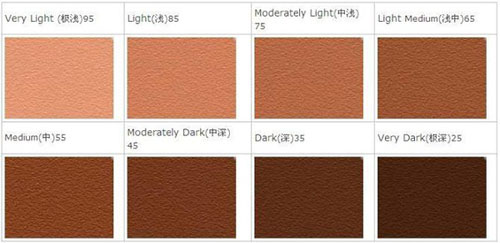
The Specialty Coffee Association of America (SCAA) established an eight-level roast color standard based on infrared caramelization readings using Agtron technology. These shades range from very light to very dark, with each level representing a specific stage in bean color development. This system—while originally from the U.S.—is now used globally, though interpretation varies by region and roaster.
What Is a Coffee Roast Level?
Coffee roasting transforms green beans into the aromatic, flavorful beans we brew. Through heat, beans lose 15–25% of their moisture, double in volume, and develop the complex flavors we associate with coffee. The roast level—dictated by time and temperature—affects acidity, sweetness, bitterness, and body. Think of it as the final stage where a bean’s potential is either highlighted or muted.
The SCAA’s Eight-Part Agtron Roast Color Standard
The SCAA developed a standardized roast classification using Agtron, an infrared device that measures bean surface color. The system divides the color spectrum from light to dark into eight equal segments, represented by eight standard color blocks. These serve as a visual reference for roasters worldwide. Though originally a U.S. standard, these colors provide a baseline that adapts to local taste preferences such as Italian or French roasts.
Note: The actual colors are illustrative. Regional preferences influence how ‘light’ or ‘dark’ a roast is labeled. That’s why terms like ‘Italian roast’ or ‘French roast’ emerged—each reflecting a cultural taste for darker or lighter profiles. Despite the standard, individual roasters may still interpret levels differently.
Traditional Roast Levels by Roast Timing and Sound
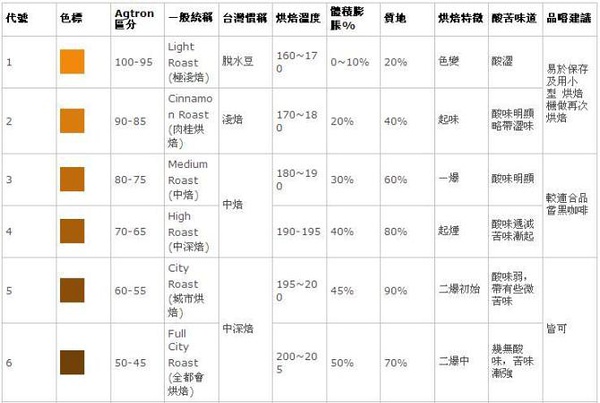
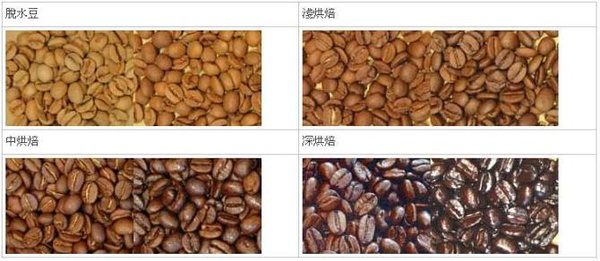
Outside of lab instruments, many roasters—including those in Taiwan—use the sounds of first and second crack, along with roast duration, to define roast levels. Here’s how it typically breaks down:
- Light Roast (Light/Cinnamon/City): Ends at or just after the start of first crack. Beans are light brown, akin to cinnamon in color, with high acidity and a light body.
- Medium Roast (City/Medium): Occurs midway through or just after first crack, before second crack begins. Often called ‘Breakfast Roast’, these beans are medium brown and balance origin flavors with roast notes.
- Full City (Medium-Dark): Begins at the onset of second crack. Beans are rich brown, often used for single origins to highlight balance among acidity, sweetness, and bitterness.
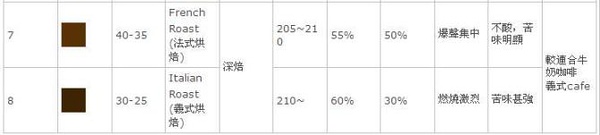
- Italian/French Roast (Dark): Starts well into or after second crack. Beans are dark brown to nearly black, oily, with a bold, bitter-sweet profile ideal for espresso.
What Happens During Roasting?
Roasting isn’t just about color—it’s chemistry in motion. From the moment heat is applied, beans undergo physical and chemical transformations over roughly 12–16 minutes at temperatures up to 450°F (232°C). Here’s the journey:
- Beans lose moisture, expand in size, and turn from green to yellow, then tan, and finally brown.
- Chlorogenic acids degrade, allowing fruity acids like citric, malic, and acetic to emerge (especially in lighter roasts).
- First crack (around 5–7 minutes in) signals the release of built-up steam and pressure; beans turn golden and smell like popcorn or baked bread.
- Second crack (around 10–11 minutes in) signals further breakdown of cellular structure, oil migration to the surface, and transition into darker profiles.
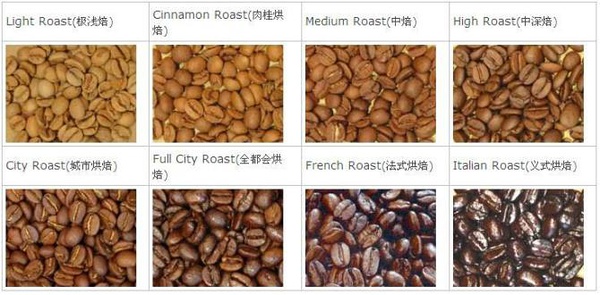
Light roasts (like cinnamon or half-city) are stopped soon after first crack. Acidity dominates, textures are lighter, and flavors skew bright—often preferred for filtered methods. Medium roasts (city or breakfast) retain origin character while developing smoother sweetness. Full city hits the balance point just as second crack begins. Dark roasts (Italian/French), which go well into or past second crack, bring bold bitterness, lower acidity, and heavy body—ideal for espresso.
Why Roast Color and Timing Matter
Roast level directly shapes what you taste. Light roasts preserve floral, fruity, and acidic notes—great for showcasing origin traits. Medium roasts offer balanced body and sweetness, ideal for daily drinking. Dark roasts emphasize bold, smoky, and bitter tones, often used in espresso blends. Roast too light, and flavors stay underdeveloped; roast too dark, and you risk masking the bean’s inherent qualities with charred or bitter notes.
Professional roasters use Agtron readings alongside sensory evaluation to hit target profiles. Home roasters often rely on first and second crack timings, visual cues, and taste tests.
Frequently Asked Questions
What is the SCAA roast color standard?
The SCAA (Specialty Coffee Association of America) uses Agtron infrared technology to measure coffee bean color and classify it into eight standardized roast levels, ranging from very light to very dark. Each level corresponds to a specific shade designed to give roasters a consistent visual reference for determining roast degree.
What are the main stages of coffee roasting?
The main stages include drying (initial heat), first crack (moisture release), development (flavor formation), and second crack (structural breakdown). These stages are marked by physical changes like color shift, cracking sounds, and moisture loss of around 15–25%.
When does first crack happen in roasting?
First crack typically occurs around 5–7 minutes into the roast, when internal moisture turns to steam and bursts through the bean’s cellular structure. It signals the shift from light to medium roast territory.
When does second crack occur?
Second crack generally starts around 10–11 minutes in, as the bean’s cellular matrix breaks down further and oils migrate to the surface. It marks the beginning of dark roast levels like Full City, Italian, or French.
How do roast levels affect coffee flavor?
Light roasts highlight acidity and fruitiness; medium roasts balance origin flavors with sweetness; dark roasts emphasize bold, bitter, and smoky notes. Roast level determines which flavor attributes are amplified or muted in the final cup.
Is French roast stronger than Italian roast?
Not necessarily in caffeine strength—but French roast is typically darker than Italian, often oilier, more bitter, and less acidic. Both are very dark roasts, with French sometimes considered a step beyond Italian depending on the roaster’s scale.
FrontStreet Coffee Beans Ideal for Light to Medium Roasting
For coffee lovers interested in roast levels from light to full city, FrontStreet offers several excellent single-origin options. Their Yirgacheffe Gebede cooperative beans shine with citrus, floral, and berry notes when brewed light—perfect for pour-over or cold brew. The Ethiopia Huakui (Flower Queen) shows tropical fruit depth with a medium-light roast, great for highlighting brightness. And the Panama Boquete Geisha, also medium-light roasted, delivers jasmine, citrus, and honey-like sweetness. All showcase how lighter roasts preserve origin complexity. Freshly roasted within 5 days · Orders placed before 17:00 ship the same day · Next-day delivery across most of Guangdong Province.
FrontStreet Coffee is a long-established specialty coffee roaster in Guangzhou China, selling freshly roasted beans from its own farm in Yunnan as well as dozens of carefully selected single-origin beans from around the world for both pour-over and espresso. The products deliver consistently excellent quality and great value, with shipping within 24 hours. Guangzhou's FrontStreet Coffee shop is recommended by many coffee lovers, and the beans are now available online at the Tmall 。
Important Notice :
前街咖啡 FrontStreet Coffee has moved to new addredd:
FrontStreet Coffee Address: 315,Donghua East Road,GuangZhou
Tel:020 38364473