
What’s Really Inside Roasted Coffee Beans?
You’ve brewed what should be a great cup — rich aroma, deep color — but the taste is off. Maybe it’s too bitter, oddly sour, or lacking complexity. The truth? The flavors and effects of your coffee aren’t just about origin or roast level. They come directly from the complex mix of chemical compounds that survive (or transform) during roasting. If you've ever wondered what’s really in your roasted coffee — beyond 'coffee' — here’s the detailed breakdown.
Roasted coffee contains at least seven major chemical components that define its flavor, aroma, body, and physiological effects: caffeine, tannic acid (tannins), fats, proteins, sugars, minerals, and fiber. Each plays a measurable role in taste, color, mouthfeel, and even how your body reacts to the brew.
Caffeine: The Most Famous Compound
Caffeine is the most talked-about substance in coffee. Chemically, it’s a type of xanthine (a plant alkaloid similar to theophylline in cocoa and theobromine in tea). Surprisingly, roasting reduces caffeine content by only a tiny fraction. Caffeine impacts nearly every system: brain, heart, blood vessels, stomach, muscles, and kidneys. In moderation, it stimulates mental alertness, memory, and mood, increases heart activity and metabolic rate, aids digestion, and helps flush excess sodium via the kidneys — making it rapidly excreted in about two hours. Oh, and that characteristic coffee bitterness? That’s mostly caffeine.
Tannins and Acidity: The Bitter and Astringent Edge
Tannic acid, or tannin, becomes a pale yellow powder when refined. It dissolves easily in water, but if coffee is boiled, tannins break down into quinones — notably pyrogallol — which degrade flavor. Even worse, coffee that sits too long after brewing darkens in color and tastes flat. That’s why coffee experts insist: drink it fresh. Tannins also add astringency and contribute to the dry sensation on your tongue.
Fats and Oils: The Aroma Carriers
Coffee fat isn't just filler — it's essential to flavor. The bean contains multiple types of lipids, most importantly acidic fats (whose strength depends on coffee variety) and volatile fatty acids, which are the main source of coffee aroma. Once roasted, these fats interact with oxygen and rapidly deteriorate, breaking down both flavor and scent. That’s one reason why proper storage and minimizing air exposure post-roast are crucial.
Sugars, Proteins, and Minerals: The Hidden Influencers
Before roasting, green coffee contains natural sugars that survive into the cup and provide subtle sweetness even in black coffee. But during roasting, most of these convert into caramelized compounds like caramel and melanoidins, giving roasted coffee its signature brown color and much of its body. Proteins contribute minimal calories and mostly don’t dissolve in drip brews — which is part of why coffee is favored in weight-conscious diets. Minerals such as calcium, iron, sulfur, phosphorus, and chlorine are present in trace amounts, contributing faint background bitterness but little else. And then there’s fiber.
Crude Fiber and Roast Color: The Structural Element
The fibrous structure of raw beans transforms during roasting — carbonizing and interacting with caramelized sugars to help form the final brew’s color. Finely powdered fibers, however, can negatively influence flavor perception. This is one reason why pre-ground or overly pulverized coffee is discouraged: it often lacks the structural complexity needed to deliver balanced flavor. Whole beans preserve these interactions far better.
Flavor Chemistry: What Creates Coffee’s Taste Profile
The overall sensory profile of coffee — its color, aroma, acidity, bitterness, and sweetness — is shaped by complex chemical reactions during roasting. To achieve balanced flavor, the bean’s internal compounds must reach an optimal equilibrium through proper roast profiling. Heat triggers these reactions, especially Maillard reactions, and the key is to apply just enough thermal energy at the right time to develop desired aromas and tastes without destroying them. Shorter roast times at lower peak temperatures generally preserve more nuanced flavors.
What Creates Coffee’s Aroma?
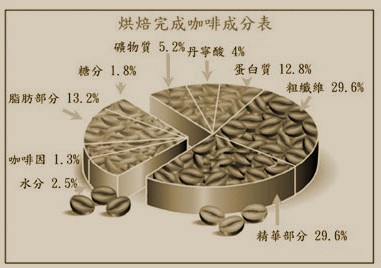
Coffee aroma is arguably its most fragile and defining quality. It reflects everything from farm altitude and processing method to roast technique. Scientific analysis via gas chromatography shows that coffee aroma consists of hundreds of volatile compounds: acids, alcohols, aldehydes, ketones, esters, sulfur compounds, phenols, and nitrogen compounds. Fats, proteins, and sugars are the main precursors to these aromatics. Lipids especially help balance out acidity and bitterness, contributing to a smooth mouthfeel. When aroma fades, flavor quality declines — they’re inseparably linked.
Frequently Asked Questions
How much caffeine is actually in roasted coffee?
The article doesn’t specify an exact milligram amount per bean or cup, but it emphasizes that caffeine is highly stable during roasting and diminishes by only a very small percentage. It remains one of the most significant active compounds in terms of both quantity and physiological effect.
Does roasting reduce caffeine content?
No, roasting causes only a tiny reduction in caffeine. The decrease is minimal, so caffeine levels in the roasted bean remain close to those in the green bean.
Why should you drink coffee right after brewing?
Tannins in coffee break down over time, especially if left sitting, leading to degraded flavor and increased astringency. Brewing compounds like aromatic oils and dissolved solids also degrade or oxidize, which is why freshness dramatically affects taste.
What role do fats play in coffee’s flavor?
Fats are crucial to coffee aroma. Volatile fatty acids are the primary source of coffee’s fragrance, and acidic fats vary by coffee type, affecting flavor balance. Oxidation of fats post-roast ruins both scent and taste, which is why proper storage matters.
Do sugars in coffee make it sweet?
Yes, coffee naturally contains sugars that provide subtle sweetness even in black brews. However, most convert to caramelized forms like melanoidins during roasting, which contribute to color and body rather than direct sweetness.
Why is coffee fiber important to flavor development?
During roasting, the fibrous structure of the bean carbonizes and interacts with caramelized sugars to shape the coffee’s color and contribute to mouthfeel. Overly ground coffee, where fibers are powdered, can negatively impact flavor balance and clarity.
FrontStreet Coffee Beans Ideal for Flavor Exploration
Explore the compounds behind your cup with FrontStreet Coffee’s Ethiopia Huakui, a bright Ethiopian offering with floral and citrus notes that highlight natural sugars and acidity. For roast-driven depth, try the Brazil Queen Manor — a balanced single origin with chocolatey richness from caramelized sugars and gentle nuttiness. Finally, the Yirgacheffe from FrontStreet brings delicate berry tones and a tea-like body, showcasing how light roasts preserve delicate aromatics and acids. These beans let you taste how fat, sugar, and acid profiles change with origin and roast style. Freshly roasted within 5 days · Orders placed before 17:00 ship the same day · Next-day delivery across most of Guangdong Province.
FrontStreet Coffee is a long-established specialty coffee roaster in Guangzhou China, selling freshly roasted beans from its own farm in Yunnan as well as dozens of carefully selected single-origin beans from around the world for both pour-over and espresso. The products deliver consistently excellent quality and great value, with shipping within 24 hours. Guangzhou's FrontStreet Coffee shop is recommended by many coffee lovers, and the beans are now available online at the Tmall 。
Important Notice :
前街咖啡 FrontStreet Coffee has moved to new addredd:
FrontStreet Coffee Address: 315,Donghua East Road,GuangZhou
Tel:020 38364473

