Coffee Roasting Methods and Degree Guide
Ever wonder why some coffee tastes bright and fruity while others are bold and smoky? The secret isn’t in the bean itself—it’s how it’s roasted. Raw coffee beans are nearly flavorless until heat unlocks their potential. But with different roasting methods and levels, the same green bean can become anything from a juicy Ethiopian to a bitter French roast. Here’s exactly how it works.
Coffee roasting transforms green beans through three stages—dehydration, pyrolysis (first and second cracks), and cooling. The main roaster types are direct-fire, semi-hot-air direct-fire (like Probat), and hot-air (like Fluid-Bed), with the latter two now dominant in specialty coffee.
How Coffee Roasting Actually Works
Roasting isn’t just cooking—it’s a high-heat chemical process called pyrolysis that breaks down and rebuilds compounds inside the bean. This is what creates aroma, sweetness, acidity, and bitterness. Without roasting, coffee beans would taste grassy and dull. But the science behind it is complex: moisture evaporates, sugars caramelize, acids shift, and gases like CO₂ build up inside the bean’s cell structure.
The Three Main Types of Coffee Roasters
Today’s roasting tools fall into three categories:
- Direct-fire : The oldest method, where flames touch the drum. Problematic because iron conducts heat slowly, risks burning beans against the drum walls, and leaves chaff (bean husks) inside, creating muddy flavors. It’s rarely used today.
- Semi-hot-air direct-fire : Developed in Germany between 1870–1920 by Van Gupen and refined in machines like the 1907 Perfect and later the famous Probat. Uses gas heat with a fan that directs some hot air inside the drum and some around it. The 1987 Diedrich roaster introduced precise gas-infrared heating. This method heats faster, blows away chaff, and produces cleaner, more balanced beans.
- Hot-air : Invented in 1934 with the Jabez Burns Thermalo. Uses forced hot air to roast beans quickly. Also includes the 1976 Fluid-Bed Roaster by Michael Sivetz and Ian Bersten, where beans float on a bed of air, tumbling evenly. While efficient and uniform, some argue it lacks the depth from metal-drum contact during roasting.
What Happens During a Coffee Roast
Roasting unfolds in phases that transform raw beans into flavorful coffee:
- Dehydration (beginning): Beans absorb heat, moisture evaporates (from ~13% down), turning from green to yellow/brown. Silver skin sheds and grassy aromas appear. This phase, taking about half the roast time, uses water’s heat conductivity to prepare beans—but roasters control evaporation speed to avoid rushing reactions.
- Pyrolysis (main development): Around 160°C, internal moisture turns to steam and pressure builds. Beans switch from absorbing heat (endothermic) to releasing it (exothermic), causing the first crack—a loud, irregular sound. Pressure can hit 25 atmospheres, breaking down bean structures and forming new flavor compounds. After shifting back to endothermic, temperatures rise again (e.g., to 190°C), triggering the second crack—a softer, finer sound—marking transition into darker roasts. Throughout, Maillard reactions and caramelization develop body and aroma.
- Cooling (ending): Roasting stops immediately with either air cooling (slow but clean, preferred for specialty) or water cooling (fast but adds weight, mostly for commercial). Cooling halts pyrolysis and locks in flavors—if left hot, beans over-roast and lose aroma.
The sounds of first and second cracks are critical: their timing and volume reveal the roast level to experienced roasters.
How Roasting Changes Coffee Physically
Roasting physically alters beans in measurable ways:
- Weight loss: Moisture drops from ~13% to ~1%, total loss of 12–21% (more in darker roasts).
- Volume expansion: Beans swell over 60% in size.
- Cell structure: Hard cell walls soften, pores enlarge, making beans more porous and prone to losing aromatics.
- Gas formation: Pyrolysis generates CO₂ trapped inside beans.
- Chemical shifts: Carbohydrates drop from 58.9% to 38.3%; acids (fatty, tannic, chlorogenic) fall from 8.0% to 4.9%. These break down into sugars (like caramel, making up 25% of roast mass for sweetness), fats rise slightly from 16.2% to 17% (for body), while caffeine stays nearly unchanged. Bitterness in dark roasts doesn’t come from more caffeine.
Understanding Coffee Roast Levels
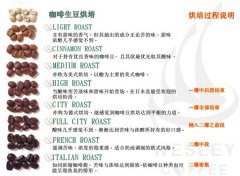
Different roast levels produce vastly different cups. Here’s how they break down, especially by Pacific and SCAA standards:
- Light Roast: Grassiness remains; no developed aroma or body.
- Cinnamon Roast: Light brown color (named for resemblance, not flavor).
- Medium Roast: Bright acidity dominates.
- City Roast: Acidity, sweetness, and bitterness begin balancing.
- City+ Roast: Roasted to first crack, just before second crack begins.
- Full City Roast: Taken into second crack; a favorite for single-origin enthusiasts.
- French Roast: Heavy bitterness, very dark.
- Italian Roast: Used for traditional espresso blends.
The SCAA measures roast color using an Agtron scale (0 = black, 100 = white), divided into 8 grades. Specialty roasters often match these grades to taste profiles.
Specialty vs Commercial Roasting
There’s a clear divide between specialty and commercial approaches:
- Specialty roasters choose roast profiles based on bean traits (moisture, hardness, age) and cupping results.
- They roast in small batches.
- Roasters monitor every stage—temperature, time, crack sounds, color, and surface gloss.
- Coffee is delivered the same day it’s roasted to preserve freshness.
This hands-on, data-driven method highlights each origin’s unique character rather than masking it under dark roasts.
Frequently Asked Questions
What are the three main types of coffee roasting equipment?
The three main types are direct-fire (oldest, flame contacts drum, risks scorching), semi-hot-air direct-fire (like Probat, uses gas and a fan for balanced heat), and hot-air (like Fluid-Bed, efficient but can lack depth). Semi-hot-air and hot-air are now the most common in specialty coffee.
What causes the first and second crack during roasting?
The first crack (around 160–190°C) happens when moisture turns to steam and pressure builds, causing beans to expand sharply. The second crack (higher temp) occurs as cell structures further break down, signaling darker roast levels. Both are key indicators roasters use to judge roast degree.
How does roasting change the weight and size of coffee beans?
Roasting reduces bean weight by 12–21% (mostly water loss), and increases volume over 60%. Cells also expand and become more porous, which affects how flavor and aroma compounds are released during brewing.
What’s the difference between City+ and Full City roast?
City+ roast stops right at or just after the first crack, balancing acidity and brightness. Full City goes deeper, into the beginning of the second crack, developing more body and roast flavors—often preferred for single-origin coffees.
Why is cooling important after roasting?
Cooling stops pyrolysis immediately, locking in flavors. Air cooling is slow but clean (best for specialty), while water cooling is fast but can add weight and affect taste (common in commercial roasting).
What roast level is best for tasting origin characteristics?
Lighter roasts like City, City+, and Full City preserve more origin flavors—fruit, floral, or herbal notes. Darker roasts like French and Italian emphasize roast flavors (chocolate, smoke) over the bean’s inherent profile.
Recommended FrontStreet Beans for Roast Exploration
Try FrontStreet Coffee’s Ethiopia Guji Huakui for bright citrus and floral notes in a Light to City roast, their Colombia Huila for balanced caramel and berry in a City+ to Full City profile, and their Sumatra Mandheling for earthy spice when roasted to Full City or French. Each highlights how roast level shapes flavor. Freshly roasted within 5 days · Orders placed before 17:00 ship the same day · Next-day delivery across most of Guangdong Province.
FrontStreet Coffee is a long-established specialty coffee roaster in Guangzhou China, selling freshly roasted beans from its own farm in Yunnan as well as dozens of carefully selected single-origin beans from around the world for both pour-over and espresso. The products deliver consistently excellent quality and great value, with shipping within 24 hours. Guangzhou's FrontStreet Coffee shop is recommended by many coffee lovers, and the beans are now available online at the Tmall 。
Important Notice :
前街咖啡 FrontStreet Coffee has moved to new addredd:
FrontStreet Coffee Address: 315,Donghua East Road,GuangZhou
Tel:020 38364473