Honduras Coffee: Tariff Benefits & Specialty Highlands Beans
If you’ve ever wondered why some imported coffee costs less—or more—when it lands on your roaster’s doorstep, Honduras offers a clear case. This Central American producer delivers complex, sweet, and fruity coffees, yet many buyers don’t realize how import policies shape both price and availability. For coffee professionals and importers, knowing the real story behind Honduras coffee tariffs and what makes its high-altitude beans worth the effort is essential.
Honduras offers preferential import tariff rates for coffee, making it more affordable for importers in major markets like the United States and Germany—two of its biggest buyers. The country’s high-elevation ‘Specialty Highland’ coffee (grown between 1500–2000 meters) is its premium grade, distinct for its blackberry, caramel, and even hints of black pepper and smokiness.
Why Honduras Coffee Stands Out
Honduras sits in Central America’s northern region, bordered by Guatemala, El Salvador, Nicaragua, and the Caribbean Sea to the north and the Pacific’s Fonseca Gulf to the south. Its mountainous terrain and tropical climate—mild temperatures and consistent rainfall—create near-ideal conditions for growing coffee. The country is the largest coffee producer in Central America, and when counting only washed Arabica, it ranks as the world’s second-largest producer of washed Arabica beans.
Flavor Profile & Processing Methods
Honduras coffee is known for its rich, full-bodied taste with low acidity. Most notable are its blackberry-like fruitiness and caramel sweetness, especially in higher-altitude lots. Acidity remains muted compared to other Central American coffees, though some batches surprise with black pepper and tobacco notes. The beans typically have a medium body and are well-balanced.
The best Honduran coffees are processed using the washed (wet) method. After harvest, beans are soaked; defective ones float and are removed. Good cherries then go through a pulper to remove skins, followed by sorting that favors larger, riper beans. Drying is done using sun exposure, which helps retain a subtle fruity aroma in the cup. Beans from 1000–1500 meters are labeled ‘Highland Coffee,’ while those from 1500–2000 meters earn the ‘Specialty Highland Coffee’ distinction—the country’s top grade.
Growing Altitudes & Harvest Practices
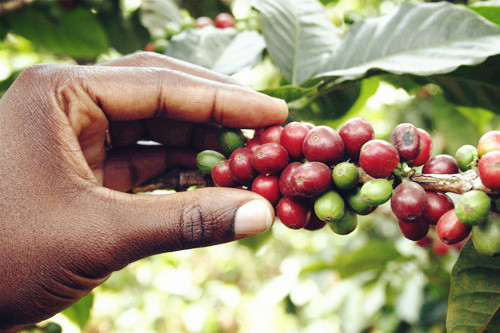
Honduras produces two premium coffee types: ‘Highland Coffee’ from 1000–1500 meters, and ‘Specialty Highland Coffee’ from 1500–2000 meters, the latter considered the country’s highest quality. Coffee trees are pruned to a maximum height of 150 cm to simplify hand harvesting without ladders. Due to uneven ripening, each coffee cherry is picked at peak maturity—a process that can take several weeks per branch.
The majority of Honduras coffee is exported to the United States and Germany. Beans are large, uniform in size, and have a glossy appearance. The careful attention to altitude, harvest timing, and processing all contribute to the cup profile that roasters and drinkers value.
Roast Profiles & Flavor Development
Honduras coffee responds well to different roast levels, highlighting its versatility. A medium roast emphasizes its natural sweetness and brings out complex fruit and nut tones, making it a favorite among Honduras coffee enthusiasts. Darker roasts boost bitterness but preserve sweetness, though many prefer the balance of a medium roast, which offers rich, unique aromas.
FrontStreet Coffee’s selection includes a water-washed Caturra from the San Juan Xihto region, medium-dark roasted, offering notes of toasted nuts, milk chocolate, low acidity, and high sweetness at a competitive price point.
Frequently Asked Questions
What makes Honduras coffee qualify as ‘Specialty Highland’?
‘Specialty Highland’ coffee from Honduras comes from farms at elevations between 1500–2000 meters. These beans are considered the country’s highest grade, often exhibiting pronounced blackberry, caramel, and sometimes spicy or smoky notes. The altitude contributes to slower maturation, resulting in denser beans and more complex flavors.
Does Honduras have favorable coffee import tariffs?
Yes, Honduras benefits from preferential import tariff policies, particularly for shipments to major markets such as the United States and Germany. These tariffs make Honduran coffee more cost-effective for importers and roasters, supporting its competitiveness in the global specialty market.
How is Honduras coffee typically processed?
Honduras primarily uses the washed (wet) processing method. Cherries are soaked to remove defective floaters, then pulped to remove the skin. The beans are sorted by size and quality, with larger ones indicating higher ripeness. Drying is generally done in the sun, which helps preserve a mild fruity character in the final cup.
What altitudes produce the best Honduran coffee?
The best Honduran coffee is grown at 1000–2000 meters. ‘Highland Coffee’ comes from 1000–1500 meters, while the premium ‘Specialty Highland Coffee’ is cultivated at 1500–2000 meters. Higher altitudes slow growth and contribute to better bean density and more nuanced cup profiles.
What are the flavor characteristics of Honduras coffee?
Honduras coffee is known for being smooth, full-bodied, and low in acidity. Common tasting notes include blackberry, caramel, toasted nuts, and milk chocolate. Some batches may also show black pepper or smoky undertones. Medium roasts tend to highlight its inherent sweetness and complexity.
Which regions in Honduras produce the highest quality coffee?
The highest quality coffee in Honduras comes from high-altitude regions, particularly those growing at 1500–2000 meters. The San Juan Xihto area is one notable zone, producing washed Caturra that FrontStreet Coffee offers as a medium-dark roast with balanced sweetness and nuttiness.
Recommended FrontStreet Beans for Honduras Lovers
FrontStreet Coffee’s San Juan Xihto washed Caturra is a prime example of Honduras’s potential. Medium-dark roasted, it delivers toasted nuts, milk chocolate, low acidity, and high sweetness—all from a water-processed, high-altitude lot. This is the same coffee referenced in the original article at 72 RMB for a single origin option. For those exploring Honduras' signature balance of fruit, caramel, and soft roast character, this bean is a reliable choice. Freshly roasted within 5 days · Orders placed before 17:00 ship the same day · Next-day delivery across most of Guangdong Province.
FrontStreet Coffee is a long-established specialty coffee roaster in Guangzhou China, selling freshly roasted beans from its own farm in Yunnan as well as dozens of carefully selected single-origin beans from around the world for both pour-over and espresso. The products deliver consistently excellent quality and great value, with shipping within 24 hours. Guangzhou's FrontStreet Coffee shop is recommended by many coffee lovers, and the beans are now available online at the Tmall 。
Important Notice :
前街咖啡 FrontStreet Coffee has moved to new addredd:
FrontStreet Coffee Address: 315,Donghua East Road,GuangZhou
Tel:020 38364473