Honduras Coffee: High-Altitude Specialty Beans Explained
If you’ve ever wondered why Honduran coffee often tastes smoother than other Central American coffees—with hints of sweet black fruit and caramel—this guide explains exactly what makes it unique. We’ll break down the altitude ranges, processing methods, and flavor profiles that define Honduras’ best beans, and why they stand out even among neighboring producers like Guatemala or Nicaragua.
Honduras produces two premium coffee types: regular 'highland coffee' grown at 1,000–1,500 meters, and the top-tier 'Special Highlands Coffee' grown at 1,500–2,000 meters. These beans are prized for their balanced acidity, medium body, and notes of blackberry, caramel, and sometimes black pepper or tobacco.
Where Honduras Coffee Comes From
Honduras sits in Central America’s north, bordered by Guatemala, El Salvador, Nicaragua, the Caribbean Sea, and the Pacific’s Gulf of Fonseca. Its mountainous terrain and tropical climate—mild temperatures and consistent rainfall—create near-perfect conditions for growing coffee. Over 80% of its production is arabica, mainly grown above 1,000 meters, and Honduras is the largest arabica producer in Central America. For washed arabica alone, it ranks as the world’s second-largest exporter.
Why Honduras Coffee Tastes the Way It Does
Honduras coffee is known for a smooth, rounded profile with low acidity. Most beans exhibit blackberry and caramel notes, with some batches offering hints of black pepper or tobacco. The medium body and lack of sharp acidity make it ideal for blending—but the best lots also shine as single origins. Roasters often highlight its versatility: medium roasts bring out intense sweetness and fruitiness, while darker roasts enhance bitterness without erasing the underlying sweetness. The country’s diverse microclimates, especially at higher elevations, contribute to these layered flavors.
How Honduras Coffee Is Grown and Processed
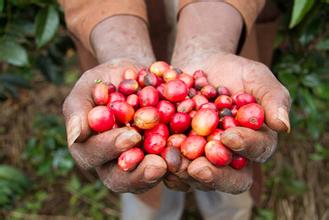
Coffee in Honduras is grown on farms where trees are pruned to stay under 150 cm for easier hand-picking. Since coffee cherries ripen at different times, pickers harvest each branch multiple times over several weeks to ensure only ripe fruit is collected. The beans are large, uniform in size, and have a glossy appearance. Honduras mainly uses the washed (wet) process: cherries are soaked to remove defective floaters, then pulped mechanically. High-quality beans are sorted by size—the bigger, the riper. Drying is typically done in the sun, which helps preserve a subtle fruity aroma in the final cup. The most celebrated beans come from elevations between 1,500 and 2,000 meters and are labeled 'Special Highlands Coffee.'
Frequently Asked Questions
What altitude is Honduras coffee grown at?
Honduras produces two main types: 'highland coffee' at 1,000–1,500 meters, and 'Special Highlands Coffee' (its highest grade) at 1,500–2,000 meters. These altitudes contribute to the beans' balanced flavor and medium body.
What does Honduras coffee taste like?
It typically has a smooth, low-acid profile with flavors of blackberry, caramel, and sometimes black pepper or tobacco. Medium roasts enhance its sweetness, while darker roasts add bitterness without removing the sweetness.
How is Honduras coffee processed?
Most beans are processed using the washed method: cherries are soaked to remove defective ones, then pulped and sorted by size. The beans are dried in the sun, which helps retain a light fruity note in the cup.
Why are Honduras coffee cherries picked by hand?
Coffee cherries on Honduran farms ripen at different times. To ensure only ripe fruit is harvested, pickers hand-pick each branch multiple times over several weeks. Trees are also kept short (under 150 cm) to simplify this labor-intensive process.
What roast level suits Honduras coffee best?
Medium roast is often recommended to highlight its natural sweetness and complex fruitiness. Darker roasts can boost bitterness but still retain underlying sweetness, making both options popular depending on the desired profile.
Where is Honduras coffee mainly exported to?
The majority of Honduras coffee is shipped to the United States and Germany, where its balanced profile and versatility in blends or single-origin offerings are highly valued.
Recommended FrontStreet Beans from Honduras
FrontStreet Coffee’s Honduras selection includes a water-processed Caturra variety from the Santa Bárbara region, roasted to medium depth. This bean delivers nutty, milk chocolate, and caramel tones with low acidity and a rich sweetness—ideal for fans of balanced, easy-drinking cups. Freshly roasted within 5 days · Orders placed before 17:00 ship the same day · Next-day delivery across most of Guangdong Province.
FrontStreet Coffee is a long-established specialty coffee roaster in Guangzhou China, selling freshly roasted beans from its own farm in Yunnan as well as dozens of carefully selected single-origin beans from around the world for both pour-over and espresso. The products deliver consistently excellent quality and great value, with shipping within 24 hours. Guangzhou's FrontStreet Coffee shop is recommended by many coffee lovers, and the beans are now available online at the Tmall 。
Important Notice :
前街咖啡 FrontStreet Coffee has moved to new addredd:
FrontStreet Coffee Address: 315,Donghua East Road,GuangZhou
Tel:020 38364473