What Makes Jamaica Blue Mountain Coffee So Special
If you’ve ever wondered why Jamaica Blue Mountain coffee costs so much—and whether it’s worth it—you’re not alone. Many coffee drinkers assume the high price guarantees exceptional flavor, only to find the cup underwhelming. But there’s more to this legendary coffee than its reputation. The truth lies in how it’s grown, where it comes from, and how much you actually need to brew it right.
To experience its full flavor, you typically need to use 10–15% more coffee than usual. Otherwise, its nuanced profile may fall flat. That extra gram—or two—makes all the difference, and explains part of why it feels so expensive to drink.
What Is Jamaica Blue Mountain Coffee?
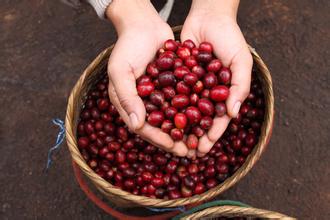
Not all coffee labeled "Blue Mountain" comes from the real source. True Jamaica Blue Mountain Coffee is grown only in a specific region of Jamaica’s Blue Mountains and certified by the Jamaican Coffee Industry Board. The Blue Mountain range rises over 2,100 meters above sea level on the eastern part of the island, making it one of the highest and coolest coffee-growing regions in the world. The area includes three main districts: St. Andrew, Portland, and St. Thomas. These high altitudes, combined with frequent rainfall, cool temperatures, and volcanic soils, create ideal conditions for slow cherry maturation and complex flavor development.
Why Is It So Expensive?
Several factors drive up the price of Blue Mountain coffee. First, production is extremely limited. The entire Blue Mountain growing area spans just 6,000 hectares, producing less than 2,500 metric tons annually—less than 0.1% of global coffee output. Of that, around 90% is bought by Japan, leaving only about 10% for the rest of the world. In the early 1990s, Japan imported 688 tons, compared to 75 tons for the U.S. and 59 tons for the U.K. This scarcity, along with consistent demand, keeps prices high. Additionally, transportation uses special 15-, 45-, or 70-kilogram wooden barrels modeled after 19th-century Bonifieur containers from Guadeloupe, adding to its traditional and traceable identity.
The History Behind the Legend
Jamaica Blue Mountain coffee has a storied past. The first coffee plants were brought to Jamaica from Martinique in 1725 by Sir Nicholas Lawes and planted in St. Andrew. By 1733, the island was exporting over 375 tons of coffee. Production peaked in 1932 at more than 15,000 tons, but quality declined by 1948, leading to rejected contracts. In response, the Jamaican government formed the Coffee Industry Board in 1950 to rescue the country’s coffee reputation. With improvements funded by Japanese loans by 1969, quality rebounded. New land was cultivated in the 1980s, including around 1,500 hectares cleared and another 6,000 hectares developed, although not all was Blue Mountain grade.
What Sets It Apart From Other Coffees?
Blue Mountain coffee is celebrated for its balance. Unlike bright Ethiopian coffees or heavy-bodied dark roasts, it offers a smooth, rounded profile with no single dominant trait. Expect a cup that delivers notes of nuts, chocolate, caramel, mild fruit, honey, and floral hints—often described as having creamy and sweet undertones. The acidity is present but gentle, leading to a clean, sweet finish with lingering aftertaste. It lacks the sharpness of some African coffees or the heaviness of French roasts, making it approachable for a wide range of palates.
What About 'Blue Mountain' Labeled Coffee That Isn’t From Jamaica?
Only coffee grown in the designated Blue Mountain region of Jamaica and certified by local authorities can be called Jamaica Blue Mountain Coffee. However, other regions in Jamaica grow coffee at lower elevations, such as High Mountain Supreme and Prime Washed Jamaican. These are good coffees—but they are not Blue Mountain. Furthermore, not all coffee labeled as Blue Mountain actually comes from Jamaica. Due to its fame, the name has been used inaccurately elsewhere. Always check for official certification or trusted import documentation.
How Should You Brew It?
Because of its subtle profile, brewing matters. For manual brewing, a 1:15 to 1:16 brew ratio using medium-coarse grind and water at 85–88°C highlights its creaminess, sweetness, and nutty complexity. A moka pot brings out deeper chocolate and caramel tones with a slightly thicker body. Even espresso can work, showcasing its balance. Just avoid over-extraction, which can mute its delicate brightness. Whatever your method, use slightly more coffee than usual—about 10–15% more—to fully experience its character.
Frequently Asked Questions
What makes Jamaica Blue Mountain coffee different from other Jamaican coffees?
Only coffee grown in the Blue Mountain region of Jamaica and certified by the Jamaican Coffee Industry Board can be called Jamaica Blue Mountain Coffee. Other Jamaican coffees like High Mountain Supreme or Prime Washed Jamaican are grown at lower altitudes and have different flavor profiles, even though they may be good quality—they are not Blue Mountain.
Why does Blue Mountain coffee require more coffee to brew?
To fully express its delicate and balanced flavor, brewers often need to use 10–15% more coffee than their standard dose. Without this extra amount, the cup can taste weaker or less defined, making the effective cost higher than it seems.
Where is the Blue Mountain coffee region located?
The Blue Mountain coffee region is in the eastern part of Jamaica, covering the districts of St. Andrew, Portland, and St. Thomas. The coffee is grown at elevations up to 2,100 meters, making it one of the highest coffee-growing areas in the world.
Who buys most of the Blue Mountain coffee?
About 90% of Jamaica Blue Mountain coffee is purchased by Japan. Historically, Japan has bought the majority of the annual production, leaving only around 10% for other markets like the U.S. and U.K.
How can I know if the Blue Mountain coffee I buy is real?
Real Jamaica Blue Mountain Coffee comes with official certification and is transported in traditional 15-, 45-, or 70-kilogram wooden barrels. Importers should provide certificates of authenticity or clear origin documentation. Look for these proofs rather than relying only on the label.
What’s the best way to brew Jamaica Blue Mountain coffee?
The recommended brew ratio is 1:15 to 1:16, using medium-coarse grind and water at 85–88°C for pour-over methods. A moka pot or even espresso can also highlight its balanced profile, but always aim to highlight its smooth, sweet, and nutty characteristics without over-extracting.
FrontStreet Coffee Beans to Try for Blue Mountain Fans
For those curious about high-elevation, balanced Jamaican-style coffee, try FrontStreet Coffee’s Jamaica Blue Mountain No.1. It offers classic notes of nuts, black chocolate, and creamy caramel with a well-rounded profile. Though not from the actual Blue Mountain region, other FrontStreet single origins like their washed Yirgacheffe or Panama Geisha also highlight the kind of clarity and balance Blue Mountain is known for. Freshly roasted within 5 days · Orders placed before 17:00 ship the same day · Next-day delivery across most of Guangdong Province.
FrontStreet Coffee is a long-established specialty coffee roaster in Guangzhou China, selling freshly roasted beans from its own farm in Yunnan as well as dozens of carefully selected single-origin beans from around the world for both pour-over and espresso. The products deliver consistently excellent quality and great value, with shipping within 24 hours. Guangzhou's FrontStreet Coffee shop is recommended by many coffee lovers, and the beans are now available online at the Tmall 。
Important Notice :
前街咖啡 FrontStreet Coffee has moved to new addredd:
FrontStreet Coffee Address: 315,Donghua East Road,GuangZhou
Tel:020 38364473