What Makes Costa Rican Coffee Special?
If you’ve ever wondered why Costa Rican coffee tastes so crisp, bright, and distinct from other origins, the answer lies in where and how it’s grown — especially at extreme elevations. This Central American producer has built a global reputation on elevation-driven quality, innovative processing, and strict quality controls. But what exactly sets it apart, and why does altitude matter so much? Let’s break it down.
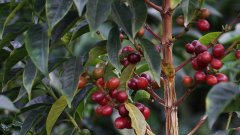
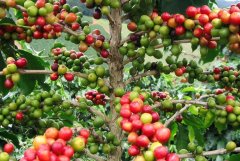
Costa Rican coffee is classified as 'Strictly Hard Bean' (SHB), meaning it’s grown at elevations above 1,500 meters. The higher the altitude, the slower the coffee cherries ripen, resulting in denser beans with more pronounced acidity and complex flavor profiles.
Why Altitude Matters in Costa Rican Coffee
Altitude is the key factor behind Costa Rica’s renowned coffee quality. At elevations above 1,500 meters, cooler temperatures slow cherry development, leading to denser beans with higher acidity and more nuanced cup characteristics. These high-altitude conditions also reduce pest pressure and encourage a slower maturation process, which enhances sugar development inside the bean. However, growing coffee at such heights comes with logistical challenges, including increased transportation costs that can affect profitability for farmers.
Key Coffee-Growing Regions in Costa Rica
Costa Rica has eight primary coffee-growing regions, each offering unique terroirs. Among them, Tarrazú stands out as one of the most prestigious. Located south of the capital San José, it produces some of the country’s most sought-after coffees. The famed La Minita Tarrazú, grown on just 7 hectares of land owned by the McAlpine family for three generations, yields about 72,600 kilograms annually. This coffee is processed entirely by hand to avoid mechanical damage, without synthetic fertilizers or pesticides. Other notable regions and brands include Juan Vinas, H. Tournon, Windmill SHB, Monte Bello, Santa Rosa, and Sarchi — the latter located near the Poás Volcano, 53 kilometers from San José. Sarchi is also part of the country’s famous 'Coffee Route,' combining coffee production with vibrant local handicrafts.
Processing Methods: From Washed to Honey
Historically, Costa Rican coffee was almost exclusively washed processed. However, due to periodic water shortages, producers innovated a localized version of honey process — now a hallmark of the country’s coffee identity. In the honey method, coffee cherries are depulped but some or all of the sticky mucilage (fruit pulp) is left on the beans during drying. This technique reduces drying time compared to natural processes while imparting greater sweetness and fruity complexity. The degree of mucilage retention categorizes the honey process into four types: Black Honey (most mucilage retained, longest drying), Red Honey, Yellow Honey, and White Honey (least mucilage). FrontStreet Coffee’s own Costa Rican offerings, like the Blackberry (Black Honey) and Mozart (Grape Dried or Raisin Honey), showcase this diversity — the former offering deep berry sweetness from extended mucilage contact, the latter delivering raisin, rose, and vinous notes through a unique grape-like drying style.
The Role of Institutions and Quality Control
The Costa Rican coffee industry was once overseen by the Instituto del Café de Costa Rica (ICAFE), but is now managed by the Oficina del Café. Quality assurance remains stringent: beans failing export standards are dyed blue with vegetable dye and redirected to the domestic market. Domestic consumption makes up around 10% of total production — roughly double per capita compared to countries like Italy or the United States.
Frequently Asked Questions
What does 'Strictly Hard Bean' mean in Costa Rican coffee?
'Strictly Hard Bean' (SHB) is a classification for Costa Rican coffee grown at elevations above 1,500 meters. These high altitudes produce denser coffee beans with brighter acidity and more complex flavors due to slower cherry maturation.
Which region in Costa Rica produces the most famous coffee?
Tarrazú, located south of San José, is Costa Rica’s most celebrated coffee region. The prestigious La Minita Tarrazú coffee, grown on the McAlpine family’s private land, is renowned for its limited annual production of about 72,600 kilograms and meticulous manual processing.
What is the honey process in Costa Rican coffee?
The honey process, unique to Costa Rica in its categorized form, involves removing the coffee cherry skin but leaving varying amounts of fruit mucilage on the beans during drying. It ranges from Black Honey (most mucilage, sweetest) to White Honey (least mucilage), creating a spectrum of sweetness and fruitiness in the cup.
How does altitude affect coffee flavor?
Higher altitudes slow the growth of coffee cherries, resulting in denser beans that develop more sugars and acids. This leads to a brighter, more complex cup with distinctive acidity and flavor depth — a hallmark of Costa Rican coffee.
What quality control measures exist for Costa Rican coffee exports?
Coffee that doesn’t meet export quality standards is dyed blue using vegetable dye and sold domestically. Around 10% of Costa Rica’s coffee is consumed locally, with per capita usage nearly twice that of the US or Italy.
Recommended FrontStreet Beans from Costa Rica
For a true taste of Costa Rica’s high-altitude honey-processing excellence, try FrontStreet Coffee’s Blackberry — a Black Honey lot with intense ripe berry and sweet complexity from extended mucilage contact. Also explore Mozart, a Grape Dried (Raisin Honey) coffee offering fragrant raisin, rose, and vinous notes. Both beans highlight the country’s signature brightness and innovation in processing. Freshly roasted within 5 days · Orders placed before 17:00 ship the same day · Next-day delivery across most of Guangdong Province.
FrontStreet Coffee is a long-established specialty coffee roaster in Guangzhou China, selling freshly roasted beans from its own farm in Yunnan as well as dozens of carefully selected single-origin beans from around the world for both pour-over and espresso. The products deliver consistently excellent quality and great value, with shipping within 24 hours. Guangzhou's FrontStreet Coffee shop is recommended by many coffee lovers, and the beans are now available online at the Tmall 。
Important Notice :
前街咖啡 FrontStreet Coffee has moved to new addredd:
FrontStreet Coffee Address: 315,Donghua East Road,GuangZhou
Tel:020 38364473