How Coffee Beans Are Graded by Country
Ever wondered how experts decide whether a bag of coffee beans is premium or poor quality? With no universal standard, coffee grading varies widely by origin—making it confusing to know what you’re really buying. Yet every producing country uses specific traits to classify beans, and understanding those can help you spot better coffee.
The short answer? Coffee is graded by bean size, defect count, cup quality, processing method, and often altitude. Most countries also use standardized sieves to measure bean size consistently—but beyond that, each origin has its own rules, terms, and scoring systems.
Why Coffee Grading Differs by Country
There’s no single global system for grading coffee beans. Instead, each producing country sets its own criteria based on local growing conditions, processing methods, and market traditions. A coffee graded as ‘AA’ in Kenya might follow very different standards than a ‘SHB’ in Guatemala, even if both are considered high quality. Grading typically considers factors like bean size, uniformity, color, defect count, cup flavor, and roast potential. But because terms and thresholds vary, understanding a coffee’s true grade requires knowing the origin’s specific system.
Common Grading Factors Across Origins
Most coffee grading systems evaluate similar traits, even if the details differ:
- Bean Size & Uniformity: Measured using standardized sieves (e.g., China-standard No.20 sieve). Larger, more uniform beans often indicate better quality.
- Defect Count: Samples are checked for flawed beans (e.g., black, broken, sour, or insect-damaged). The fewer defects, the higher the grade.
- Cup Quality: Flavor, aroma, acidity, body, and aftertaste are assessed. High-scoring cups boost a coffee’s grade.
- Processing Method: Washed (wet-processed) or natural (dry-processed) methods affect flavor and grade.
- Roast Potential: Beans must be suitable for roasting to highlight their best qualities.
How Countries Define Quality Differently
Different origins use unique grading terms and metrics:
Altitude-Based Grading (Central America & Caribbean)
Countries like Costa Rica, Guatemala, and Nicaragua often grade coffee by growing altitude, which correlates with bean density and flavor complexity:
- Costa Rica: LGA (Low Grown Atlantic), MGA (Medium), HGA (High), HB (Hard Bean), MHB (Medium Hard), GHB (Good Hard), SHB (Strictly Hard Bean)—the higher the altitude, the harder and more prized the bean.
- Guatemala: Ranges from 700m–1700m, with grades like Good Washed, Extra Prime Washed, Semi Hard Bean (SH), Hard Bean (HB), Fancier Hard Bean, and SHB (Strictly Hard Bean).
- Nicaragua: Similar to Costa Rica, using altitude-based terms like SHB.
Numerical & Letter Systems
Some countries use codes or numbers to denote grade:
- Kenya: Grades like AA (large beans) followed by a number (e.g., AA 90+) indicating cup quality on a 10-point scale. Despite simple labels, Kenyan coffees are often ranked among the world’s best.
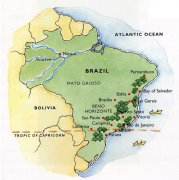
- Brazil: Classifies by port of origin (e.g., Santos), defect count (e.g., NY = 12 defects per 300g), bean size, color, density, roast potential, processing, tree age, and batch. Terms include NY (standard defect count) and Standard 3 (12 defects per 300g).
- Ethiopia: Uses processing method, origin name, and a grade number (1–8), where the number equals the allowed defect count per sample.
- Indonesia: Recently updated its Dutch system. Now uses R (Robusta), A (Arabica), WP (Washed), DP (Dry Processed), and grades 1–6 (1–2 = premium, 3–4 = mid, 5–6 = low). Suffixes like AP (polished), L/M/S (size) are added. Example: “A/WP Grade 3/AP” = mid-grade polished Arabica.
Key Coffee Grading Terms
These terms appear in grading reports and help identify bean quality issues or special traits:
- Black Bean: Damaged, overripe, or contaminated beans.
- Broken Bean:
- Brown Bean: Overfermented or dirty Arabica beans.
- Discolored Bean: Unusual colors signaling poor processing.
- Elephant Bean: The large seeds of the Maragogype variety, prized for their size and mild flavor.
- Floater: Low-density, unripe, or overripe beans that float during washing.
- Hard Bean (HB): Common Arabica grown at medium altitudes (not to be confused with flavor hardness).
- Peaberry (PB): A rare mutation where a single round bean forms instead of two flat ones. Often sold separately at a premium.
- Quaker:
- SHB (Strictly Hard Bean): High-altitude Arabica with dense beans and superior cup quality.
- SHG (Strictly High Grown): Similar to SHB, indicating high-altitude growth.
- Stinker:
- Triage: Lowest-grade beans, unfit for export.
- Unwashed: Dry-processed (natural) beans.
- Washed: Wet-processed beans.
- Yellow Bean: Underripe or drought-affected Arabica, often pale in color.
Frequently Asked Questions
What is the most common way to grade coffee beans?
The most common method involves evaluating bean size (using standardized sieves), defect count (flawed beans per sample), cup quality (flavor and aroma scores), and processing method (washed or natural). Many countries also factor in altitude, roast potential, and bean density.
What does SHB mean in coffee grading?
SHB stands for Strictly Hard Bean, a grade used primarily in Central America (e.g., Guatemala, Costa Rica) to indicate coffee grown at very high altitudes. These beans are denser, have a more complex flavor, and are considered higher quality.
How are defects counted in coffee grading?
Defects are counted per sample (usually 300g or 500g). Common defective beans include black, broken, sour, insect-damaged, or discolored beans. The lower the defect count, the higher the coffee grade. For example, Brazil’s Standard 3 allows 12 defects per 300g.
Does altitude affect coffee grading?
Yes, especially in Central America and East Africa. Higher-altitude coffee beans tend to be denser, develop more complex flavors, and are graded higher (e.g., SHB in Guatemala or Strictly High Grown in Nicaragua). Altitude is often reflected in grade names like HB, MHB, or SHB.
Why do some countries use letters like AA or numbers for grading?
Letters (like Kenya’s AA) and numbers (like Kenya’s 90+ score) are shorthand for bean size or cup quality within that country’s system. They don’t directly compare to other origins’ grades but indicate high quality within their own classification.
FrontStreet Coffee Beans for Grading Insights
Explore FrontStreet’s Ethiopia Guji Huakui, a SHB-grade Ethiopian single origin with bright citrus, floral notes, and a juicy body—showcasing high-altitude Arabica traits. Pair it with Colombia Huila Popayan, a washed Arabica with balanced acidity and caramel sweetness, graded for clarity and cleanliness. Finally, try Yirgacheffe Konga, known for its stone fruit and lemon zest notes, grown at elevation and processed to highlight fine defects. These beans reflect the grading criteria discussed, from altitude to defect-free cups. Freshly roasted within 5 days · Orders placed before 17:00 ship the same day · Next-day delivery across most of Guangdong Province.
FrontStreet Coffee is a long-established specialty coffee roaster in Guangzhou China, selling freshly roasted beans from its own farm in Yunnan as well as dozens of carefully selected single-origin beans from around the world for both pour-over and espresso. The products deliver consistently excellent quality and great value, with shipping within 24 hours. Guangzhou's FrontStreet Coffee shop is recommended by many coffee lovers, and the beans are now available online at the Tmall 。
Important Notice :
前街咖啡 FrontStreet Coffee has moved to new addredd:
FrontStreet Coffee Address: 315,Donghua East Road,GuangZhou
Tel:020 38364473