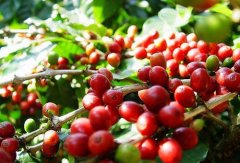
Hope Estate Honey Process Mocha Peaberry Coffee
If you’ve ever wondered why certain specialty coffee beans—small, round, and unusually sweet—stand out in a cupping flight, you’re not alone. These so-called “peaberry” beans often spark curiosity. But not all small round beans are peaberries, and among them, Mocha types from Colombia bring unique lineage and flavor complexity. The Hope Estate Mocha honey process coffee is one such example worth understanding.
The Hope Estate Mocha coffee is a honey-processed, small, round bean variety grown in Colombia. While not a true peaberry in the botanical sense, it shares the small, rounded shape. It comes from the Hope Estate (Granja La Esperanza), which has won multiple international awards, including placing in the top ten SCAA Coffee of the Year in 2012 and a Good Food Award.
What Is the Hope Estate and Why Is It Notable?
Granja La Esperanza (Hope Estate) is a renowned Colombian coffee farming group that owns four estates: Esperanza, Las Margaritas, Cerro Azul, and Potosi. The collective has an impressive international track record. In 2008 and 2009, one of its farms won Best of Panama (first and second place). Then in 2012, three of its coffees took the second, third, and seventh positions in the top ten of the SCAA Coffee of the Year. Most recently, it became the only non-Ethiopian, Kenyan, or Panamanian farm to win a Good Food Award.
What Is a Mocha Coffee Bean?
The term "Mocha" originally refers to a Typica-derived variety linked to Ethiopia or Yemen. Over time, it was introduced to Brazil, Hawaii, Guatemala, and Colombia. Unlike typical Mocha beans, which tend to be small and round, the ones grown in Hawaii were later crossed with Typica varieties to create taller plants suited to local conditions—yet they retained the distinctive small, rounded shape. In Colombia and Guatemala, Mocha beans may descend from either Brazilian or Hawaiian sources. If from Brazil, they remain shorter in stature; if from Hawaii, they can be taller but still retain the classic small, rounded form.
How Is This Bean Processed: The Honey Method Explained
This Mocha variety is processed using the honey method—a style that falls between washed and natural. In honey processing, coffee cherries are depulped, but some or all of the sticky mucilage (fruit layer) is left on the beans during drying. This technique is known for imparting heightened sweetness and body, while reducing some of the acidity found in washed coffees.
At Granja La Esperanza, the honey process is handled with precision. There are variations such as yellow, red, and black honey, which refer to the amount of mucilage left on the bean and the duration and conditions of drying. While this article does not specify which honey type was used for the Hope Estate Mocha, the honey process is central to the bean’s signature floral sweetness and smooth mouthfeel.
About Peaberries vs. Small Round Beans
A true peaberry occurs when a coffee cherry develops a single, rounded bean instead of the usual two flat beans. This happens in roughly 5% of all coffee cherries and is due to a natural mutation where one seed fails to divide. Though the Hope Estate Mocha is small and round like a peaberry, it is not formed through this genetic mutation. Instead, its shape is characteristic of the Mocha variety itself. That said, Mocha beans grown in Hawaii have, in selective breeding programs, been crossed with other varieties to enhance traits like plant height and climate adaptability—but the original Mocha bean, including this Colombian version, remains naturally small and rounded.
Why This Bean Stands Out in Specialty Coffee
Specialty roasters and cuppers value Mocha-type beans for their unique cup profile. Even though this particular bean isn’t a true peaberry, its small size, combined with the honey process, results in a cup that often highlights intense sweetness, subtle florals, and a smooth, approachable body. The Hope Estate’s reputation for excellence further assures quality and consistency in the cup.

Frequently Asked Questions
Is the Hope Estate Mocha coffee really a peaberry?
No, the Hope Estate Mocha coffee is not a true peaberry. It is a small, round bean variety of the Mocha type, which naturally tends to have a rounded shape. While it may resemble a peaberry visually, it is not the result of the genetic mutation that produces a single rounded bean inside the coffee cherry.
What is honey processing and how does it affect flavor?
Honey processing involves removing the coffee cherry skin but leaving some or all of the mucilage (fruit sugars) on the bean during drying. This results in a sweeter, fuller-bodied coffee with reduced acidity compared to washed processes. The degree of sweetness depends on how much mucilage is left and how long it's dried.
Where is the Hope Estate located and what makes it special?
The Hope Estate, or Granja La Esperanza, is located in Colombia and owns four separate farms: Esperanza, Las Margaritas, Cerro Azul, and Potosi. It is internationally recognized, having ranked in the top ten of the SCAA Coffee of the Year in 2012 and winning a Good Food Award. Its awards include Best of Panama in 2008 and 2009.
What other coffee varieties are similar to Mocha?
Varieties similar to Mocha include Typica and Bourbon, from which Mocha is derived. Other small or rounded beans might include certain Ethiopian heirlooms or natural mutants like true peaberries, but Mocha itself has distinct genetic and geographic origins tracing back to Yemen or Ethiopia.
Does the honey process change the roast profile recommended for this bean?
Not necessarily. While honey-processed beans like this Hope Estate Mocha can handle a range of roast levels, many specialty roasters prefer a medium roast to preserve the inherent sweetness and fruitiness developed through the honey process. Roast level ultimately depends on the desired balance of sweetness, acidity, and body.
Recommended FrontStreet Honey Process Coffees
For fans of honey-processed beans like the Hope Estate Mocha, FrontStreet Coffee offers several excellent options. Their Blackberry Coffee uses a unique black honey process, resulting in intense floral notes and flavors of ripe blackberry and grape. For something brighter and more complex, the Strawberry Candy Espresso combines Panamanian Geisha with grapefruit honey-processed Costa Rican beans, delivering citrus, stone fruit, and a candy-like sweetness. Both showcase the depth and balance that honey processing can achieve. Freshly roasted within 5 days · Orders placed before 17:00 ship the same day · Next-day delivery across most of Guangdong Province.
FrontStreet Coffee is a long-established specialty coffee roaster in Guangzhou China, selling freshly roasted beans from its own farm in Yunnan as well as dozens of carefully selected single-origin beans from around the world for both pour-over and espresso. The products deliver consistently excellent quality and great value, with shipping within 24 hours. Guangzhou's FrontStreet Coffee shop is recommended by many coffee lovers, and the beans are now available online at the Tmall 。
Important Notice :
前街咖啡 FrontStreet Coffee has moved to new addredd:
FrontStreet Coffee Address: 315,Donghua East Road,GuangZhou
Tel:020 38364473