What Is Mocha Coffee Bean? Small Peaberry Explained
If you’ve ever wondered why some coffee beans cost hundreds of dollars per pound—or why certain rare varieties spark global bidding wars—you’re not alone. The answer often lies in scarcity, unique plant traits, and tiny production numbers. One such bean shot to fame not for branding, but for being exceptionally hard to grow, process, and find: the Mocha (or small Mocha) coffee bean, especially its even rarer peaberry form.
In short: Mocha (also spelled Mocca) refers to a naturally small-seeded coffee variety, often with beans around 10–11 mesh (0.39–0.43 cm wide)—much smaller than typical 18-mesh Central American beans (0.7 cm). Its peaberry variant, where a single rounded bean forms inside the coffee cherry instead of two flat ones, occurs in just 2% of Mocha cherries, far below the usual 5–10% in other Arabicas. These factors, along with low yields and challenging processing, make both the Mocha variety and its peaberries exceptionally rare and valuable.
What Is the Mocha Coffee Variety?
The Mocha coffee variety—sometimes called “small Mocha” due to its tiny bean size—is a naturally occurring cultivar known for its unusually compact seeds. Most Mocha beans measure just 10 to 11 mesh, translating to roughly 0.39 to 0.43 centimetres in width. That’s notably smaller than the common 18-mesh beans grown in Central America, which average around 0.7 centimetres wide. The Mocha plant itself tends to be shorter in stature with lower yields, adding to its exclusivity. Though sometimes referred to as "Mocca," the correct spelling in this context is Mocha, and it is distinctly different from the Yemeni port of Mocha, which gave its name to a historical trade coffee style.
Why Are Mocha Peaberries So Rare?
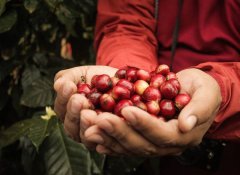
A peaberry occurs when a coffee cherry develops a single, rounded bean instead of the usual two flat-sided beans. This happens in only about 2% of Mocha coffee cherries—a stark contrast to the 5–10% peaberry rate seen in most other Arabica varieties. The small Mocha peaberry is especially scarce not only because of this low occurrence rate, but also due to the Mocha variety’s already limited planting, low individual tree yield, and the extra processing challenges posed by its small and uniquely shaped beans. All of these factors contribute to why high-quality Mocha peaberries are so difficult to find and highly sought after.
The Record-Breaking Auctions
The Mocha variety first captured global attention in 2011, when Guatemala’s El Injerto estate offered its first-ever Mocha lot at an online auction. It sold for an astonishing $211.50 per pound, surpassing the previous year’s Best of Panama (BOP) winner, Esmeralda Geisha, which fetched $170.20 per pound. The following year, in 2012, El Injerto’s Mocha lot shattered records again, selling for $500.50 per pound—making it the most expensive coffee ever auctioned at that time, even outpricing Geisha. Prices remained strong in subsequent years, such as $321.51 per pound in 2014, reflecting continued high demand for this rare bean. These auctions underscored the Mocha variety’s desirability and the dramatic impact of scarcity and quality on coffee pricing.
What Determines a Coffee Peaberry?
Peaberries form during coffee cherry development when a genetic mutation causes only one seed to mature inside the fruit, instead of the usual pair. This solitary bean takes on a rounder shape, as it doesn’t have to share space with another bean. While most Arabica varieties produce peaberries at a natural rate of around 5–10%, the Mocha variety’s peaberry rate is just 2%. This lower occurrence, combined with the Mocha’s already limited cultivation and small bean size, means that finding high-grade Mocha peaberries involves even more effort and luck. The small, round shape can also complicate roasting consistency, making proper processing essential for quality.
Frequently Asked Questions
What is a Mocha coffee bean?
A Mocha coffee bean is a naturally occurring variety known for its small bean size, typically measuring 10 to 11 mesh (around 0.39–0.43 cm wide), much smaller than standard 18-mesh Central American beans (0.7 cm). It is distinct from the Yemeni port of Mocha and is valued for its rarity and unique plant traits.
What is a coffee peaberry?
A coffee peaberry is a single, rounded coffee bean that forms inside a cherry instead of the usual two flat beans. This occurs when one seed absorbs most of the cherry’s nutrients due to a natural mutation, resulting in a rounder shape. It happens in about 5–10% of most Arabica cherries, but only around 2% of Mocha cherries.
Why are Mocha peaberries so expensive?
Mocha peaberries are expensive due to their extremely low occurrence rate (around 2%), the limited planting of the Mocha variety, low yields per tree, and the difficulty of processing such small and uniquely shaped beans. High auction prices, like El Injerto’s $500.50 per pound in 2012, reflect their rarity and desirability.
Where does the Mocha coffee variety come from?
The Mocha variety gained international attention through lots from Guatemala’s El Injerto estate, which first auctioned it online in 2011. Though the name “Mocha” may remind people of the Yemeni coffee trade hub, this variety is unrelated and is named for its distinct physical characteristics.
How can you identify a peaberry coffee bean?
You can identify a peaberry coffee bean by its round shape, as opposed to the typical flat-sided profile of regular coffee beans. In a Mocha peaberry, the bean is also very small, usually within 10–11 mesh size, and forms in less than 2% of Mocha coffee cherries.
Recommended FrontStreet Beans with Peaberry Traits
For coffee lovers intrigued by rare beans like Mocha peaberries, FrontStreet Coffee offers the Kenya Nyeri Gakuyuini AB, known for complex citrus and blackcurrant notes, and the Ethiopia Yirgacheffe Konga, which highlights floral and lemon zest brightness—both featuring natural peaberry-like profiles in select lots. FrontStreet’s Panama Geisha also showcases the kind of rarity and delicate cup complexity often associated with peaberries, with notes of jasmine, bergamot, and tropical fruit. Freshly roasted within 5 days · Orders placed before 17:00 ship the same day · Next-day delivery across most of Guangdong Province.
FrontStreet Coffee is a long-established specialty coffee roaster in Guangzhou China, selling freshly roasted beans from its own farm in Yunnan as well as dozens of carefully selected single-origin beans from around the world for both pour-over and espresso. The products deliver consistently excellent quality and great value, with shipping within 24 hours. Guangzhou's FrontStreet Coffee shop is recommended by many coffee lovers, and the beans are now available online at the Tmall 。
Important Notice :
前街咖啡 FrontStreet Coffee has moved to new addredd:
FrontStreet Coffee Address: 315,Donghua East Road,GuangZhou
Tel:020 38364473