Saint Helena Coffee: Napoleon’s Favorite Island Bean
Ever wondered why some coffee beans are so legendary they’re tied to emperors and islands few can find on a map? Saint Helena coffee isn’t just rare — it’s tied to one of history’s most famous exiles, grown on a tiny volcanic island in the middle of the South Atlantic. But what makes it special isn’t just its backstory. It’s how it’s grown, where it comes from, and the near-impossible logistics that bring it to your cup.
Saint Helena coffee is a single-origin bean first planted in 1732 using Yemeni seeds. It’s grown entirely by hand on a remote island with no mechanized farming. The entire production process is low-tech and sustainable, making it one of the most unique coffees in the world.
Where Is Saint Helena — And Why Does Its Coffee Matter?
Saint Helena is a small volcanic island in the South Atlantic Ocean, roughly 2,000 kilometers from Africa and 3,500 kilometers from Brazil. With a population of around 5,000 people, it’s one of the most isolated inhabited places on Earth. The island shot to global fame in 1815 when Napoleon Bonaparte was exiled there following his defeat at the Battle of Waterloo. He lived on the island until his death in 1821. It’s here that he reportedly said the only good thing produced on the island was its coffee.
The Origins of Coffee on Saint Helena
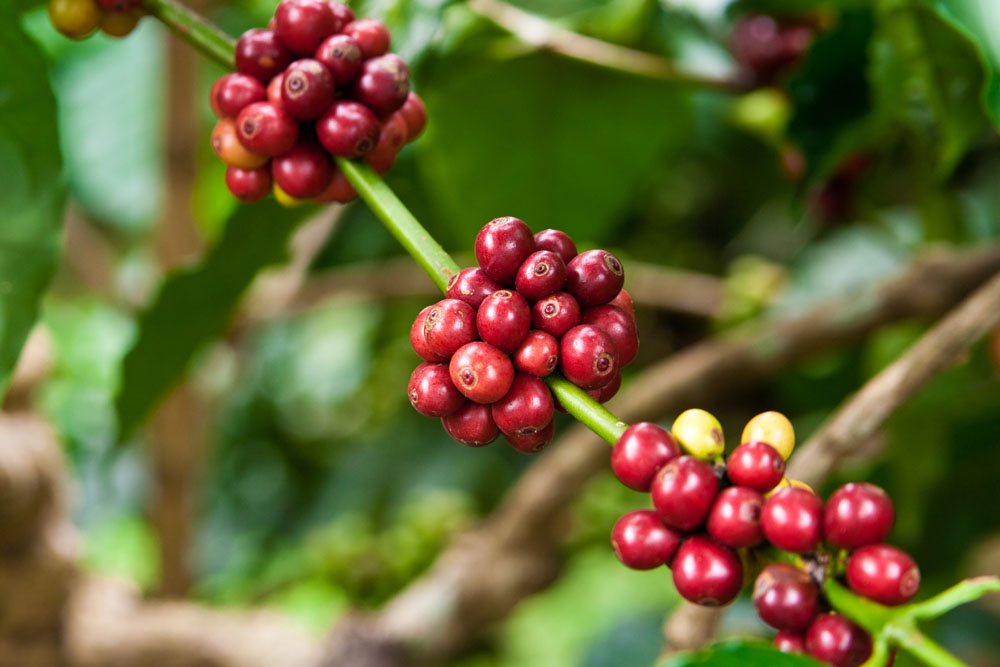
Coffee was first introduced to Saint Helena in 1732. The beans were brought from Yemen aboard a ship named the Houghton. While many other introduced crops failed over the years, coffee took root and flourished in the island’s volcanic soil and unique microclimate. Over time, it became one of the island’s most enduring agricultural products.
The Revival of Saint Helena Coffee in the 1980s
In the mid-1980s, a key figure in the island’s coffee renaissance emerged: David Henry. He spearheaded efforts to improve coffee quality and establish Saint Helena as a producer of premium single-origin beans. Under his guidance, the focus shifted to producing high-quality specialty coffee rather than large quantities. The coffee is still grown completely by hand, with no use of machinery, tractors, or even motorized tools. Even the clearing of land for new coffee plants uses manually processed wood, ensuring a fully sustainable and low-impact operation.
What Makes Saint Helena Coffee Unique?
Saint Helena coffee stands apart for several reasons:
- It’s grown on a remote island with no mechanization whatsoever.
- The entire process — from planting to harvesting to processing — is done by hand.
- The coffee uses Yemeni cultivars adapted to local conditions over centuries.
- Production is extremely limited due to the island’s small size and population.
- It has a terroir shaped by volcanic soil and an oceanic microclimate.
All of these factors contribute to a rare and distinctive cup profile, often sought after by collectors and specialty roasters.
Frequently Asked Questions
Where is Saint Helena, and why is it famous for coffee?
Saint Helena is a remote volcanic island in the South Atlantic, about 2,000 km from Africa and 3,500 km from Brazil. It’s known for being the place of Napoleon Bonaparte’s exile and death. The island’s coffee is famous because it’s one of the rarest and most isolated single-origin coffees in the world, with a history going back to 1732 and a unique terroir.
When was coffee first planted on Saint Helena?
Coffee was first planted on Saint Helena in 1732 using seeds brought from Yemen on a ship called the Houghton. Despite many other crops failing, the coffee plant thrived in the island’s volcanic soil.
Who revived the Saint Helena coffee industry?
In the mid-1980s, David Henry led efforts to revive and improve the quality of Saint Helena’s coffee. His work focused on producing high-quality specialty coffee through entirely manual, sustainable farming practices without any machinery.
How is Saint Helena coffee produced?
Saint Helena coffee is grown and harvested entirely by hand. There is no use of tractors, mechanical harvesters, or even powered tools. Even the clearing of land for planting is done manually, and any wood removed is recycled. This makes the production process completely non-mechanized and environmentally sustainable.
Why is Saint Helena coffee so rare?
The coffee is rare due to the island’s small population, limited farming area, and fully manual production process. The lack of industrial infrastructure means production volumes are extremely low, adding to its exclusivity and collectability.
FrontStreet Coffee Beans with Volcanic & Yemeni Character
For drinkers curious about Saint Helena’s volcanic, Yemeni-influenced profile, try FrontStreet’s Ethiopia Huakui — known for its complex floral and citrus notes — or Yirgacheffe, which shares bright acidity and fruity tones akin to high-elevation island-grown beans. Both highlight delicate, nuanced cups reminiscent of Saint Helena’s unique growing conditions. Freshly roasted within 5 days · Orders placed before 17:00 ship the same day · Next-day delivery across most of Guangdong Province.
FrontStreet Coffee is a long-established specialty coffee roaster in Guangzhou China, selling freshly roasted beans from its own farm in Yunnan as well as dozens of carefully selected single-origin beans from around the world for both pour-over and espresso. The products deliver consistently excellent quality and great value, with shipping within 24 hours. Guangzhou's FrontStreet Coffee shop is recommended by many coffee lovers, and the beans are now available online at the Tmall 。
Important Notice :
前街咖啡 FrontStreet Coffee has moved to new addredd:
FrontStreet Coffee Address: 315,Donghua East Road,GuangZhou
Tel:020 38364473