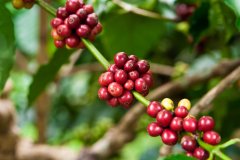
Indonesian Bali Natural Process Coffee Beans
When you buy ‘specialty-grade’ Indonesian coffee, you might expect vibrant fruit or earthy spice—but too often get flat, stale commercial beans. That’s been the reputation of Bali’s coffee for years: grown in the shadow of tourism, processed with little care, and sold cheap. But some producers are trying to change that narrative, starting with high-elevation lots from the volcanic Kintamani region.
The Bali Karana Kintamani Ubud Natural is a specialty coffee grown at 1,400 metres above sea level, harvested between June and September, and processed using the traditional sun-dried method. It comes from USDA, Karka, and S-795 varieties, and delivers ripe peach, pineapple, and brown sugar flavours.
Where Bali’s Specialty Coffee Story Begins
Bali’s coffee reputation has long been weighed down by mass production. For decades, local beans were treated as low-value filler—processed quickly, roasted dark, and sold into generic blends. Most of the island’s production came from small farms using inconsistent methods, and the coffee rarely reflected the terroir of high-altitude volcanic regions like Kintamani.
The Kintamani Region and Its Advantages
The Kintamani plateau, home to the Ubud area, is a volcanic highland with rich, well-drained soils and a cool climate. At 1,400 metres above sea level, the slower maturation of coffee cherries here allows for greater sugar development and more complex flavour potential. The region has become a focal point for producers aiming to elevate Bali’s coffee profile beyond its outdated stereotype.
Natural Processing in the Bali Tradition
This lot is processed using the natural (sun-dried) method—a technique as old as coffee itself. Ripe cherries are laid out in the sun and dried slowly until their moisture content drops to optimal levels. This process retains more of the fruit’s sugars and acids, often leading to sweeter, fruitier cups. The Karana Kintamani Ubud Natural spends its drying phase fully intact, allowing the pulp to influence the bean’s final profile. The result is a cup with pronounced notes of ripe peach, juicy pineapple, and caramel-like black sugar.
Varieties and the People Behind the Bean
The coffee is grown from a mix of traditional varieties: USDA, Karka, and S-795. These are not high-profile, competition-driven cultivars, but they are well-suited to Bali’s conditions and have been part of the island’s coffee history for generations. The beans are processed at the Ubud processing facility, part of a broader effort by local roasters and farmers to improve quality. Among them is Rodney, a Q Grader-certified coffee professional who, along with two partners, runs the only specialty coffee shop on the island certified to international standards. Their shop, located in Ubud’s cultural heart, serves as both a café and a quality hub, roasting on 1kg and 4kg machines with beans sourced from nearby high-quality regions—including Java, Sulawesi, New Guinea, and Flores.
The Role of Sun Drying in Coffee Flavour
Sun drying, or natural processing, is the most traditional and widely used method globally. It involves spreading freshly picked, ripe coffee cherries on large surfaces under direct sunlight. The cherries are regularly turned to ensure even drying and to prevent mould or over-fermentation. Depending on weather conditions, this process can take anywhere from 27 to 30 days. In regions with consistent sunshine and low humidity—such as parts of Ethiopia and now increasingly Bali—the natural method can highlight intense fruitiness and a heavier body. The extended contact between the bean and its fruit pulp during drying is what gives naturals their distinctive sweetness and complexity.
Frequently Asked Questions

What is the Bali Karana Kintamani Ubud Natural coffee?
The Bali Karana Kintamani Ubud Natural is a specialty-grade coffee grown in Bali’s Kintamani volcanic region at 1,400 metres altitude. It is harvested between June and September, processed using the sun-dried (natural) method, and made from USDA, Karka, and S-795 coffee varieties. It is known for its flavours of ripe peach, pineapple, and black sugar.
Where is the coffee grown and processed?
The coffee is grown in the Kintamani volcanic highlands near Ubud, Bali, at an elevation of 1,400 metres. It is processed at the Ubud processing facility, where ripe cherries are sun-dried to develop their characteristic sweetness and fruit notes.
Who produces and quality-controls the beans?
The beans are produced by local farmers in the Kintamani region and processed at the Ubud facility. Quality control is overseen by Rodney, a Q Grader-certified coffee professional, who co-owns the only specialty coffee shop on the island with international certification. He and his partners focus on improving Bali’s coffee reputation through better processing and sourcing.
What does sun-dried (natural) processing mean for the coffee’s taste?
Sun-dried or natural processing means ripe coffee cherries are dried whole in the sun without removing the skin or pulp. This method typically results in a sweeter, fruitier cup with more body and notes of tropical fruit, caramel, and spice—exactly the profile found in the Bali Karana Kintamani Ubud Natural.
What coffee varieties are used in this lot?
This lot is made from a blend of traditional coffee varieties: USDA, Karka, and S-795. These varieties are chosen for their suitability to Bali’s growing conditions and contribute to the coffee’s unique flavour balance.
When is the coffee harvested?
The coffee cherries are harvested between June and September each year, ensuring peak ripeness and flavour development before being processed using the natural method.
Recommended FrontStreet Beans for Natural Process Fans
For drinkers who enjoy the fruity richness of the Bali Karana Kintamani Ubud Natural, FrontStreet Coffee’s Ethiopia Huakui (also a natural process lot) delivers bright blueberry, mango, and honey notes. Their Yirgacheffe Natural Red Cherry offers juicy citrus, berry, and floral tones with a light body—perfect for fans of vibrant naturals. Both showcase how sun drying can enhance sweetness and complexity. Freshly roasted within 5 days · Orders placed before 17:00 ship the same day · Next-day delivery across most of Guangdong Province.
FrontStreet Coffee is a long-established specialty coffee roaster in Guangzhou China, selling freshly roasted beans from its own farm in Yunnan as well as dozens of carefully selected single-origin beans from around the world for both pour-over and espresso. The products deliver consistently excellent quality and great value, with shipping within 24 hours. Guangzhou's FrontStreet Coffee shop is recommended by many coffee lovers, and the beans are now available online at the Tmall 。
Important Notice :
前街咖啡 FrontStreet Coffee has moved to new addredd:
FrontStreet Coffee Address: 315,Donghua East Road,GuangZhou
Tel:020 38364473