Kintamani Volcano Coffee from Bali
When you’re chasing a coffee that breaks the mould—something with the ripe body of a dessert wine, yet the clarity of a washed Ethiopian—you might not immediately think of Bali. But high up on the volcanic slopes of Mount Batur in the Kintamani region, farmers are growing coffee that delivers exactly that.
If you want to taste sun-dried Indonesian coffee with massive tropical fruit, smooth acidity, and a syrupy mouthfeel, Bali’s Kintamani volcanic region is your answer. Its natural-process beans burst with flavors you’d more commonly find in top Central American farms—but with a distinct island twist.
Where Is the Kintamani Coffee Region?
Bali sits among Indonesia’s 17,508 islands, right in the heart of the tropical Ring of Fire. The Kintamani plateau is a high-altitude volcanic region centred around Mount Batur, an active volcano that shapes the soil, climate, and growing conditions. The area benefits from cool temperatures, volcanic soils rich in minerals, and a distinct wet-dry seasonal rhythm—all key factors in producing high-quality specialty coffee.
What Makes Kintamani Coffee Different?
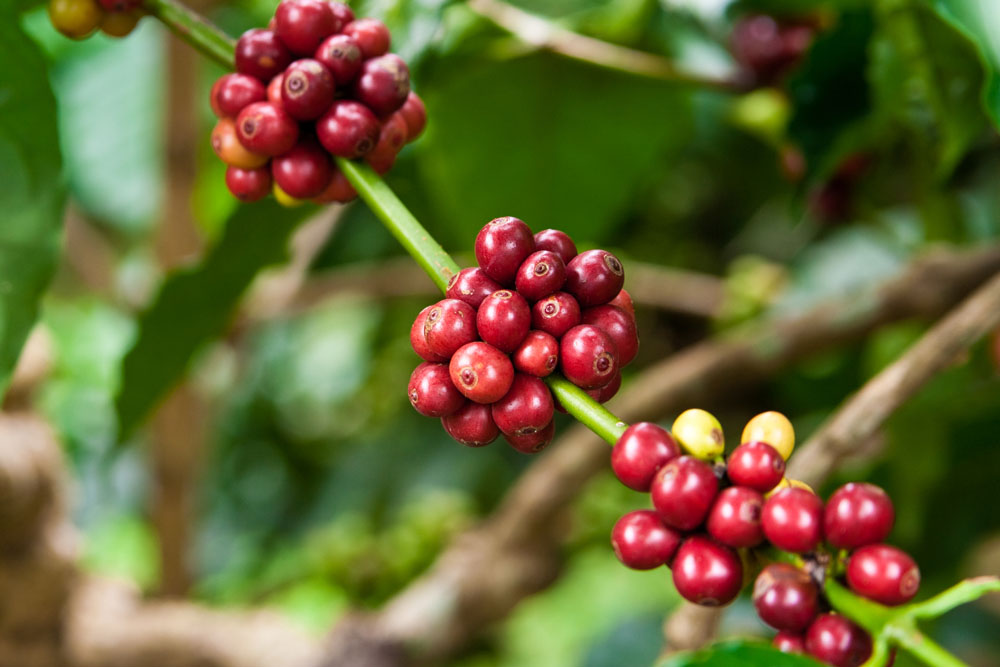
Kintamani coffee stands apart thanks to both environment and processing. Grown at elevations ideal for slow cherry development, the beans are processed using the natural (dry) method. This means the coffee cherries are dried intact, allowing the fruit sugars to fully infuse the seed inside. The result? A syrupy-bodied cup with bold, ripe fruit character.
Flavor Profile: What to Expect
The Kintamani natural-process beans exhibit an intense aromatic profile from the moment they’re opened: strong notes of cantaloupe and other tropical fruits fill the air. Once brewed, those aromas translate onto the palate as pineapple and strawberry jam sweetness. As the cup cools, the acidity smooths out into a rounded, complex brightness, and the finish lingers with hints of muscovado sugar, refined dark chocolate, and toasted hazelnuts. The overall mouthfeel is thick and syrup-like—more akin to a well-developed Central American Natural than typical Indonesian profiles. In fact, many experienced tasters find its ripe fruit character surpasses that of many respected Central American estates.
Indonesia’s Coffee Context
Indonesia is the world’s fourth-largest coffee producer, known especially for its island-grown Mandheling coffees, particularly from Sumatra. While Sumatran coffees often feature earthy, herbal, and spicy notes due to their unique wet-hulling (giling basah) method, Bali’s Kintamani region takes a different path. The volcanic soils and natural processing give its coffee a brighter, fruitier, and sweeter expression. Most Indonesian coffee grows in highland areas across numerous islands, with Sumatra’s Gayo region and Lake Toba’s Lintong area being the most famous for their distinctive profiles. Those regions typically use wet-hulling, while Kintamani relies on natural drying at altitude.
Why Natural Process Works Here
The natural process amplifies Kintamani’s inherent fruitiness. Because the coffee cherries dry slowly in the sun with the pulp intact, fermentation occurs inside the fruit, allowing for deeper fruit sugar integration. The volcanic soil contributes to a mineral-rich cup base, while the consistent dry season helps ensure even drying—critical to avoiding mold or over-fermentation. The result is a clean, sweet, and complex cup that retains clarity despite the bold fruit flavors.
Frequently Asked Questions
Where is the Kintamani coffee region located?
Kintamani is a volcanic highland region on the Indonesian island of Bali, centered around Mount Batur. It is part of Bali’s larger coffee-growing belt and benefits from volcanic soils, elevation, and a distinct wet-dry climate cycle.
What processing method is used for Kintamani coffee?
Kintamani coffee is typically processed using the natural (dry) method, where coffee cherries are dried with the fruit still intact. This enhances the fruitiness and sweetness in the cup and contributes to its syrupy body.
What does Kintamani coffee taste like?
Kintamani natural coffee features intense tropical fruit aromas such as cantaloupe, followed by flavors of pineapple and strawberry jam. As it cools, it reveals smooth acidity, with a finish of brown sugar, dark chocolate, and hazelnuts. The mouthfeel is rich and syrupy.
How is Kintamani coffee different from other Indonesian coffees?
Unlike the earthy, herbal profiles common in Sumatran coffees (often processed with wet hulling), Kintamani coffee is brighter, fruitier, and sweeter due to its high-altitude natural processing and volcanic soil. It more closely resembles the profiles of Central American naturals.
Is Kintamani coffee considered specialty grade?
Yes, Kintamani coffee is produced in conditions suitable for specialty-grade classification, especially when grown at altitude with careful processing. Its complex fruit and sugar notes meet the quality benchmarks for specialty coffee.
Recommended FrontStreet Beans with Similar Profiles
For drinkers drawn to the syrupy sweetness and tropical depth of Kintamani, try FrontStreet’s Lintong Mandheling. It’s a classic Indonesian profile with herbal and spicy notes, though processed differently. For something sweeter and closer in intensity, the PWN Golden Mandheling offers notes of toast, wood, caramel, and cocoa with a rich, syrupy body. Both are great introductions to Indonesia’s diverse coffee expressions. Freshly roasted within 5 days · Orders placed before 17:00 ship the same day · Next-day delivery across most of Guangdong Province.
FrontStreet Coffee is a long-established specialty coffee roaster in Guangzhou China, selling freshly roasted beans from its own farm in Yunnan as well as dozens of carefully selected single-origin beans from around the world for both pour-over and espresso. The products deliver consistently excellent quality and great value, with shipping within 24 hours. Guangzhou's FrontStreet Coffee shop is recommended by many coffee lovers, and the beans are now available online at the Tmall 。
Important Notice :
前街咖啡 FrontStreet Coffee has moved to new addredd:
FrontStreet Coffee Address: 315,Donghua East Road,GuangZhou
Tel:020 38364473