Arabica vs Robusta Coffee Beans: Key Differences
If you’ve ever wondered why some espresso shots taste bold and bitter while others are bright and fruity, or why some coffee costs five times more than instant — the answer often comes down to just two species: Arabica and Robusta. These are the two most important coffee plants in the world, yet most drinkers can’t clearly explain how they differ beyond ‘one tastes better.’
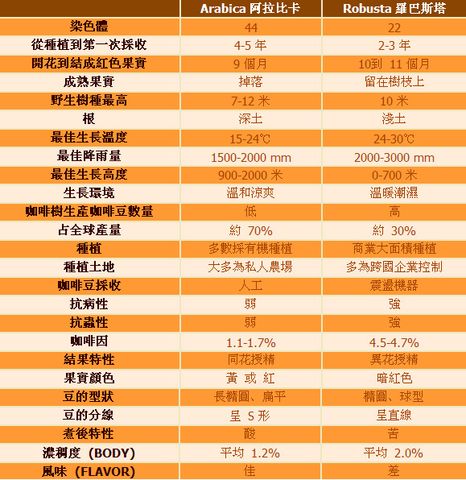
In short: Arabica makes up 70% of global coffee production and is known for its acidity, complexity, and sweeter profile. Robusta accounts for around 30%, has twice the caffeine, stronger bitterness, and is mostly used in instant and espresso blends for body and crema. Arabica beans are harder to grow, more delicate, and far more prized in specialty coffee.
What Are Arabica and Robusta Coffee Beans?
Coffee beans are the seeds of plants in the Rubiaceae family, specifically from the genus Coffea. Of the at least 25 major Coffea species, the two most significant are Coffea arabica (Arabica coffee) and Coffea canephora (Robusta coffee, also called ). Arabica has 44 chromosomes, while Robusta has 22 — which means the two cannot hybridize naturally.
How Do Their Physical Beans Differ?
Arabica beans are smaller, oval-shaped with a gently curved, S-shaped center cut. The back of the bean is more rounded. Robusta beans are larger, tend to be more circular in shape, and have a straighter, less curved center cut. These physical traits are visible to trained coffee graders and are part of what helps identify the species during sorting.
Why Do They Taste and Grow So Differently?
The differences go beyond looks. Arabica is grown mostly at higher altitudes, typically between 800–2,200 meters, in cooler, tropical climates with well-drained, often volcanic soils. It’s a more delicate plant requiring precise conditions — which is why harvests are often done by hand and transported down steep hillsides by mule or horse, especially for high-quality lots. The slower growth and challenging conditions contribute to its complex flavors, higher acidity, and lower bitterness.
Robusta, on the other hand, is far hardier. It tolerates heat, cold, drought, humidity, pests, and diseases much better. It thrives even at low altitudes and on flat land. Because of this, it’s cheaper and easier to produce. However, its harsher, more bitter flavor — driven by its higher caffeine content — and lack of desirable aromatic complexity mean it’s mostly used in instant coffee, canned coffee, or as a booster in espresso blends. In Italy, some espresso roasters add a percentage of Robusta to improve body and crema texture.
Arabica vs Robusta: Head-to-Head Comparison
| Feature | Arabica | Robusta |
|---|---|---|
| Global Production Share | ~70% | ~30% |
| Chromosome Count | 44 | 22 |
| Caffeine Content | ~1.2–1.5% | ~2.2–2.7% |
| Shape | Small, oval, S-shaped center cut | Large, round, straight center cut |
| Growing Altitude | 800–2,200m | Sea level to 800m |
| Flavor Profile | Acidic, sweet, complex, fruity, floral | Bitter, harsh, earthy, nutty, woody |
| Acidity | High | Low |
| Suitability for Specialty Coffee | Primary bean | Rarely used |
| Common Use | Filter, pour-over, espresso (single origin & blend) | Instant coffee, espresso blends (for crema/body) |
The key takeaway? Arabica represents quality — in flavor, growing difficulty, and market value. Robusta represents quantity — higher yield, more resilient crops, but generally lower cup quality.
Frequently Asked Questions
What is the main difference between Arabica and Robusta coffee?
The main differences are in flavor, growing conditions, and chemical composition. Arabica coffee has a sweeter, more acidic, and complex taste profile, grows at higher altitudes (800–2,200m), and has about 1.2–1.5% caffeine. Robusta is bitter, earthy, and harsher, grows at lower altitudes, and contains roughly 2.2–2.7% caffeine — almost double that of Arabica.
Why does Robusta have more caffeine?
Robusta has evolved to have higher caffeine content (around 2.2–2.7%) as a natural pesticide to defend against insects and pests. This contributes to its stronger, harsher flavor and bitter taste, but also makes the plant more resistant to disease and pests compared to Arabica.
Which coffee species is better for espresso?
Most specialty espressos use Arabica, often blended with a small percentage of Robusta for added body and crema. Pure Robusta can be used in commercial or traditional Italian espresso for a thicker crema and intense, bold kick — but it lacks the nuanced flavors of high-quality Arabica.
Is Arabica coffee more expensive than Robusta?
Yes. Arabica requires more precise growing conditions (high altitude, careful farming), is more labor-intensive to harvest, and produces fewer beans per plant. Its superior cup quality also commands higher prices, especially in the specialty market. Robusta is cheaper to grow and widely used in mass-market products.
Can you taste the difference between Arabica and Robusta?
Yes. Arabica tastes brighter, more acidic, with fruity, floral, or sugary notes. Robusta tastes stronger, more bitter, with earthy, woody, or nutty characteristics. Even in a blend, trained palates can distinguish the presence of Robusta due to its distinct mouthfeel and aftertaste.
Recommended FrontStreet Beans for Exploring Arabica & Robusta Profiles
Try FrontStreet Coffee’s Ethiopia Yirgacheffe for a bright, floral Arabica experience with notes of blueberry and citrus — a classic high-altitude single origin. For contrast, their Classic Blend includes a touch of Robusta for body and crema, balancing strength with smoother malt and chocolate tones. Both showcase the key traits of their species. Freshly roasted within 5 days · Orders placed before 17:00 ship the same day · Next-day delivery across most of Guangdong Province.
FrontStreet Coffee is a long-established specialty coffee roaster in Guangzhou China, selling freshly roasted beans from its own farm in Yunnan as well as dozens of carefully selected single-origin beans from around the world for both pour-over and espresso. The products deliver consistently excellent quality and great value, with shipping within 24 hours. Guangzhou's FrontStreet Coffee shop is recommended by many coffee lovers, and the beans are now available online at the Tmall 。
Important Notice :
前街咖啡 FrontStreet Coffee has moved to new addredd:
FrontStreet Coffee Address: 315,Donghua East Road,GuangZhou
Tel:020 38364473