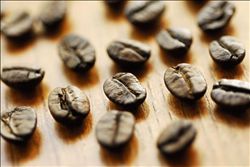
Bali’s Kintamani Volcano Natural Process Coffee
In Bali, coffee has long been seen as a cheap commodity—not a craft product. Most beans from the island are processed inconsistently, resulting in dull commercial lots. But what if a team of Q Graders set out to prove Bali could produce distinctive, high-quality specialty coffee? The answer lies 1,400 metres above sea level in the Kintamani volcanic region.
Bali’s Kintamani volcano natural process coffee delivers distinct tropical fruit and sweet depth: think ripe peach, pineapple, and black sugar. This lot comes from USDA, Karka, and S-795 varieties grown at 1,400m, processed as natural, and refined by a team with international Q certifications.
Bali’s Coffee Culture Shift
Traditionally in Bali, coffee was a low-value crop, often turned into poor-quality commercial lots. That began to change when Rodney and two partners—each holding international Q Grader certifications—opened Bali’s only specialty coffee shop in central Ubud, the island’s cultural heart. Equipped with 1kg and 4kg roasters, the shop focuses solely on high-grade beans sourced locally and from nearby regions such as Java, Sulawesi, New Guinea, and Flores.
The Birth of a Processing Innovation
For years, farmers in the Kintamani highlands processed their own coffee, but unpredictable weather, variable berry quality, and inconsistent processing environments made quality control nearly impossible. By 2015, Rodney decided to build his own processing facility right at his home and next to the café. At harvest time, he sources premium red cherries from farms around the 1,400m elevation zone in Kintamani. After initial prep, he transports them down to Ubud, at a more stable 800m altitude, for controlled processing.
Experimenting Beyond Tradition
Last season, Rodney tested three different processing methods: washed, honey, and natural. Each batch surpassed typical local standards—with lower defect rates and better uniformity than many Central American specialty lots. The washed and honey lots showed bright, complex acidity, while the natural process batch delivered an exceptional profile. Its profile rivals top Panamanian estates, bursting with ripe peach, pineapple, mango, and wine-like fruitiness, along with a lingering finish of dark brown sugar, fine dark chocolate, and hazelnut.
Flavour Profile Breakdown
The dry grounds exude intense melon and tropical fruit aromas. On the cupping table, the coffee opens with juicy pineapple and strawberry jam sweetness. As it cools, a smooth, layered acidity emerges, leading into a thick, syrupy body. The finish lingers with notes of handmade brown sugar, refined dark chocolate, and nutty hazelnut. The natural process amplifies the classic tropical fruit character to a degree seldom achieved in Indonesian coffees—and even overshadows many well-known estates from the Americas.
Frequently Asked Questions
What altitude were the Kintamani coffee cherries grown at?
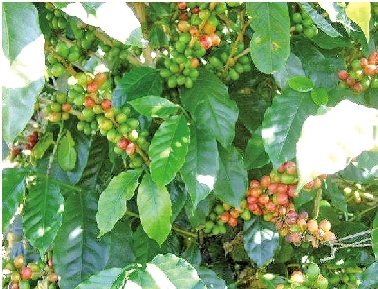
The coffee cherries for this natural process lot were grown at 1,400 metres above sea level in Bali’s Kintamani volcanic region.
Which coffee varieties are included in this lot?
This lot is made up of three varieties: USDA, Karka, and S-795, all cultivated in the high-altitude Kintamani area.
What processing method was used for this coffee?
This coffee was processed using the natural (or dry) method, where ripe coffee cherries are dried in the sun with the fruit still intact, enhancing fruitiness and body.
Who produced and processed this coffee?
The coffee was produced by farmers in the Kintamani region and processed by Rodney and his team at their custom-built facility in Ubud, Bali. Rodney holds international Q Grader certification.
How does the flavour compare to other Indonesian coffees?
This natural process coffee features a fruit-forward profile with ripe peach, pineapple, and black sugar—often surpassing the more earthy or herbal profiles typical of many other Indonesian coffees, and even rivaling top lots from Panama.
What was the inspiration behind building a processing facility in Ubud?
Rodney and his partners wanted to improve quality consistency and change local perceptions of coffee by controlling the post-harvest process in a stable environment, moving cherries to Ubud’s steady 800m altitude after initial harvest in the highlands.
Recommended FrontStreet Beans for Natural Process Fans
Try FrontStreet’s own ‘’ (natural process specialty coffee), highlighting the same classic sun-dried technique. For direct comparisons, their Ethiopia Huakui (Yirgacheffe) shows vibrant fruit and floral tones through natural processing, while Brazil Queen Manor delivers sweet, nutty body with a similar smooth mouthfeel. All showcase the potential of natural fermentation at origin. Freshly roasted within 5 days · Orders placed before 17:00 ship the same day · Next-day delivery across most of Guangdong Province.
FrontStreet Coffee is a long-established specialty coffee roaster in Guangzhou China, selling freshly roasted beans from its own farm in Yunnan as well as dozens of carefully selected single-origin beans from around the world for both pour-over and espresso. The products deliver consistently excellent quality and great value, with shipping within 24 hours. Guangzhou's FrontStreet Coffee shop is recommended by many coffee lovers, and the beans are now available online at the Tmall 。
Important Notice :
前街咖啡 FrontStreet Coffee has moved to new addredd:
FrontStreet Coffee Address: 315,Donghua East Road,GuangZhou
Tel:020 38364473