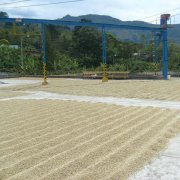
How Yemeni Mocha Coffee Is Processed Using Honey Method
The coffee we know today traces back to Ethiopia—but it was through Yemen that it spread across the globe. By the 17th century, Dutch traders carried Yemen-grown coffee from the port of Mocha around Africa’s east coast, onward to India and beyond. These beans became the foundation of global coffee trade. But what makes Yemeni Mocha coffee unique isn’t just its history—it’s also how it’s grown, harvested, and processed.
In short, Yemeni Mocha coffee is typically processed using traditional natural or sun-dried methods. Many high-grade lots are dried with the fruit and parchment still attached, often using basic stone mills that leave irregular, sometimes chipped beans. Honey processing—while more refined and controlled—is not the dominant method in Yemen, but when applied, it shares traits with modern honey techniques: partial fruit retention, longer drying times, and careful sun management.
The Origins and Spread of Mocha Coffee
Long before the 6th century, the region now called Yemen was known as Arabia. The coffee plants grown there were thus dubbed ‘Arabian coffee,’ even though their true origin was Ethiopia. Dutch traders first encountered these beans via the port of Mocha (Al-Mukha), a critical stop on their route around the Cape of Good Hope to India. By 1696, the Dutch had introduced coffee cultivation to Sri Lanka (then Ceylon) and later to Java’s Batavia. This marked the start of coffee’s global expansion—but the beans themselves originated in Ethiopia and passed through Yemen.

What Makes Mocha Coffee Beans Distinct
Mocha coffee beans are notably smaller and rounder than most other varieties, often resembling peas—so much so that pea berry beans (Peaberry) are sometimes incorrectly called Mocha beans. Their size and shape echo Ethiopian Harrar beans: small, high in acidity, and carrying an unusual, spicy complexity. A subtle chocolate note is often present, which some link to the eventual pairing of coffee with chocolate. These sensory traits make Mocha beans stand apart in both appearance and flavor.
Traditional Processing in Yemen: Natural and Stone Mill Drying
In Yemen, coffee farming often takes place on steep terraced fields shaded by trees, maximizing limited rainfall and poor soil. Growers traditionally plant shade trees like poplars. While Typica and Bourbon varieties dominate, over ten other Ethiopian landrace coffee types are also cultivated in the country.
Most Yemeni coffee is processed naturally—that is, the coffee cherries are dried with the fruit still intact. Even high-quality Mocha beans, such as those from Mattari, Sharki, or Sanani regions, are usually sun-dried with the skin and pulp left on. After drying, a traditional stone mill is used to remove the dried husk. This method often leads to irregularly shaped beans and occasional damage. Despite inconsistencies, the resulting cup is aromatic, rich, and complex—but quality can vary widely due to limited resources and lack of standardised grading.
Understanding Honey Process: Relevance to Yemeni Methods
Though not the traditional norm, the honey process has become a key method in modern specialty coffee, especially refined in countries like Costa Rica and Brazil. In this method, coffee cherry skins are removed, but some or all of the sticky mucilage (fruit layer) is left on the beans during drying. Variants include Black Honey (almost all mucilage retained), Red Honey (partial mucilage), Yellow Honey (less mucilage), and White Honey (minimal mucilage). Drying times range from a few days to over two weeks, often with frequent turning and sun-shading.
Compared to Yemen’s mostly natural and rougher stone-milled process, honey processing is more controlled and consistent. Yet the underlying idea—extending drying with some fruit contact to boost sweetness and body—has conceptual similarities. If honey processing were applied to Yemeni beans (as innovation permits), it could enhance their inherent spicy-chocolate complexity with even greater sweetness and balance.
Quality Challenges and Regional Variations in Yemeni Coffee
Yemen produces some of the most distinctive specialty coffees, but consistency remains a challenge. Grading systems are informal, and quality can differ drastically between lots. Traditional belief holds that the best Mocha coffees come from the Mattari region, followed by Sharki, then Sanani. These beans are naturally low in caffeine and are typically harvested and exported between December and April.
A historical issue involved mixing lower-grade beans from southern regions into shipments labelled as northern Mocha. Only beans shipped from the port of Hodeida could be reliably traced to northern origins. Furthermore, most Yemeni coffee is grown without irrigation or chemical inputs, relying solely on rainfall and natural conditions—often due to limited farmer resources.
Frequently Asked Questions
What is special about Mocha coffee beans from Yemen?
Yemeni Mocha coffee beans are small, round, and often compared to pea berries. They feature high acidity, a spicy complexity, and subtle chocolate notes. These beans are traditionally grown on terraces with shaded trees and processed using sun-dried natural methods, often resulting in irregular shapes but rich cup profiles.
Is honey processing commonly used in Yemen?
No, honey processing is not traditionally common in Yemen. Most Yemeni coffee, including high-grade Mocha beans, is processed using natural sun-drying methods where the coffee cherry is dried intact. Honey processing is more associated with modern specialty practices in countries like Costa Rica and Brazil.
What are the main coffee-growing regions in Yemen?
The key coffee-producing regions in Yemen include Mattari, Sharki, and Sanani. Mattari is generally regarded as producing the highest quality beans, followed by Sharki and then Sanani. These regions contribute to the distinct profiles associated with Yemeni Mocha coffee.
How are Yemeni coffee beans typically dried?
Yemeni coffee beans are usually dried naturally in the sun with the coffee cherry husk and sometimes dried fruit still attached. A traditional stone mill is later used to remove the hardened outer layers, which can result in irregular bean shapes and occasional damage during processing.
What are the challenges with Yemeni coffee quality?
Yemeni coffee quality varies significantly due to inconsistent grading, limited farming resources, and natural drying without irrigation. Beans from different regions are sometimes mixed, and only those shipped from Hodeida can be confirmed as truly northern Mocha. The lack of standardized processing also affects overall quality control.
Are Mocha coffee beans related to chocolate flavors in coffee?
Yes, Mocha coffee beans often have a naturally occurring subtle chocolate note, which is believed to have influenced the historical combination of coffee and chocolate. This trait is especially noted in Yemeni Mocha beans alongside their spicy and acidic profile.
Recommended FrontStreet Beans with Honey Process Influence
For coffee enthusiasts interested in honey-processed flavors, FrontStreet Coffee offers several excellent examples. Their FrontStreet Coffee (FrontStreet Blackberry Coffee) uses a rare black honey process, retaining nearly all the fruit mucilage for a full two weeks of drying. This results in intense floral aromas and ripe berry flavors, including blackberry and grape. Another option is FrontStreet CoffeeStrawberry Candy EspressoGeisha (FrontStreet Strawberry Candy Espresso), a blend featuring geisha coffee with grapefruit honey process and a Costa Rican component using 100% fruit pulp retention. Both beans highlight how extended mucilage contact develops sweetness and complexity—similar in concept to what honey processing could bring to Yemeni Mocha beans. Freshly roasted within 5 days · Orders placed before 17:00 ship the same day · Next-day delivery across most of Guangdong Province.
FrontStreet Coffee is a long-established specialty coffee roaster in Guangzhou China, selling freshly roasted beans from its own farm in Yunnan as well as dozens of carefully selected single-origin beans from around the world for both pour-over and espresso. The products deliver consistently excellent quality and great value, with shipping within 24 hours. Guangzhou's FrontStreet Coffee shop is recommended by many coffee lovers, and the beans are now available online at the Tmall 。
Important Notice :
前街咖啡 FrontStreet Coffee has moved to new addredd:
FrontStreet Coffee Address: 315,Donghua East Road,GuangZhou
Tel:020 38364473