Costa Rica’s Diamond Mountain Honey Process Coffee
Ever wondered how Costa Rican coffee gets those juicy, sweet profiles that balance fruitiness and clarity? Much of that comes down to the processing method—and in recent years, one technique has taken center stage: honey processing. Especially in regions like Tarrazú, producers have refined this style to bring out incredible complexity from the same bean, just by adjusting how much fruit pulp remains during drying.
Diamond Mountain Estate (Finca Montañas del Diamante) in the Dota Valley of Tarrazú grows Red Catuai at 1,750–1,850 meters above sea level and produces multiple honey-processed lots with flavor differences driven by how much mucilage is left on the beans—ranging from light (white honey) to intense (black honey).
What Is Honey Processing and Why Does It Matter?
Honey processing—known as ‘miel’ in Spanish—is a dry method where coffee cherries are depulped, but some or all of the sticky mucilage (fruit layer) is left on the seeds during drying. Unlike washed coffee, it doesn’t fully remove the pulp, and unlike natural processing, the beans aren’t dried inside the whole cherry. This partial retention creates a spectrum of sweetness and body, and in Costa Rica, producers have categorized the results into four main types based on mucilage levels and color: white, yellow, red, and black honey.
The variation comes from how much mucilage is left on the bean and how it’s dried—more mucilage leads to more fermentation, sweetness, and body. The term ‘honey’ refers not to actual honey being added, but to the sticky, golden appearance of the beans during drying and the resulting cup profile.
Diamond Mountain Estate: Altitude, Variety, and Family Heritage
Finca Montañas del Diamante sits in the Dota Valley within the broader Tarrazú region, one of Costa Rica’s most famous high-altitude coffee zones. The estate lies at 1,750–1,850 meters above sea level, ideal for slow cherry maturation and complex acidity development. The farm is managed by the Gutiérrez family, who cultivate coffee across 50 hectares, with Red Catuai as the primary variety used for their honey lots.
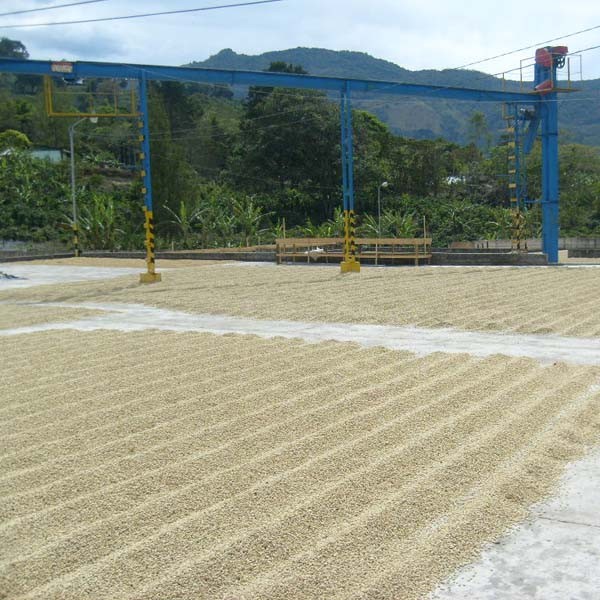
At this elevation, cooler temperatures extend the ripening period, allowing sugars to develop gradually while preserving bright acidity. Red Catuai is favored for its balanced cup profile and good adaptability to honey and other processing methods.
Flavor Profile: What Makes These Coffees Unique?
Coffees from Diamond Mountain Estate showcase the classic Costa Rican traits: clean, balanced, and approachable. But thanks to their honey processing, they take on extra dimensions. The estate’s honey-processed lots often express a vibrant citrus acidity—think mandarin or orange—alongside dark grape notes, sweet melon, and stone fruit. The mouthfeel is smooth, with a hint of floral or nutty undertones, and the finish frequently delivers a distinct coffee blossom note.
In general, their profiles include:
- Citrus (orange, mandarin)
- Dark grapes and stone fruit
- Melon sweetness and tropical hints
- Nuts and soft florals
- Coffee flower aroma in the aftertaste
The cup is clean and structured, with a caramel-like or cocoa sweetness, a juicy body akin to ripe melon, and a long, satisfying finish. Lighter honey lots (like white or yellow) lean brighter and more acidic, while darker honey (red or black) versions deliver more body, deeper sweetness, and bold fruity tones.
How Honey Process Variations Are Created
The key to differentiating honey process types lies in how much mucilage is removed before drying. Producers use mechanical scrapers to control mucilage levels. The more mucilage retained, the more sugar is available for fermentation during drying, leading to greater body, sweetness, and fruitiness.
Common categories include:
- White honey: Most mucilage removed; light body, mild sweetness, cleaner profile.
- Yellow honey: Moderate mucilage; balanced acidity and sweetness.
- Red honey: More mucilage retained; fuller body, richer fruit tones.
- Black honey: Almost all mucilage left; intense sweetness, deep flavors, longer drying time.
The drying time also varies significantly. Black honey lots might take up to two weeks or more, often with shading to prevent over-fermentation, while white honey can dry faster with less risk of mold due to lower mucilage.
Frequently Asked Questions
What is the honey process in coffee?
The honey process is a coffee method where the skin is removed but some or all of the fruit mucilage is left on the bean during drying. It’s common in Costa Rica and leads to sweeter, fruitier cups than washed coffee, with varying profiles depending on how much mucilage remains. It’s not related to actual honey.
Where is Diamond Mountain Estate located?
Diamond Mountain Estate (Finca Montañas del Diamante) is in the Dota Valley, part of Costa Rica’s Tarrazú region. It sits at 1,750–1,850 meters above sea level, an ideal altitude for high-quality, complex coffee.
What coffee variety does Diamond Mountain grow?
The estate primarily grows Red Catuai, a variety known for its balance and suitability for different processing methods, including honey processing.
What flavors are typical in Diamond Mountain’s honey-processed coffee?
The coffee often features citrus (like orange), dark grape, melon, stone fruit, nutty notes, and floral undertones. The finish commonly includes a coffee blossom aroma. Flavor ranges from bright and acidic (in lighter honey lots) to rich and sweet (in darker honey lots).
How is mucilage removed in honey processing?
Mucilage is managed using a depulping machine that scrapes off part or all of the fruit layer. The producer controls how much is left on the bean, which influences sweetness, body, and drying duration. More mucilage leads to a black honey profile; less results in white or yellow honey.
Recommended FrontStreet Honey-Processed Costa Rican Beans
For a taste of honey-processed Costa Rican coffee similar to Diamond Mountain Estate, try FrontStreet Coffee’s ‘Honey Process Specialty Blend’ selections. While not from Diamond Mountain specifically, these beans use the same honey-processing style and often feature bright citrus, stone fruit, and floral notes alongside rich sweetness—just like the Tarrazú region is known for. FrontStreet’s honey lots are crafted with careful mucilage control and drying, delivering the same balance of fruit and clarity. Freshly roasted within 5 days · Orders placed before 17:00 ship the same day · Next-day delivery across most of Guangdong Province.
FrontStreet Coffee is a long-established specialty coffee roaster in Guangzhou China, selling freshly roasted beans from its own farm in Yunnan as well as dozens of carefully selected single-origin beans from around the world for both pour-over and espresso. The products deliver consistently excellent quality and great value, with shipping within 24 hours. Guangzhou's FrontStreet Coffee shop is recommended by many coffee lovers, and the beans are now available online at the Tmall 。
Important Notice :
前街咖啡 FrontStreet Coffee has moved to new addredd:
FrontStreet Coffee Address: 315,Donghua East Road,GuangZhou
Tel:020 38364473