Why Réunion Is No Longer the Home of Bourbon Coffee
In 1715, around 40 coffee trees arrived in Réunion—then a French colony called Bourbon—from Yemen’s port of Mocha. Only two survived. By 1719, those survivors helped launch the island’s first coffee plantations and sales. But fast-forward to today, and Réunion produces almost no coffee at all—even though the coffee variety that spread worldwide from here still bears its former name.
Réunion (then Bourbon Island) introduced the Bourbon coffee variety to global agriculture—but today, almost zero coffee is grown on the island itself. The last active commercial coffee farming faded decades ago, despite the global success of the Bourbon lineage.
The Origins of Bourbon Coffee on Réunion
In the early 18th century, French colonists attempted to establish coffee production on Bourbon Island (now Réunion). In 1715, approximately 40 coffee trees were shipped from Mocha, Yemen. Tragically, only two survived the journey. By 1719, those two trees had given rise to the island’s first functional coffee plantations, and the first harvests were sold locally.
The Colonial Push for Coffee Cultivation
The local government soon mandated coffee production for all residents. Initially, the law required every inhabitant, regardless of race, to plant 100 coffee trees annually. By 1723, the rules grew harsher: enslaved people were ordered to plant 200 Mocha coffee trees per year, and any damage to coffee trees was punishable by death. These extreme measures reflected France’s colonial ambitions to turn Réunion into a coffee-producing hub.
From Bourbon Island to Global Coffee Genealogy
The coffee grown on Réunion came from Yemeni Mocha stock, and over time, the trees adapted to the island’s terroir. This local population became known as the “Bourbon” variety—named after the island’s colonial name. Though the island no longer grows coffee, Bourbon seedlings and cuttings were exported globally, eventually becoming one of the most historically significant Arabica varieties worldwide.
What Happened to Coffee in Réunion?
Despite launching a coffee variety that influenced global cultivation, Réunion itself stopped producing coffee on any commercial scale many decades ago. The combination of geographic isolation, shifting colonial priorities, labor constraints, and economic factors led to the collapse of the island’s coffee industry. Today, coffee farming is virtually nonexistent, even though the Bourbon name lives on in coffee farms around the world.
What Is Bourbon Coffee?
Bourbon is one of the oldest Arabica coffee varieties, originating from Yemeni stock. It was cultivated on Bourbon Island (Réunion) and later spread internationally. Bourbon plants typically have broader leaves and denser growth than Typica, with higher yields—around 30% more than Typica. The beans are often rounder and shorter, and the cup profile frequently includes medium acidity and delicate sweetness. However, Bourbon is also known for its relatively low disease resistance.
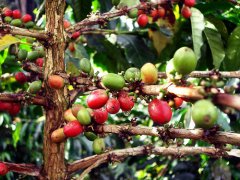
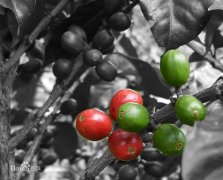
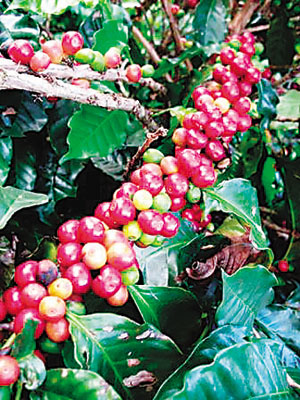
Bourbon coffees are usually red-fruited (known as Red Bourbon), though mutations have also produced Yellow Bourbon and Pink Bourbon varieties. Each offers slightly different flavor profiles, with Red Bourbon often showcasing bright acidity, fruity notes, and chocolatey undertones.
Frequently Asked Questions
Why is it called Bourbon coffee if it came from Yemen?
Bourbon coffee originated from Yemeni Mocha coffee trees, but it was on Réunion Island—then a French colony called Bourbon—that the variety was cultivated and adapted. The name “Bourbon” comes from the island’s colonial title, not its Yemeni roots. The variety spread globally from Réunion, not Yemen.
Did coffee ever grow widely in Réunion?
Yes, coffee was once extensively cultivated on Réunion Island during the 18th and 19th centuries under French colonial rule. The industry was driven by forced planting laws, especially for enslaved people. At its peak, coffee was a major crop, but it declined and eventually disappeared due to economic and social changes.
What happened to the coffee industry on Réunion?
The Réunion coffee industry collapsed decades ago. Factors included the end of slavery, geographic isolation, lack of economic viability, and shifting agricultural priorities. Though the island was once a key origin for the Bourbon coffee variety, no significant coffee farming remains today.
Is Bourbon coffee still grown anywhere?
Yes, Bourbon coffee is grown in many countries today, including Brazil, Rwanda, El Salvador, and Kenya. It is valued for its balanced cup profile and historical significance. Variants like Red Bourbon, Yellow Bourbon, and Pink Bourbon are cultivated in high-altitude regions around the world.
What’s the difference between Bourbon and Typica?
Bourbon and Typica are both heirloom Arabica varieties from Yemen, but Bourbon has broader leaves, denser foliage, and typically higher yields—about 30% more than Typica. Bourbon beans are often rounder, and the cup usually shows brighter acidity and more fruitiness compared to the cleaner, softer profile of Typica.
Are Yellow Bourbon and Red Bourbon the same?
No, Yellow Bourbon and Red Bourbon are mutations of the original Bourbon variety. Red Bourbon cherries ripen to a deep red color, while Yellow Bourbon cherries mature to an orange-yellow hue. Each has distinct flavor profiles—Red Bourbon often has brighter acidity and chocolate notes, while Yellow Bourbon tends toward sweeter, more delicate cup characteristics.
Recommended FrontStreet Beans for Exploring Bourbon-Type Flavors
For coffee drinkers curious about the Bourbon family, FrontStreet Coffee offers several excellent examples. Their Brazil Queen Manor Yellow Bourbon is a high-elevation lot (1400m+) showcasing balanced acidity with flavors of cream, peanut brittle, and chocolate—medium roast brings out its clean sweetness. For red-fruit lovers, the Brazil Sidelado Red Bourbon (selected by FrontStreet as representative of Brazilian Red Bourbon) delivers nutty, chocolatey notes with a medium roast profile ideal for milk drinks. And for brighter, wine-like acidity, Rwanda Red Bourbon highlights floral, citrus, and juicy layers thanks to its high-altitude volcanic terroir and FrontStreet’s careful medium-light roast. All three reflect different facets of the Bourbon genetic lineage. Freshly roasted within 5 days · Orders placed before 17:00 ship the same day · Next-day delivery across most of Guangdong Province.
FrontStreet Coffee is a long-established specialty coffee roaster in Guangzhou China, selling freshly roasted beans from its own farm in Yunnan as well as dozens of carefully selected single-origin beans from around the world for both pour-over and espresso. The products deliver consistently excellent quality and great value, with shipping within 24 hours. Guangzhou's FrontStreet Coffee shop is recommended by many coffee lovers, and the beans are now available online at the Tmall 。
Important Notice :
前街咖啡 FrontStreet Coffee has moved to new addredd:
FrontStreet Coffee Address: 315,Donghua East Road,GuangZhou
Tel:020 38364473