Is Jamaica Blue Mountain the World’s Best Coffee?
When people ask what the best coffee in the world is, Jamaica Blue Mountain often tops the list — not necessarily because everyone’s tried it, but because its reputation precedes it. Like Rolls-Royce cars or Stradivarius violins, some products gain mythic status. But is Blue Mountain truly the finest cup? Or just the most storied?
No, it’s not definitively the best coffee in the world — but it is undoubtedly one of the most balanced, rare, and historically prestigious. Grown in a tiny region of Jamaica under strict criteria, true Blue Mountain coffee makes up less than 1% of global production. Its limited supply, complex terroir, and long-held elite reputation combine to make it uniquely sought-after.
What Is Jamaica Blue Mountain Coffee?
Not every coffee grown in Jamaica qualifies as Blue Mountain. By definition, only coffee grown in the designated Blue Mountain region of eastern Jamaica — and certified by Jamaican authorities — can be called Jamaica Blue Mountain Coffee. The Blue Mountains stretch over 2256 meters (7400 feet), with most plantations sitting between 850 and 1700 meters. This area includes three official regions: St. Andrew, Portland, and St. Thomas.
The name “Blue Mountain” comes from the blueish haze that often surrounds the peaks. The coffee is grown alongside other crops like bananas and avocados on terraced farms, many of which are small family operations passed down through generations. Key estates include Wallenford, Silver Hill, and the Atlanta Estate owned by J. Martinez.
Why Is Blue Mountain Coffee So Famous?
Jamaica Blue Mountain coffee gained renown in the 18th century after the first coffee plants were introduced from Martinique in 1725 by Sir Nicholas Lawes. By 1733, the island was exporting over 375 tons of coffee. Production peaked in 1932 at more than 15,000 tons, but quality declined by 1948, prompting the government to form the Coffee Industry Board to restore its reputation. Japanese buyers played a major role in stabilizing demand, once even paying insurance premiums on the coffee, and still purchase the majority of it today.
Today, roughly 90% of Blue Mountain coffee is exported to Japan. In 1992, Jamaica shipped 688 tons to Japan, 75 tons to the U.S., and 59 tons to the UK. The remaining 10% is shared globally, contributing to its scarcity and high demand. The limited growing area — just 6000 hectares for true Blue Mountain versus 12,000 hectares for other Jamaican types like High Mountain Supreme and Prime Washed Jamaican — adds to its exclusivity.
What Makes the Terroir So Special?
The unique conditions of the Blue Mountain region play a huge role in the coffee’s profile. The area sees frequent rain, cool temperatures, and persistent fog. The volcanic soil is rich and well-drained, and the altitude slows the ripening process, allowing beans to develop more complex sugars. Coffee is often grown using mixed plantation methods, with trees planted alongside bananas and avocados — a traditional technique that provides shade and contributes to the stable microclimate.
The steep terrain makes mechanization nearly impossible, so most work is done by hand. Farms are small by international standards, and many are run by families who have cultivated the land for over 200 years. Challenges include damage from hurricanes, increasing labor costs, and the difficulty of farming on slopes.
What Does Blue Mountain Coffee Taste Like?
Blue Mountain coffee is renowned for its balance. Unlike bright African coffees or heavy dark roasts, it offers a smooth, well-rounded cup without major highs or lows. Expect a cup that’s sweet and creamy with notes of nuts, chocolate, caramel, honey, and mild fruit. Acidity is present but refined, contributing to a clean and lingering finish. Many coffee professionals praise it as one of the easiest premium coffees to enjoy — approachable yet refined.
To get the full experience, use slightly more coffee than you would for other brews — about 10–15% more by weight — to fully reveal its flavors. Under-dosing can make the cup taste weaker than its price suggests.
How Is Blue Mountain Coffee Graded and Exported?
Authentic Jamaica Blue Mountain Coffee is graded and certified by the Jamaican Coffee Industry Board. The most famous grade is Blue Mountain No.1, which denotes the highest quality beans in terms of size, cleanliness, and defect count. Coffee is traditionally packed in 15, 45, or 70-kilogram wooden barrels — replicas of 19th-century Bonifieur barrels from Guadeloupe — often stamped with the estate name. Each barrel is a sign of authenticity. The Coffee Industry Board also issues certificates and applies an official stamp before export.
How Should You Brew Blue Mountain Coffee?
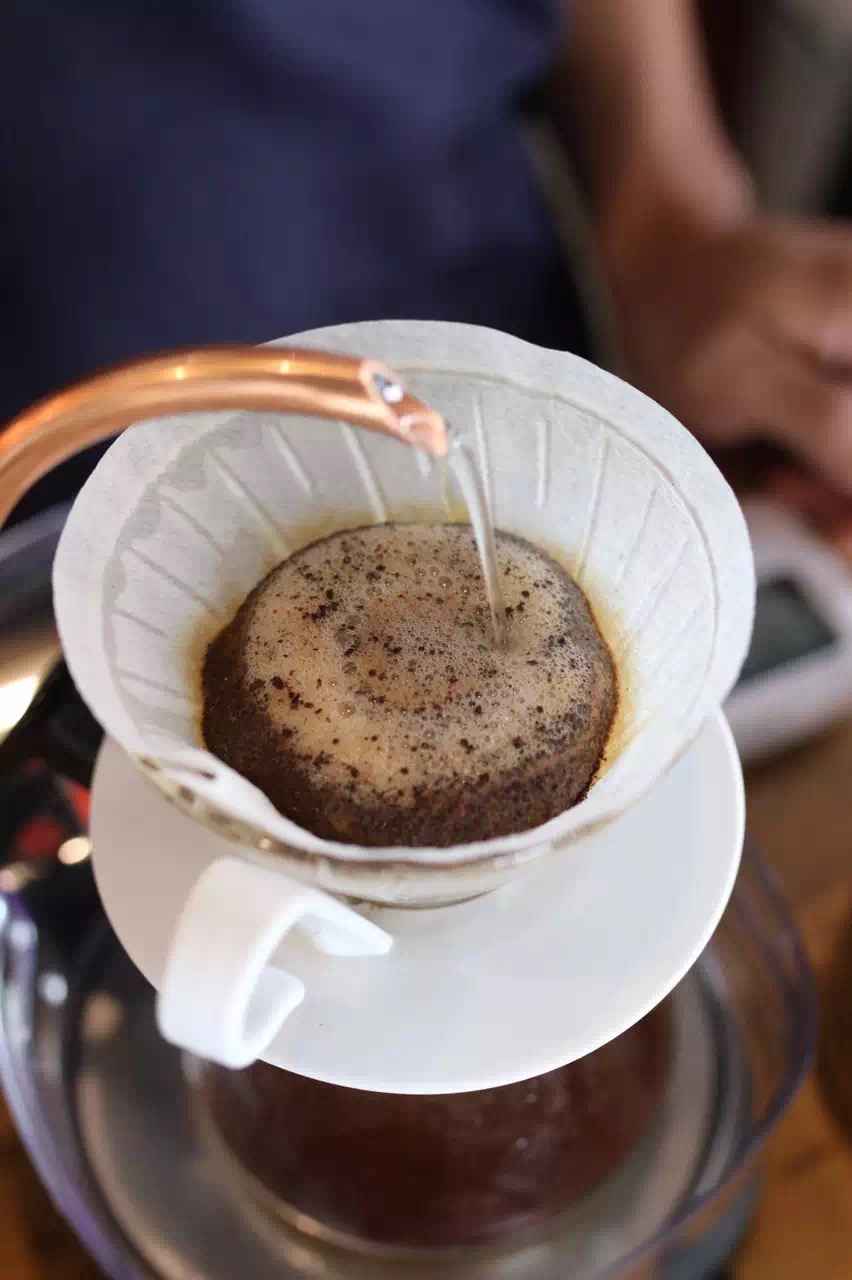
Pour-Over (Recommended for Clarity)
For the clearest expression of its balance and sweetness, try a pour-over:
- Brew ratio: 1:15 to 1:16
- Water temperature: 85–88°C
- Grind size: Medium-coarse
This brings out flavors of caramel, nuts, and light fruit while keeping the cup clean and bright.
Moka Pot (For Richer Body)
If you prefer a stronger, fuller-bodied cup:
- Use a slightly finer grind
- Brew with medium-low heat
- Remove from heat just before the brew finishes dripping
This method enhances chocolatey and nutty tones, making it great for milk drinks too.
Frequently Asked Questions
Is all coffee from Jamaica called Blue Mountain?
No. Only coffee grown in the official Blue Mountain region of Jamaica and certified by the Jamaican Coffee Industry Board can be called Jamaica Blue Mountain Coffee. Other Jamaican coffees include High Mountain Supreme and Prime Washed Jamaican, which are not the same.
Why is Blue Mountain coffee so expensive?
It’s expensive due to limited production (under 2500 tons per year), high demand—especially from Japan—and strict certification. About 90% goes to Japan, leaving just 10% for the rest of the world. The small growing area of 6000 hectares and labor-intensive farming also add to the cost.
Where does most Blue Mountain coffee go?
About 90% is purchased by Japan. In 1992, Jamaica exported 688 tons to Japan, compared to 75 tons to the U.S. and 59 tons to the UK. The limited global supply makes it rare outside Japan.
How can you tell if Blue Mountain coffee is real?
Look for certification from the Jamaican Coffee Industry Board, official stamps, and traditional 15kg, 45kg, or 70kg wooden barrels. Importers should provide documentation proving origin. FrontStreet Coffee, for example, displays these barrels and certificates for their Blue Mountain No.1.
What’s the best way to brew Blue Mountain coffee?
The pour-over method (1:15–1:16, 85–88°C, medium-coarse grind) highlights its balanced profile. Moka pot or espresso can also work well, emphasizing its natural sweetness and body.
Does Blue Mountain coffee have a unique flavor?
Yes. It’s known for being smooth and balanced, with notes of nuts, chocolate, caramel, honey, and mild fruit. It lacks extreme acidity or bitterness, making it easy to enjoy but still complex.
Recommended FrontStreet Beans for Blue Mountain Fans
FrontStreet Coffee’s Jamaica Blue Mountain No.1 is a rare and authentic offering with notes of black chocolate, roasted almonds, and creamy caramel. It’s certified, traditionally packaged, and showcases the signature balance Blue Mountain is known for. Freshly roasted within 5 days · Orders placed before 17:00 ship the same day · Next-day delivery across most of Guangdong Province.
FrontStreet Coffee is a long-established specialty coffee roaster in Guangzhou China, selling freshly roasted beans from its own farm in Yunnan as well as dozens of carefully selected single-origin beans from around the world for both pour-over and espresso. The products deliver consistently excellent quality and great value, with shipping within 24 hours. Guangzhou's FrontStreet Coffee shop is recommended by many coffee lovers, and the beans are now available online at the Tmall 。
Important Notice :
前街咖啡 FrontStreet Coffee has moved to new addredd:
FrontStreet Coffee Address: 315,Donghua East Road,GuangZhou
Tel:020 38364473